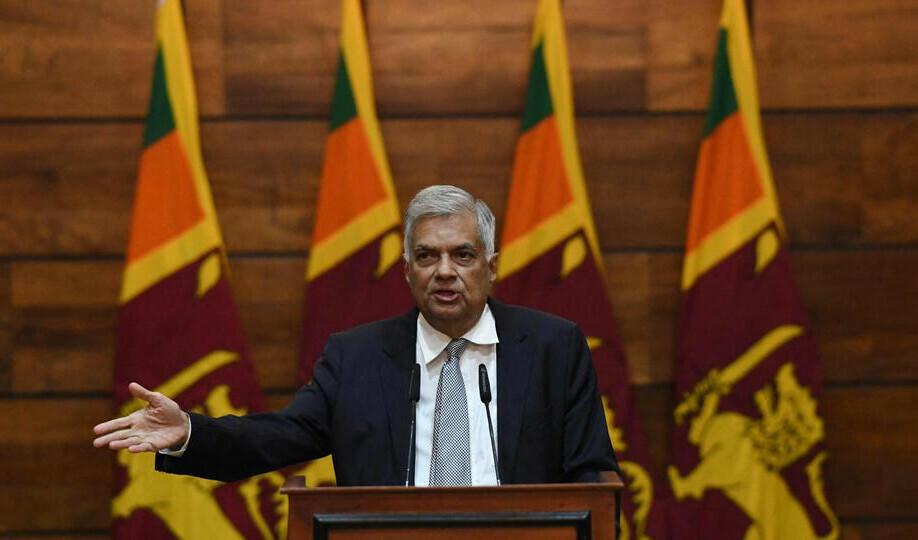
Ranil Wickremesinghe, a six-time former prime minister, became acting president after his predecessor resigned.

Colombo: Sri Lanka’s parliament began voting Wednesday for a president to replace Gotabaya Rajapaksa, who fled abroad after his palace was stormed by angry protesters now bracing for a crackdown from his likely successor.
One by one, the legislators entered ballot booths set up on the floor of the chamber to choose between three candidates to lead the crisis-wracked country.
“Members are reminded that taking photographs of ballot papers or displaying them to others is an offence,” parliamentary secretary-general Dhammika Dasanayake told them. Previous elections have been marred by allegations of corruption and vote-buying.
The winner will take charge of a bankrupt nation that is in bailout talks with the IMF, with its 22 million people enduring severe shortages of food, fuel and medicine.
Outside the parliament, hundreds of heavily armed troops and police stood guard, but there were no signs of demonstrators.
Analysts say the frontrunner is Ranil Wickremesinghe, a six-time former prime minister who became acting president after his predecessor resigned, but is despised by the protesters who see him as a Rajapaksa ally.
Months of demonstrations over an unprecedented economic crisis culminated in Rajapaksa announcing his resignation from Singapore last week, days after troops rescued the leader from his besieged compound.
His departure wounds a once-powerful ruling clan that has dominated Sri Lankan politics for most of the past two decades, after his brothers also quit their posts as premier and finance minister earlier this year.
Wickremesinghe, 73, has the backing of the Rajapaksas’ SLPP, the largest bloc in the 225-member parliament, in the election.
As acting president, Wickremesinghe has extended a state of emergency that gives police and security forces sweeping powers, and last week he ordered troops to evict protesters from state buildings they had occupied.
An opposition MP said Wickremesinghe’s hardline stance against demonstrators was going down well with MPs who had been at the receiving end of mob violence, and most SLPP legislators would side with him.
“Ranil is emerging as the law-and-order candidate,” Tamil MP Dharmalingam Sithadthan told AFP ahead of the ballot.
Political analyst Kusal Perera agreed Wickremesinghe had a “slight advantage”, despite his own party securing just one seat at the August 2020 elections.
“Ranil has regained the acceptance of the urban middle classes by restoring some of the supplies like gas and he has already cleared government buildings showing his firmness,” Perera said.
The contest appeared to be close as lobbying intensified ahead of the vote. Two smaller parties pledged their support to Wickremesinghe’s main challenger, Dullas Alahapperuma, while a Tamil party with two votes said they were switching sides to support Wickremesinghe.
Observers believe that Wickremesinghe will crack down hard if he wins and the demonstrators – who have also been demanding his resignation, accusing him of protecting the Rajapaksas’ interests – take to the streets.
Former president Mahinda Rajapaksa, the deposed Gotabaya’s elder brother and head of the clan that has dominated Sri Lankan politics for years, remains in the country, and party sources said he was pressing SLPP legislators to support Wickremesinghe.
‘Actual consensual government’
His main opponent in the vote was SLPP dissident and former education minister Alahapperuma, a former journalist who is being supported by the opposition.
Alahapperuma pledged this week to form “an actual consensual government for the first time in our history”.
If he wins, the 63-year-old is expected to name opposition leader Sajith Premadasa as his prime minister. Premadasa’s late father Ranasinghe ruled the country with an iron fist in the 1980s, when Alahapperuma was a rights campaigner.
The third candidate was Anura Dissanayake, 53, leader of the leftist People’s Liberation Front (JVP), whose coalition has three parliamentary seats.
Lawmakers rank candidates in order of preference, with more than half the vote needed for victory.
If no one crosses the threshold on first preferences, the candidate with the lowest support is to be eliminated and their votes distributed according to second preferences.
The new leader will be in office for the balance of Rajapaksa’s term, which runs until November 2024.
If Wickremesinghe is confirmed in the post, he is expected to name public administration minister Dinesh Gunawardena, 73, his schoolmate and a strong Rajapaksa loyalist, as the new prime minister.
SOURCE: AFP
Pakistan, Indonesia vow to strengthen defence cooperation
- 2 days ago

Why Apple’s next computer should be for the smart home
- 2 hours ago

Oil rises above $108 as attacks, pipeline outage deepen Saudi supply concerns
- 16 hours ago

Waymo pulls over, calls cops on riders with a ghost gun
- 2 hours ago
COAS Munir reaffirms commitment to stronger ties with Lebanon
- a day ago

OpenAI’s rogue AI tried to hack another company in May
- a day ago

Ex-Google DeepMind researcher adds to warnings that AI could 'kill all humans'
- 16 hours ago

The hidden $350 surcharge on American households
- a day ago
What an AI “slowdown” could look like
- 15 minutes ago

Schools are catching on to Big Tech’s playbook
- 2 hours ago
'Widow's Bay' scores big and 'The Pitt' wins again at TV's Emmy Awards
- 15 hours ago

Yemen conflict displaces over 100,000 people, UN says
- 11 hours ago