The apparatus moved into an unpredictable orbit and ceased to exist as a result of a collision with the surface of the Moon.

.jpg&w=3840&q=75)
Russia’s first moon mission in 47 years failed when its Luna-25 space craft spun out of control and crashed into the moon after a problem preparing for pre-landing orbit, underscoring the post-Soviet decline of a once mighty space programme.
Russia’s state space corporation, Roskosmos, said it had lost contact with the craft at 11:57 GMT on Saturday after a problem as the craft was shunted into pre-landing orbit. A soft landing had been planned for Monday.
“The apparatus moved into an unpredictable orbit and ceased to exist as a result of a collision with the surface of the Moon,” Roskosmos said in a statement.
It said a special inter-departmental commission had been formed to investigate the reasons behind the loss of the Luna-25 craft, whose mission had raised hopes in Moscow that Russia was returning to the big power moon race.
The failure underscored the decline of Russia’s space power since the glory days of Cold War competition when Moscow was the first to launch a satellite to orbit the Earth – Sputnik 1, in 1957 – and Soviet cosmonaut Yuri Gagarin became the first man to travel into space in 1961.
It also comes as Russia’s $2 trillion economy faces its biggest external challenge for decades: the pressure of both Western sanctions and fighting the biggest land war in Europe since World War Two.
Russia has not attempted a moon mission since Luna-24 in 1976, when Leonid Brezhnev ruled the Kremlin.
Russia has been racing against India, whose Chandrayaan-3 spacecraft is scheduled to land on the moon’s south pole this week, and more broadly against China and the United States which both have advanced lunar ambitions.
“India’s Chandrayaan-3 is set to land on the moon on August 23,” the Indian Space Research Organisation (ISRO) posted on X, formerly Twitter, around the time news of the Luna crash broke.
Failed moonshot
Russian officials had hoped that the Luna-25 mission would show Russia can compete with the superpowers in space despite its post-Soviet decline and the vast cost of the Ukraine war.
“The flight control system was a vulnerable area, which had to go through many fixes,” said Anatoly Zak, the creator and publisher of www.RussianSpaceWeb.com which tracks Russian space programmes.
Zak said Russia had also gone for the much more ambitious moon landing before undertaking a simpler orbital mission – the usual practice for the Soviet Union, the United States, China and India.
More than a decade ago, the failure of the 2011 Fobos-Grunt mission to one of the moons of Mars underscored the challenges facing Russia’s space programme: it could not even exit the earth’s orbit and fell back to earth, smashing into the Pacific Ocean in 2012.
Eventually, in the early 2010s, Russia settled upon the idea of the Luna-25 mission to the south pole of the moon. Luna-25 did manage to exit the earth’s orbit.
But its failure means that Russia may not be the first to sample the frozen water which scientists believe the south pole of the moon holds.
It was not immediately unclear what long-term impact the failed mission would have on the country’s moon programme, which envisages several more missions over coming years.
Courtesy: Reuters
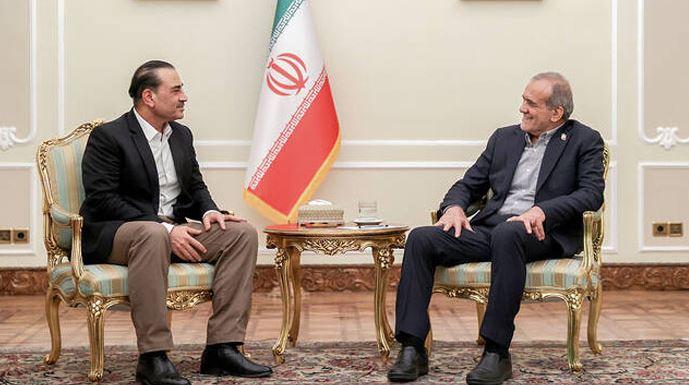
CDF Munir arrives in Tehran for talks with senior Iranian officials
- 6 hours ago

Bollywood actor Tiger Shroff shot at in Mumbai, three suspects held: police
- a day ago

Army officer martyred, four terrorists killed in Balochistan operations: ISPR
- a day ago

FinMin Aurangzeb reaffirms commitment to export-led economic growth
- 8 hours ago

Can this Democrat crack the code for universal healthcare?
- 8 hours ago

Security of Haramain al-Sharifain non-negotiable: DG ISPR
- a day ago

Musk says will give SpaceX share to 'every kid in America'
- a day ago

Communism in China and the changing world: from capitalist critique to socialism with Chinese characteristics
- a day ago
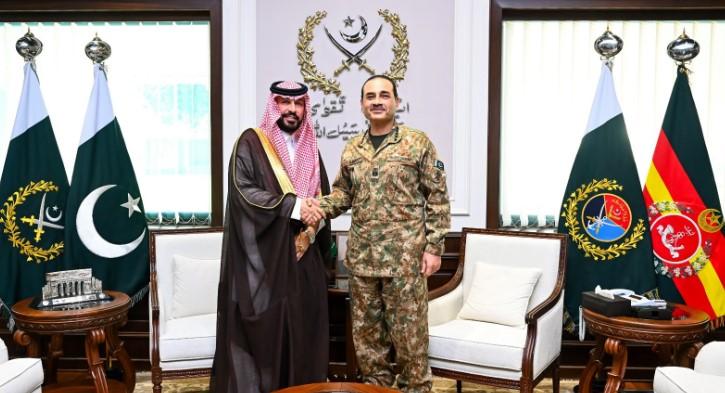
Field Marshal, Saudi envoy discuss regional security dynamics
- a day ago

The radical Democratic plan to change the government for good
- 8 hours ago
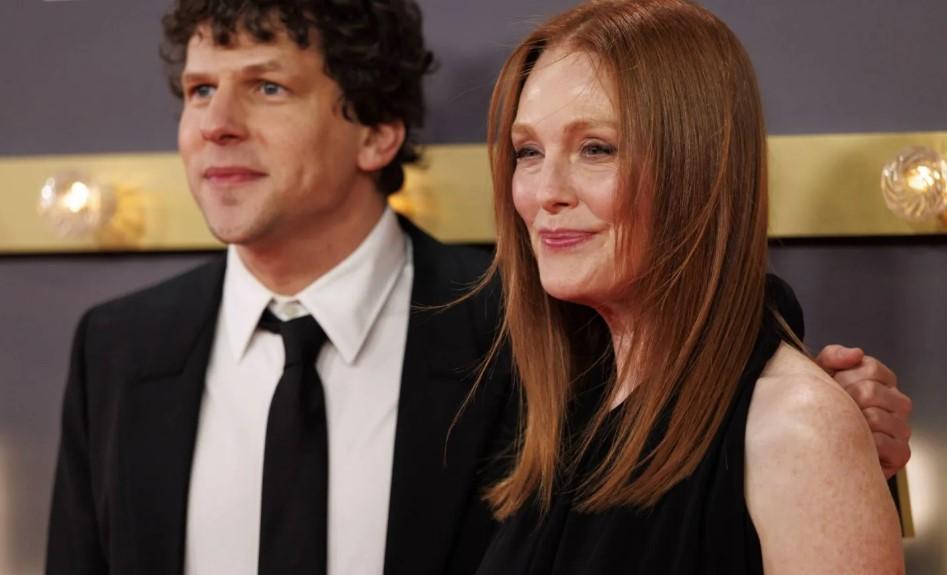
Jesse Eisenberg, Julianne Moore bring curtain down on London Film Festival with 'The Debut'
- 8 hours ago
UK to deploy RAF Typhoon jets to defend Saudi cities from Houthi attacks
- 8 hours ago