Iran, along with allies would launch a direct attack if the Gaza talks fail

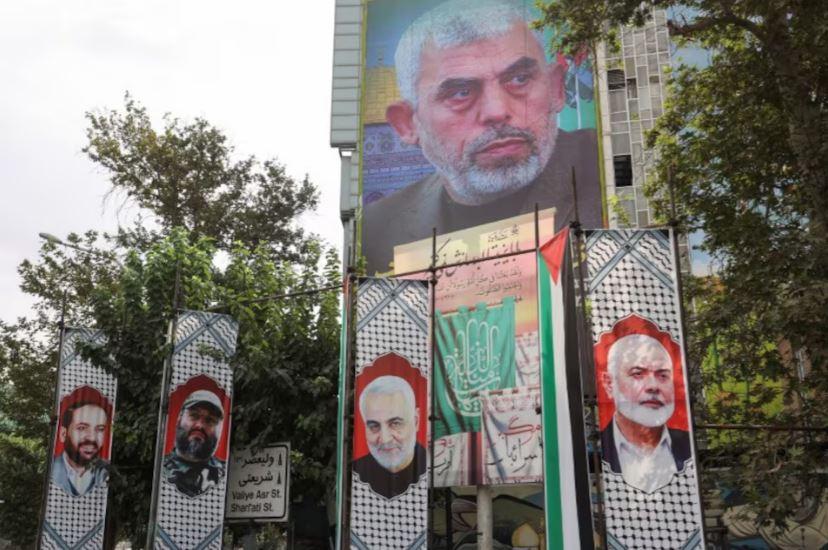
Beirut (Reuters): Only a ceasefire deal in Gaza stemming from hoped-for talks this week would hold Iran back from direct retaliation against Israel for the assassination of Hamas leader Ismail Haniyeh on its soil, three senior Iranian officials said.
Iran has vowed a severe response to Haniyeh's killing, which took place as he visited Tehran late last month and which it blamed on Israel. Israel has neither confirmed or denied its involvement. The U.S. Navy has deployed warships and a submarine to the Middle East to bolster Israeli defenses.
One of the sources, a senior Iranian security official, said Iran, along with allies such as Hezbollah, would launch a direct attack if the Gaza talks fail or it perceives Israel is dragging out negotiations. The sources did not say how long Iran would allow for talks to progress before responding.
With an increased risk of a broader Middle East war after the killings of Haniyeh and Hezbollah commander Fuad Shukr, Iran has been involved in intense dialogue with Western countries and the United States in recent days on ways to calibrate retaliation, said the sources, who all spoke on condition of anonymity due to the sensitivity of the matter.
In comments published on Tuesday, the U.S. ambassador to Turkey confirmed Washington was asking allies to help convince Iran to de-escalate tensions. Three regional government sources described conversations with Tehran to avoid escalation ahead of the Gaza ceasefire talks, due to begin on Thursday in either Egypt or Qatar.
"We hope our response will be timed and executed in a way that does not harm a potential ceasefire," Iran's mission to the U.N. said on Friday in a statement. Iran's foreign ministry on Tuesday said calls to exercise restraint "contradict principles of international law."
Iran's foreign ministry and its Revolutionary Guards Corps did not immediately respond to questions for this story. The Israeli Prime Minister's Office and the U.S. State Department did not respond to questions.
"Something could happen as soon as this week by Iran and its proxies... That is a U.S. assessment as well as an Israel assessment," White House spokesperson John Kirby told reporters on Monday.
"If something does happen this week, the timing of it could certainly well have an impact on these talks we want to do on Thursday," he added. At the weekend, Hamas cast doubt on whether talks would go ahead. Israel and Hamas have held several rounds of talks in recent months without agreeing a final ceasefire.
In Israel, many observers believe a response is imminent after Supreme Leader Ayatollah Ali Khamenei said Iran would "harshly punish" Israel for the strike in Tehran.
Iran's regional policy is set by the elite Revolutionary Guards, who answer only to Khamenei, the country's top authority. Iran's relatively moderate new president Masoud Pezeshkian has repeatedly reaffirmed Iran's anti-Israel stance and its support for resistance movements across the region since taking office last month.
Meir Litvak, a senior researcher at Tel Aviv University's Alliance Center for Iranian Studies, said he thought Iran would put its needs before helping its ally Hamas but that Iran also wanted to avoid a full-scale war.
"The Iranians never subordinated their strategy and policies to the needs of their proxies or protégées,” Litvak said. “An attack is likely and almost inevitable but I don't know the scale and the timing.”
Iran-based analyst Saeed Laylaz said the Islamic Republic's leaders were now keen to work towards a ceasefire in Gaza, "to obtain incentives, avoid an all-out war and strengthen its position in the region."
Laylaz said Iran had not previously been involved in the Gaza peace process but was now ready to play "a key role."
Iran, two of the sources said, was considering sending a representative to the ceasefire talks, in what would be a first since the war started in Gaza.
The representative would not directly attend the meetings but would engage in behind-the-scenes discussions "to maintain a line of diplomatic communication" with the United States while negotiations proceed. Officials in Washington, Qatar and Egypt did not immediately respond to questions about whether Iran would play an indirect role in talks.
Two senior sources close to Lebanon's Hezbollah said Tehran would give the negotiations a chance but would not give up its intentions to retaliate.
A ceasefire in Gaza would give Iran cover for a smaller "symbolic" response, one of the sources said.
Israel launched its assault on Gaza after Hamas fighters stormed into southern Israel on Oct. 7, killing 1,200 people, mostly civilians, and capturing more than 250 hostages, according to Israeli tallies.
Since then, nearly 40,000 Palestinians have been killed in the Israeli offensive in Gaza, according to the health ministry.

How bad healthcare can derail a woman’s entire life
- 3 hours ago

The 2.5-hour AI-generated Odyssey movie is 2.5 hours too long
- 5 hours ago

Walmart takes a bite off the cost of Metroid Ravenous physical preorders
- 20 hours ago

Trump puts himself on the ballot
- 3 hours ago

The overlooked factor making everything more expensive
- 3 hours ago

I reviewed Valve’s Steam Frame, ask me anything
- 5 hours ago

Ronaldo included in Jesus' first Portugal squad
- 15 hours ago

PM expresses satisfaction over SBP reserves reaching historic high of $21.4bn
- 14 hours ago
Blast at Kohat Police Lines kills 16, including five policemen
- 18 hours ago
Pakistan will go to any extent in defending sovereignty of Saudi Arabia: DG ISPR
- 18 hours ago
No one will be allowed to march on Islamabad: Mohsin Naqvi
- 13 hours ago

The Dell XPS 13 is the first real competitor to the MacBook Neo
- 5 hours ago