
The issue has become one of the most contentious in Canadian politics

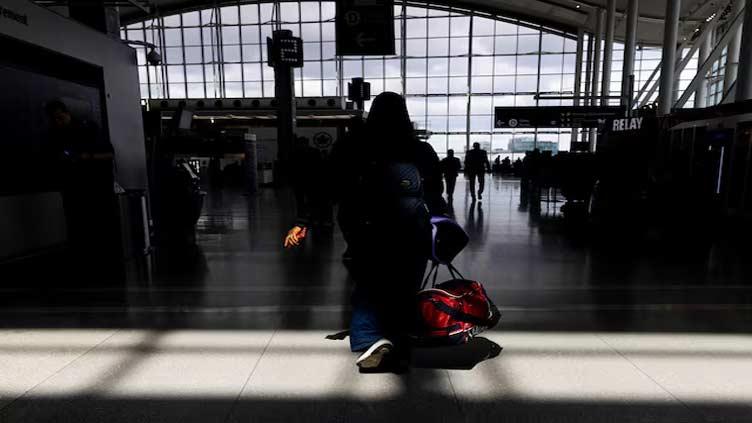
Toronto (Reuters): Canada is further reducing the number of study permits it will grant to foreign students and tightening eligibility for work permits in a bid to cut down on the number of temporary residents in the country, the government said on Wednesday.
The announcement comes as Prime Minister Justin Trudeau's Liberal government, trailing in the public opinion polls and coming off a major by-election loss this week, seeks to reduce the number of temporary residents - including international students and foreign workers - in the country.
The issue has become one of the most contentious in Canadian politics with a federal election due no later than October, 2025.
The changes announced on Wednesday would reduce the number of international study permits issued to 437,000 in 2025. Canada approved 509,390 in 2023, according to immigration department data, and 175,920 in the first seven months of 2024.
The changes would also limit work permit eligibility for spouses of some students and temporary foreign workers.
As Canada sees a spike in the number of refugee claimants, the government said Wednesday it planned to review measures to strengthen visa integrity and was "reviewing visa decision-making so that our highly trained officers have the right tools to detect fraud and reduce the number of non-genuine visitors."
“The reality is that not everyone who wants to come to Canada will be able to—just like not everyone who wants to stay in Canada will be able to," Immigration Minister Marc Miller said in a statement.
The government has already pledged to reduce the number of temporary residents to 5% of the total population. It was 6.8% in April.
Migrants have been blamed for societal problems including a lack of affordable housing and ramped-up cost of living, even as post-pandemic inflation slowed to the Bank of Canada's target of 2% annually in August.
Immigrant advocates and some economists argue the link between migrants and economic malaise is an oversimplification, and that vulnerable newcomers cannot be held responsible for complex economic problems.
Polls have shown a growing slice of the public thinks Canada is bringing in too many immigrants, and anti-migrant rhetoric and attacks have risen in Canada, once renowned for its welcoming stance toward newcomers.
Nonetheless, after years of increasing Canada's ranks of temporary residents, its federal government is seeking to pull back.
In January, the government placed a two-year cap on international students, whose approvals are projected to decrease by almost half this year.
Earlier this month, the government walked back 2022 expansions to the temporary foreign worker program. In some sectors, it reduced the maximum share of any employer's workforce that can be made up of low-wage, temporary foreign workers.
It also ended, in some sectors, low-wage temporary foreign workers in communities with high unemployment rates.

Pakistan lodges protest after Indian Navy's provocative action in EEZ
- 11 hours ago

CDF Munir stresses tech innovation for national security
- 16 hours ago

Trump’s Kennedy Center sabotage is complete
- 6 hours ago

Amazon’s Fire TV Stick 4K is over half off at under $20
- 8 hours ago

How your pet can help you tap into a sense of spirituality
- 6 hours ago

Saudis pound Yemen, Houthis fire at Saudi, as Middle East war spreads
- 19 hours ago
The successful campaign to make a terrifying Supreme Court immigration case disappear
- 6 hours ago

Sylvan Esso think you should splurge on good-quality yogurt
- 8 hours ago

Apple is reportedly working on iPhone game controllers
- 8 hours ago

The one thing you can do to help a whole lot of animals, explained in 4 charts
- 6 hours ago

New York City’s last pickpocket doesn’t need a smartphone
- 8 hours ago

StarCraft returns in 2030 as an open-world shooter
- 8 hours ago