
Scientists just discovered a sea creature as large as two basketball courts. Here’s what it looks like.
In the warm blue waters of the Solomon Islands, an island chain in the South Pacific, lies one of the world’s largest sea creatures. Roughly the size of two basketball courts, it’s neither a whale nor a giant squid. It is a single piece of coral. On Wednesd…

Published 2 years ago on Nov 15th 2024, 12:00 pm
By Web Desk
Support independent journalism that matters — become a Vox Member today.
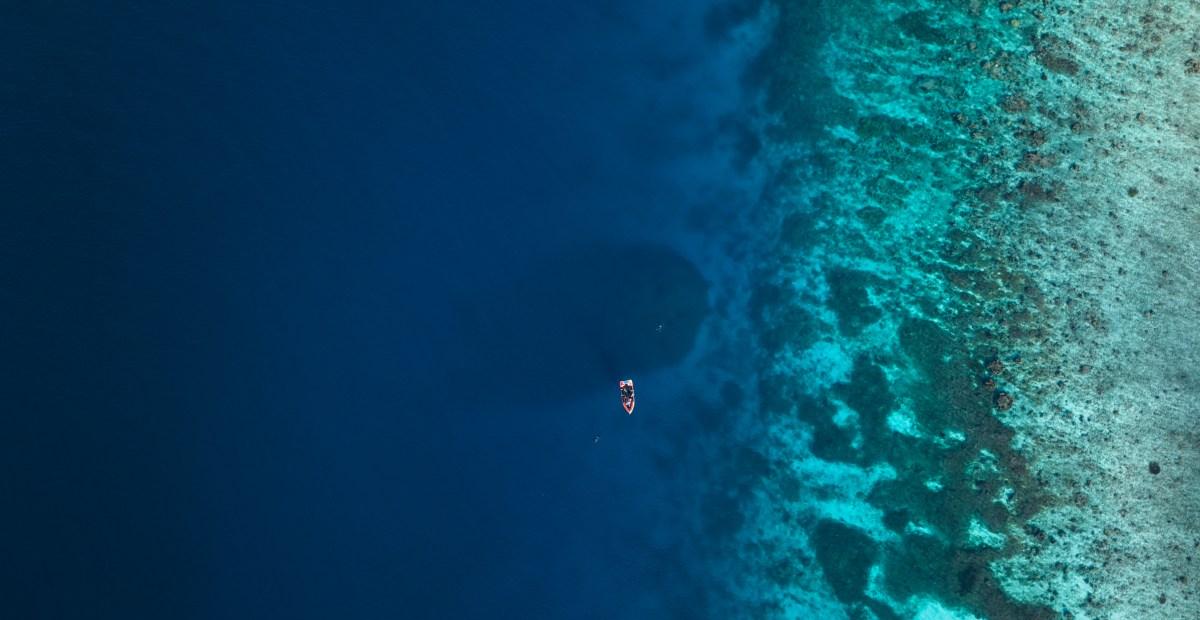
In the warm blue waters of the Solomon Islands, an island chain in the South Pacific, lies one of the world’s largest sea creatures.
Roughly the size of two basketball courts, it’s neither a whale nor a giant squid.
It is a single piece of coral.
On Wednesday, a team of researchers and filmmakers exploring the Solomon Islands revealed that they found what they claim is the world’s largest individual coral colony. The coral, a communal organism comprising millions of animals called polyps, is 34 meters wide and 32 meters long — and so large it can be seen from space. A typical coral reef is made of many different coral colonies, most of which are genetically distinct, whereas this is just one individual.
In new photos shared by the research team, the coral, a species known as Pavona clavus, looks like a lumpy brown mound covered in knobs. Closer views reveal bits of yellow, green, and purple. Given its size and the slow speed at which corals grow, this individual is likely several centuries old.
[Image: The mega coral is so large it dwarfs the diver alongside it. https://platform.vox.com/wp-content/uploads/sites/2/2024/11/06-NGSPS2024SOL_MSF_2532Nat_Geographic.jpg?quality=90&strip=all]
[Image: Close-up views reveal all kinds of sea life growing on and around the coral. https://platform.vox.com/wp-content/uploads/sites/2/2024/11/14-NGSPS2024SOL_MSF_2599Nat_Geographic.jpg?quality=90&strip=all]
“It’s a dream to see something unique like this,” Manu San Félix, an underwater photographer and marine biologist who first saw the coral last month in the Solomon Islands, told Vox. “When Napoleon was alive, this thing was here.”
San Félix discovered the coral while filming near an island called Malaulalo for an ongoing National Geographic expedition. The expedition, a collaboration with the Solomon Islands government, is part of National Geographic’s Pristine Seas project, which aims to help countries establish more marine parks, in part by documenting sea life. Malaulalo is mostly uninhabited and its waters are largely unexplored, according to Dennis Marita, a member of the Po’onapaina Tribe of Ulawa. The tribe oversees Malaulalo’s marine territory.
“This is something huge for our community,” Marita, who’s also the director of culture at the Solomon Islands’s ministry of culture and tourism, said in a press conference Tuesday.
No other coral in the public record is larger than this one, though it’s possible that there are bigger colonies in remote stretches of the ocean that have yet to be discovered. The previous record-holder for the world’s largest coral was a colony in American Samoa that was roughly 22 meters wide.
“Many of the world’s coral reefs are remote and not well explored,” Stacy Jupiter, executive director of marine conservation at the Wildlife Conservation Society, who was not involved in this expedition, told Vox. Humans have only surveyed about 5 percent of the planet’s marine realm, she mentioned. “So it is not surprising at all that we continue to make new discoveries, even of large creatures,” Jupiter said.
[Image: Manu San Felix dives over a massive coral https://platform.vox.com/wp-content/uploads/sites/2/2024/11/31-NGSPS2024SOL_1024_DAY-STRINGOUT.jpg?quality=90&strip=all]
“Beacon of hope”
The discovery comes at a time when coral reefs around the world are vanishing.
Climate change is warming the oceans, and warm water kills corals. Coral gets its color and much of its food from symbiotic algae that live inside polyps. When seawater gets too warm, that algae disappears, and the coral turns white — or “bleaches.” Bleached corals are essentially starving to death.
Coral reefs globally are facing the most extensive bleaching crisis on record. Three-quarters of the world’s coral reefs have experienced enough ocean heat to cause bleaching since early 2023, according to the National Oceanic and Atmospheric Administration. Many corals have died.
Meanwhile, new research suggests that more than 40 percent of hard corals — those that build reefs, like the recently discovered colony in the Solomon Islands — are at risk of extinction.
This is a problem, to put it lightly. Reefs dampen waves that hit the shoreline during hurricanes, they are home to a significant portion of commercial fish that people eat, and they are the engine of tourism economies in many coastal regions. Hundreds of millions of people depend on coral reefs.
Perhaps unsurprisingly, the National Geographic team discovered a lot of dead coral in the shallows of the Solomon Islands, likely due to excessive heat in the ocean, said Molly Timmers, a marine ecologist and the expedition’s lead scientist. That was discouraging, she said.
In the face of that loss, this discovery was a “beacon of hope,” Timmers told Vox. “It’s like, holy crap! This is amazing!”
Large coral colonies provide homes for marine critters like crabs, snails, and small fish. More importantly, they seed the ocean with baby corals when they spawn, or reproduce, helping damaged sections of reef recover.
Plus, this particular coral may be resilient to stress, including excessive marine heat. The research team estimates that it’s between 300 and 500 years old, meaning it’s lived through multiple global bleaching events and survived. Unlike some of the coral closer to shore, this individual — which was more than 10 meters deep — appeared healthy, perhaps because it was in deeper, cooler water or because it has some built-in genetic tolerance to heat. So the spawn it produces could be resilient too.
“Anything old is really good at surviving,” said Maria Beger, a marine ecologist at the University of Leeds, who was not involved in the discovery.
[Image: Divers measure the newly discovered coral, revealing it to be the largest on record. https://platform.vox.com/wp-content/uploads/sites/2/2024/11/12-NGSPS2024SOL_NGPS2024SOL_1025_ThreeSisters2_ISF_CR3_001_MSF_2570-1.jpg?quality=90&strip=all]
Discovering a hulking colony of coral is not, by itself, all that impressive, said Beger. To support marine life and withstand threats like climate change, it’s more important that reefs have a diverse array of coral species in all shapes and sizes, rather than one big one.
“At the same time, if a report like this gets people excited about coral reefs,” she said, “maybe that’s a good thing.”
The discovery could also help the Solomon Islands conserve their waters more effectively, Marita, of the ministry of culture and tourism, told Vox. While his tribe has been informally conserving Malaulalo for a decade on its own, he said, the island would benefit from an official marine protected area recognized by the Solomon Islands government. Marita has been campaigning to make that happen.
“This will certainly boost the conservation initiative that we have been working on,” he told Vox, referring to the discovery. “This mega coral will help bring much-needed visibility and recognition from the government and other stakeholders. This is really a gain for us.”

Musk says will give SpaceX share to 'every kid in America'
- 13 hours ago

Hands-on with the Apple Home Collection
- 3 days ago

West Bank settlers brutally attack a Washington Post journalist
- 2 days ago

Florida’s uniquely horrifying death penalty system
- 3 days ago

Field Marshal, Saudi envoy discuss regional security dynamics
- 11 hours ago

Communism in China and the changing world: from capitalist critique to socialism with Chinese characteristics
- 15 hours ago

Trump’s revenge campaign comes for Ilhan Omar
- 3 days ago

Buying Apple’s wall-mounted HomeView? The mount costs extra
- 3 days ago

FIA offloads 2 passengers at Lahore airport over fake documents, tampered study visa
- 2 days ago

Security of Haramain al-Sharifain non-negotiable: DG ISPR
- 15 hours ago

Bollywood actor Tiger Shroff shot at in Mumbai, three suspects held: police
- 14 hours ago

Army officer martyred, four terrorists killed in Balochistan operations: ISPR
- 13 hours ago
You May Like


Trending