The NCAA announced changes to its participation policy for transgender athletes on Thursday, limiting competition in women's sports to athletes assigned female at birth only.

Published 2 years ago on Feb 8th 2025, 11:00 am
By Web Desk
The NCAA changed its participation policy for transgender athletes on Thursday, limiting competition in women's sports to athletes assigned female at birth only.
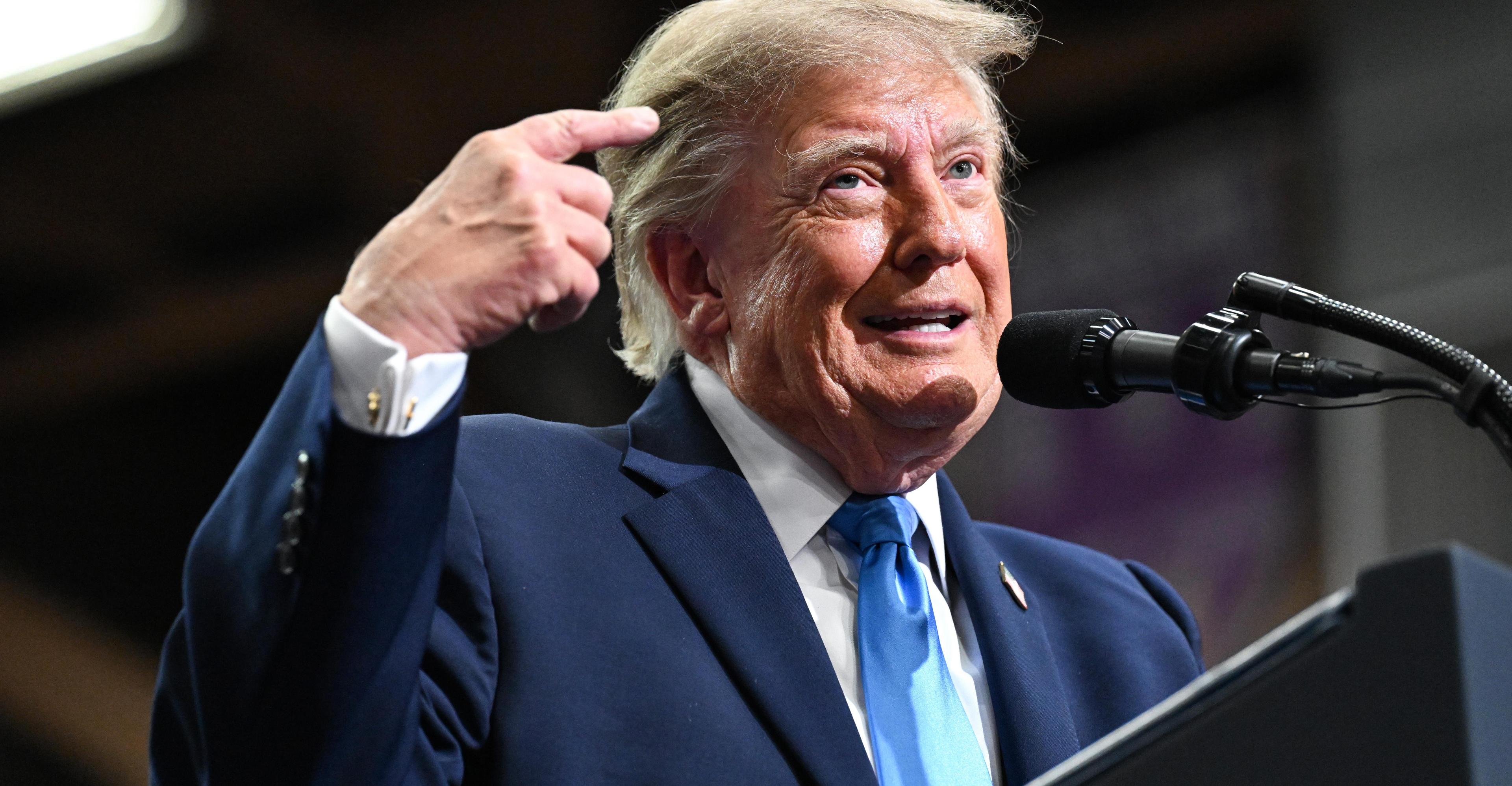
The move came one day after President Donald Trump signed an executive order intended to ban transgender athletes from girls' and women's sports. The order gives federal agencies latitude to withhold federal funding from entities that do not abide by Title IX in alignment with the Trump administration's view, which interprets "sex" as that which someone is assigned at birth.
The NCAA policy change is effective immediately and applies to all athletes regardless of previous eligibility reviews. The NCAA has some 1,100 member schools with more than 500,000 athletes, easily the largest governing body for college athletics in the U.S.
"We strongly believe that clear, consistent, and uniform eligibility standards would best serve today's student-athletes instead of a patchwork of conflicting state laws and court decisions," NCAA president Charlie Baker said. "To that end, President Trump's order provides a clear, national standard."
The NCAA's decision was hailed by former Kentucky swimmer Riley Gaines, a vocal advocate of banning transgender athletes from women's sports. Gaines, who was at the White House signing ceremony with Trump, was among more than a dozen college athletes who filed a lawsuit against the NCAA last year, accusing it of violating their Title IX rights by allowing transgender woman Lia Thomas to compete at the national championships in 2022.
"I can't even begin to tell you how vindicating it feels knowing no girl will ever have to experience what my teammates and I did," Gaines posted on X shortly after the NCAA announced the policy change.
The previous NCAA policy that went into effect in 2022 adopted a sport-by-sport approach, in which transgender participation was determined by the policy of the sport's national governing body. In sports with no national governing body, that sport's international federation policy would be in place. If there is no international federation policy, previously established IOC policy criteria would take over.
Over the past year, however, transgender athletes have been targeted by critics who say their participation in women's sports is unfair and a potential safety risk. It became a major talking point in Trump's reelection campaign, even though there is believed to be a very small number of transgender athletes; Baker last year said he knew of only 10 transgender athletes in the NCAA.
The NCAA's revised policy permits athletes assigned male at birth to practice with women's teams and receive benefits such as medical care. It it not uncommon, for example, for women's basketball teams to practice against fellow students who are male.
Regardless of sex assigned at birth or gender identity, an athlete can practice and compete with a men's team assuming they meet all other NCAA eligibility requirements.
However, the NCAA said an athlete assigned female at birth who has begun hormone therapy (testosterone, for example) can practice with a women's team but cannot compete on a women's team without risking the team's eligibility for championships.
Member schools remain responsible for certifying athlete eligibility for practice and competition. The NCAA also said schools are subject to local, state and federal legislation and such legislation supersedes NCAA rules.
The NCAA policy change was announced hours after the Trump administration said it was investigating potential civil rights violations at two universities and a high school sports league that allowed transgender athletes to compete on women's teams. The Education Department said it had opened reviews of San Jose State University, the University of Pennsylvania and the Massachusetts Interscholastic Athletic Association.
San Jose State's women's volleyball team drew headlines last season over unconfirmed allegations that the roster included a transgender player. As for Penn, three former teammates of transgender swimmer Lia Thomas have sued the NCAA, Ivy League, Harvard and the school over Thomas's participation at conference and national championships, saying it violated Title IX provisions.
Sia Liilii, captain of the Nevada volleyball team that refused to play San Jose State this season, said she was "ecstatic" about the new NCAA policy.
"Women have fought long and hard for equal athletic opportunities," Liilii said. "By completely removing men from women's sports, we are moving back to the true definition of Title [IX]. Women are given an opportunity to champion their own sports division and shine on a fair competition floor."
The NCAA also said its board of governors had directed staff to help all member schools foster respectful and inclusive collegiate athletic cultures, noting it has recently updated its mental health guidance.
"The updated policy combined with these resources follows through on the NCAA's constitutional commitment to deliver intercollegiate athletics competition and to protect, support and enhance the mental and physical health of student-athletes," Baker said. "This national standard brings much needed clarity as we modernize college sports for today's student-athletes."
The NCAA policy now mirrors that of the National Association of Intercollegiate Athletics, which governs sports at 241 mostly small colleges across the country. Last April, the NAIA unanimously approved a policy allowing only athletes whose sex assigned at birth is female and who have not begun hormone therapy to compete.
Information from The Associated Press was used in this report.
The move came one day after President Donald Trump signed an executive order intended to ban transgender athletes from girls' and women's sports. The order gives federal agencies latitude to withhold federal funding from entities that do not abide by Title IX in alignment with the Trump administration's view, which interprets "sex" as that which someone is assigned at birth.
The NCAA policy change is effective immediately and applies to all athletes regardless of previous eligibility reviews. The NCAA has some 1,100 member schools with more than 500,000 athletes, easily the largest governing body for college athletics in the U.S.
"We strongly believe that clear, consistent, and uniform eligibility standards would best serve today's student-athletes instead of a patchwork of conflicting state laws and court decisions," NCAA president Charlie Baker said. "To that end, President Trump's order provides a clear, national standard."
The NCAA's decision was hailed by former Kentucky swimmer Riley Gaines, a vocal advocate of banning transgender athletes from women's sports. Gaines, who was at the White House signing ceremony with Trump, was among more than a dozen college athletes who filed a lawsuit against the NCAA last year, accusing it of violating their Title IX rights by allowing transgender woman Lia Thomas to compete at the national championships in 2022.
"I can't even begin to tell you how vindicating it feels knowing no girl will ever have to experience what my teammates and I did," Gaines posted on X shortly after the NCAA announced the policy change.
The previous NCAA policy that went into effect in 2022 adopted a sport-by-sport approach, in which transgender participation was determined by the policy of the sport's national governing body. In sports with no national governing body, that sport's international federation policy would be in place. If there is no international federation policy, previously established IOC policy criteria would take over.
Over the past year, however, transgender athletes have been targeted by critics who say their participation in women's sports is unfair and a potential safety risk. It became a major talking point in Trump's reelection campaign, even though there is believed to be a very small number of transgender athletes; Baker last year said he knew of only 10 transgender athletes in the NCAA.
The NCAA's revised policy permits athletes assigned male at birth to practice with women's teams and receive benefits such as medical care. It it not uncommon, for example, for women's basketball teams to practice against fellow students who are male.
Regardless of sex assigned at birth or gender identity, an athlete can practice and compete with a men's team assuming they meet all other NCAA eligibility requirements.
However, the NCAA said an athlete assigned female at birth who has begun hormone therapy (testosterone, for example) can practice with a women's team but cannot compete on a women's team without risking the team's eligibility for championships.
Member schools remain responsible for certifying athlete eligibility for practice and competition. The NCAA also said schools are subject to local, state and federal legislation and such legislation supersedes NCAA rules.
The NCAA policy change was announced hours after the Trump administration said it was investigating potential civil rights violations at two universities and a high school sports league that allowed transgender athletes to compete on women's teams. The Education Department said it had opened reviews of San Jose State University, the University of Pennsylvania and the Massachusetts Interscholastic Athletic Association.
San Jose State's women's volleyball team drew headlines last season over unconfirmed allegations that the roster included a transgender player. As for Penn, three former teammates of transgender swimmer Lia Thomas have sued the NCAA, Ivy League, Harvard and the school over Thomas's participation at conference and national championships, saying it violated Title IX provisions.
Sia Liilii, captain of the Nevada volleyball team that refused to play San Jose State this season, said she was "ecstatic" about the new NCAA policy.
"Women have fought long and hard for equal athletic opportunities," Liilii said. "By completely removing men from women's sports, we are moving back to the true definition of Title [IX]. Women are given an opportunity to champion their own sports division and shine on a fair competition floor."
The NCAA also said its board of governors had directed staff to help all member schools foster respectful and inclusive collegiate athletic cultures, noting it has recently updated its mental health guidance.
"The updated policy combined with these resources follows through on the NCAA's constitutional commitment to deliver intercollegiate athletics competition and to protect, support and enhance the mental and physical health of student-athletes," Baker said. "This national standard brings much needed clarity as we modernize college sports for today's student-athletes."
The NCAA policy now mirrors that of the National Association of Intercollegiate Athletics, which governs sports at 241 mostly small colleges across the country. Last April, the NAIA unanimously approved a policy allowing only athletes whose sex assigned at birth is female and who have not begun hormone therapy to compete.
Information from The Associated Press was used in this report.

Army officer martyred, four terrorists killed in Balochistan operations: ISPR
- 4 hours ago

Musk says will give SpaceX share to 'every kid in America'
- 4 hours ago

Florida’s uniquely horrifying death penalty system
- 3 days ago
FIA offloads 2 passengers at Lahore airport over fake documents, tampered study visa
- a day ago

Bollywood actor Tiger Shroff shot at in Mumbai, three suspects held: police
- 5 hours ago

Trump’s revenge campaign comes for Ilhan Omar
- 3 days ago

Field Marshal, Saudi envoy discuss regional security dynamics
- 2 hours ago

West Bank settlers brutally attack a Washington Post journalist
- 2 days ago

Communism in China and the changing world: from capitalist critique to socialism with Chinese characteristics
- 5 hours ago
Buying Apple’s wall-mounted HomeView? The mount costs extra
- 2 days ago

Security of Haramain al-Sharifain non-negotiable: DG ISPR
- 6 hours ago
Hands-on with the Apple Home Collection
- 2 days ago
You May Like




Trending