
One month ago, while announcing US airstrikes targeting Iran’s nuclear program, President Donald Trump said that he and Israeli Prime Minister Benjamin Netanyahu had worked together as a team “like perhaps no team has ever worked before.” This was notable bec…

Published a year ago on Jul 24th 2025, 7:00 am
By Web Desk

One month ago, while announcing US airstrikes targeting Iran’s nuclear program, President Donald Trump said that he and Israeli Prime Minister Benjamin Netanyahu had worked together as a team “like perhaps no team has ever worked before.” This was notable because Trump had just publicly discouraged Israeli strikes against Iran almost up until the moment that they began, and because — as I wrote in May — in the first few months of his administration, the US and Israel often did not appear to be on the same page about regional conflict.
In May, the administration cut a deal with Hamas — without Israel’s involvement — to secure the release of an American hostage in Gaza. Then, the US reached a ceasefire agreement with the Houthis, in which the Yemeni rebel group pledged to stop attacking American ships but notably made no mention of its ongoing attacks against Israel. And then there was the ongoing effort, in the face of heavy Israeli skepticism, to reach a new nuclear enrichment deal with Iran — an effort that came to an end, at least for now, with the Israeli and American bombing campaign.
This story was first featured in the Today, Explained newsletter
Understand the world with a daily explainer plus the most compelling stories of the day. Sign up here.
But if the “12-Day War” with Iran ushered in a new era of US-Israel regional cooperation, it was a short-lived one. In general, the pendulum seems to be swinging back toward Trump and Netanyahu not getting along. Last week, Israel’s bombing of Gaza’s only Catholic church prompted an angry call from Trump. Ambassador Mike Huckabee, arguably the most staunchly pro-Israel high-ranking Trump official, has been uncharacteristically critical after the killing of a US citizen and an attack on a different Palestinian church in the West Bank, both allegedly by Israeli settlers. And now, the Trump and Netanyahu administrations are also plainly at odds over Israel’s latest intervention in Syria.
Israel has been periodically launching airstrikes in Syria for years, but the latest clash began last week when Syria’s government sent troops into its southern Sweida province to put down clashes between Bedouin tribes and armed groups from the local Druze community, a religious minority group. The troops were accused of carrying out summary executions against the Druze and attacking civilians. This prompted Israel to launch strikes against the Syrian forces and against the defense ministry in Damascus. Israel wants to keep Syrian forces out of areas close to its borders; it also has an interest in protecting the Druze, who have a substantial community in Israel and are heavily represented in its armed forces.
This is all very awkward for the Trump administration. At the urging of allies in the Gulf, the US has gone all in on normalizing relations with Syria’s new government, including the once-unthinkable meeting between Trump and President Ahmad al-Sharaa, a former rebel leader who was once a member of al-Qaeda, in May. Trump has expressed hopes for diplomatic normalization between Syria and Israel, though the Israelis have been less enthusiastic. Netanyahu urged Trump not to lift sanctions on the Syrian government.
The tensions between the two positions are now on full display. Reuters reported that the Syrian government had sent its troops into Sweida believing that it had a green light from the US, which has urged the new leaders to take full security control of the fractured and war-torn country. Tom Barrack, the US ambassador to Turkey who is also special envoy to Syria, criticized the Israeli strikes as “poorly timed,” and said there was no alternative to working with Syria’s current government. Speaking on background, administration officials are even more peeved, with one telling Axios, “Bibi acted like a madman. He bombs everything all the time. … This could undermine what Trump is trying to do.”
“Bombing everything all the time” isn’t far off. Since the Iran strikes ended, Israel has carried out military operations in Lebanon and Yemen and made clear it reserves the right to hit Iran again. As I recently noted, this is a kind of region-wide version of the “mowing the grass” strategy Israel employed in Gaza before the October 7, 2023, attacks: periodically striking its adversaries to degrade them and keep them off balance while avoiding long, costly engagements.
To put it lightly, the strikes against Iran did not create a peaceful new regional order, as Trump said they would. Instead, they have been followed by what looks like long-term, low-intensity warfare between Israel and its enemies throughout the region. That, combined with the ongoing bloodshed in Gaza and fading prospects for a new ceasefire there, seems very likely to provoke tension between Israel and a US administration that has vowed to draw down its military presence in the Middle East — but seems continually drawn into the region’s conflicts.
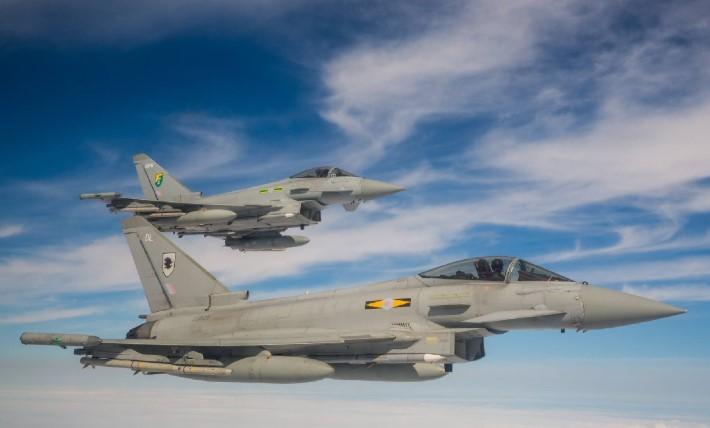
UK to deploy RAF Typhoon jets to defend Saudi cities from Houthi attacks
- 8 hours ago

Can this Democrat crack the code for universal healthcare?
- 8 hours ago

Security of Haramain al-Sharifain non-negotiable: DG ISPR
- a day ago

Communism in China and the changing world: from capitalist critique to socialism with Chinese characteristics
- a day ago

Bollywood actor Tiger Shroff shot at in Mumbai, three suspects held: police
- a day ago

Musk says will give SpaceX share to 'every kid in America'
- a day ago

The radical Democratic plan to change the government for good
- 8 hours ago

FinMin Aurangzeb reaffirms commitment to export-led economic growth
- 8 hours ago

Army officer martyred, four terrorists killed in Balochistan operations: ISPR
- a day ago

Jesse Eisenberg, Julianne Moore bring curtain down on London Film Festival with 'The Debut'
- 8 hours ago
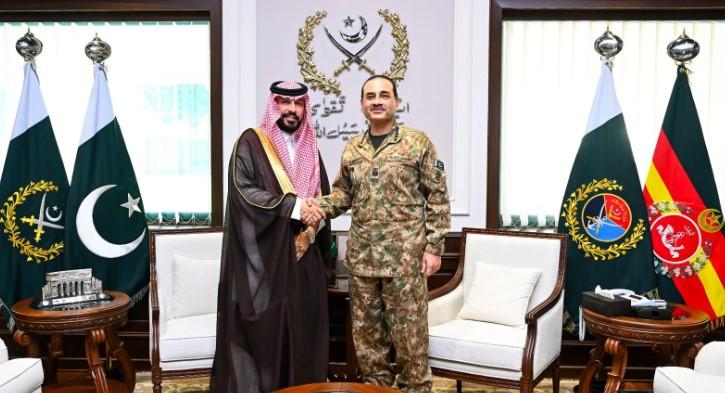
Field Marshal, Saudi envoy discuss regional security dynamics
- a day ago
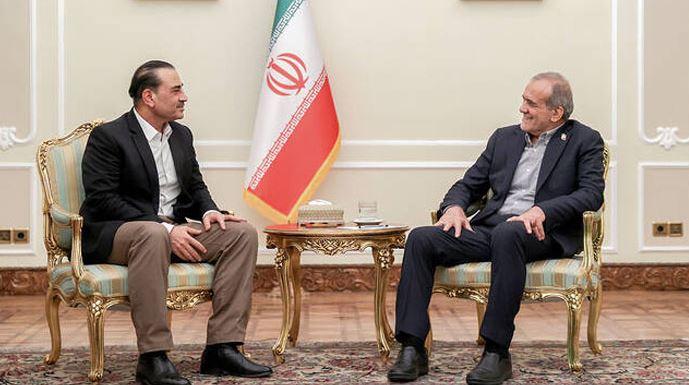
CDF Munir arrives in Tehran for talks with senior Iranian officials
- 6 hours ago
You May Like



Trending