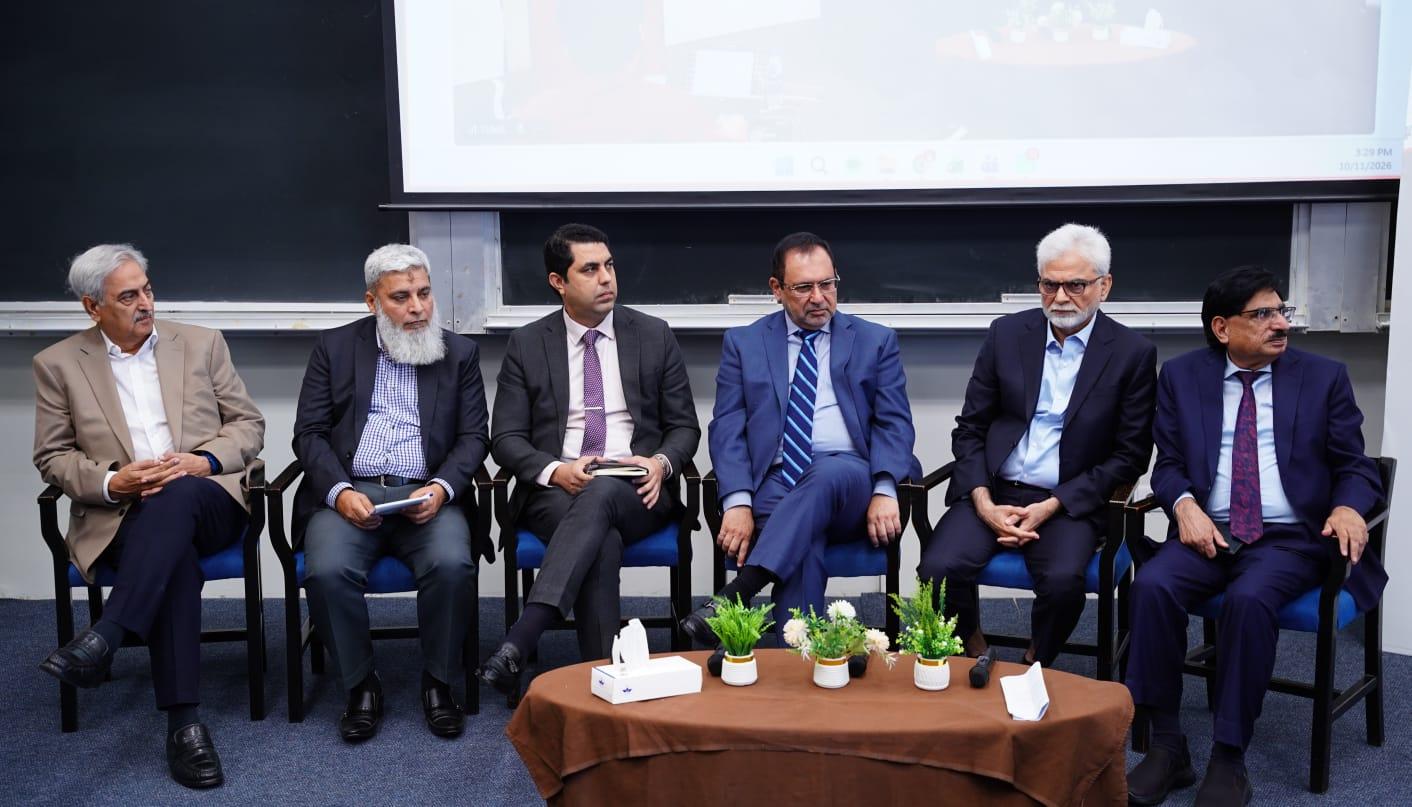
Much like migratory birds and retirees, college students are flocking to the South come September. Big state schools with large football programs and robust Greek life, like the University of Alabama or the University of Mississippi, have seen an influx of st…

Published a year ago on Sep 9th 2025, 7:00 am
By Web Desk

Much like migratory birds and retirees, college students are flocking to the South come September. Big state schools with large football programs and robust Greek life, like the University of Alabama or the University of Mississippi, have seen an influx of students from the North; the number of students who left the North to go South for school increased 30 percent between 2018 and 2022.
There are lots of reasons for this change. It could be the fun campus experience, or that Southern campuses relaxed Covid restrictions before their northern counterparts. It could be a change of scenery. It could be that students are getting more bang for their buck at a time when college tuition is at an all-time high. But whether it’s #RushTok or less student loan debt, students are embracing life South of the Mason-Dixon line.
According to Bloomberg senior reporter Amanda Mull, this is just one symptom of a larger embrace of Southern culture. She unpacks those changes on this week’s episode of Explain It to Me, Vox’s weekly call-in podcast.
Below is an excerpt of our conversation with Mull, edited for length and clarity. You can listen to the full episode on Apple Podcasts, Spotify, or wherever you get podcasts. If you’d like to submit a question, send an email to askvox@vox.com or call 1-800-618-8545.
Over time, the South has grown in the American imagination. What first made that possible?
In the 1960s, you see the simultaneous occurrence of political evolution, logistical evolution, and technological evolution.
The political aspect is of course the civil rights movement and the Civil Rights Act, which changed the political possibilities for lots of people in the South. It started to change how the rest of the country viewed the south.
Then you also have the practical shift, which is air conditioning. So in 1956, you get the advent of the American highway program, which built interstates that connected places and parts of the country that were previously difficult to travel between. The South was industrially underdeveloped relative to the Northeast and the Midwest. So the advent of the highway system made it a lot easier for the South to interact commercially with the rest of the country, and made it a lot easier for the South to interact commercially with itself at the end of Jim Crow.
The advent of air conditioning made it possible for lots of different types of businesses to think about the South as a possible location, and made it possible for more people to think about the South as a place they might want to live. This change across time has led us to where we are now, where the population of the South has been growing for decades and is still growing.
Southern states started offering advantages to businesses. What are those advantages, and how has that changed the culture there?
State governments started putting together incentive packages where they pitch themselves both to the business community at large and to specific employers. One way you can really see this happening is Southern states pitching themselves as a union-unfriendly alternative for car manufacturing. You see that especially attracting foreign car manufacturers. American manufacturers have less of a presence in the South, but they have, over the past several decades, moved car manufacturing there because employers saw it as an opportunity to avoid some of the shipping and tariff and logistical problems of cars overseas, but also avoiding paying the higher wages and offering the better working conditions of the Midwest and Northeast, which had been traditionally areas of car manufacturing.
The car business and the movie business are both great examples of how this similar playbook works across industries. Georgia and Louisiana have put together huge tax incentive packages to attract television and movie production. Netflix has a huge complex in Atlanta. A lot of Marvel movies over the past decade have been filmed in Georgia. They pitch themselves as locations where you have a lot of different outdoor landscapes that can stand in for a lot of different places. You have cities, mountains, coastline, and forests.
I want to get into the cultural impact. How has the South impacted mainstream American music?
The rise of Southern hip-hop and the subsequent rise of country music are two sides of the same coin. I don’t want to say that the embrace of country is entirely reactionary. But I do think that some of the interest in explicitly white Southern culture in the past few years is a reaction to the omnipresence of Black Southern creativity, especially in music.
When you look at someone like Morgan Wallen, who is enormously popular among listeners and has also been in the news for doing explicitly racist things, it’s hard to look at that and go, “Okay, this has to be at least part a reaction against Black dominance in music.”
But then you look at other artists who have a more explicitly progressive bent, like Kacey Musgraves and Brandi Carlile, who are sort of challengers to that. And then you also see Beyoncé with Cowboy Carter re-embracing her heritage as a Southerner and questioning some of the tropes and the aesthetics and the sounds of white Southern music. Of course, there’s no such thing as white Southern music. It’s very hard to look at the South and go, “Okay, this is white Southern culture and this is Black Southern culture,” because there are so many cultural overlaps over time.
How does this new embrace of the South make you feel as a Southerner?
I’m of two minds about it. I think that it’s good for Southerners of all stripes, of all races, of all backgrounds, if people look at the South more as a legitimate part of the country and less as a backwater where people are subhuman and inferior. But it’s also strange. It’s really uncanny to see people embrace the aesthetics of the South without contending with what the South is and what it has been and what it means. Because I think that most Southerners do that.
Being from the South requires you to interface with the region’s history in a way that the rest of the country gets to skip if they so choose. And so it’s weird to see people cosplaying as stereotypical Southerners when I know that a lot of them have not really thought about it.
I only bought Pokémon Legends: Z-A during Prime Day, and it’s still on sale
- 20 hours ago
National Assembly passes resolution endorsing federal govt's imposition of emergency, governor's rule in KP
- 10 hours ago

Two US cities could soon ban one of the world’s most controversial foods
- 18 hours ago

The liver transplant system tried to fix its sex bias. Did it work?
- 18 hours ago
Tim Cook says ‘I’m not meddling’ in the new Apple CEO’s business
- 20 hours ago

Gold prices decline after one day's increase in Pakistan
- 8 hours ago

Saudi-led coalition orders evacuation of Yemen oil facility in Sanaa ahead of operation
- a day ago
Hands-on with Amazon’s Alexa Tablet 12 Pro and its wild new matte display
- 20 hours ago

Anthropic launches free AI security scans for open-source projects
- 20 hours ago

Pakistan, Oman vow to expand bilateral cooperation in multiple fields
- 7 hours ago

Nobel Peace Prize winner Navi Pillay blasts Trump's 'unlawful' sanctions against ICC
- 5 hours ago

CDF Munir reaffirms resolve to strengthen Pakistan-Russia ties
- 5 hours ago
You May Like





Trending