Technology
- Home
- Technology
- News
Google to manufacture 600,000 Chromebooks annually in Pakistan: Shaza
Minister says Google has completed its registration in Pakistan and plans to open its office in country soon

Published a year ago on Nov 8th 2025, 4:48 pm
By Web Desk
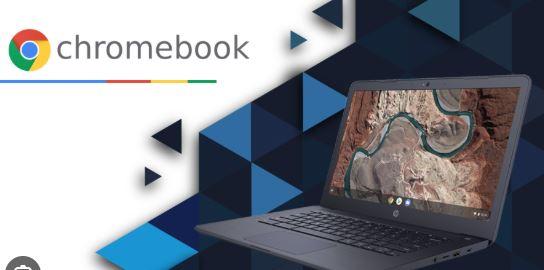
Islamabad (APP): Federal Minister for Information Technology and Telecommunication Shaza Fatima Khawaja on Saturday said that Google will manufacture approximately 600,000 Chromebooks each year in Pakistan, marking a major milestone for the country’s technology sector.
Speaking to the media, she said Google has completed its registration in Pakistan and plans to open its office in the country soon.
Highlighting recent developments under the leadership of the Prime Minister, she said that Pakistan’s engagement with leading global technology and social media companies has entered a new and productive phase.
Shaza Fatima revealed that Google, in collaboration with the Ministry of Defence Production and the National Radio & Telecommunication Corporation (NRTC), has begun Chromebook manufacturing in Haripur. Launched as a public-private partnership with a local company, the project is expected to give a significant boost to Pakistan’s IT manufacturing industry.
The minister said the initiative aimed to provide affordable, high-quality devices, particularly for students and the education sector.
“Such high-tech ventures reflect global companies’ growing confidence in Pakistan’s economy, while also promoting technology transfer, international best practices, and new job opportunities,” she added.
During her visit to the Haripur facility, Shaza Fatima said she was pleased to see around 600 young men and women employed there. “As production expands, the assembly line will be extended to create more jobs and enable Chromebook exports,” she said , highlighting the strong participation of women engineers in advancing Pakistan’s technology landscape.
The minister also said that the Ministry of IT has finalised a memorandum of understanding (MoU) with Google to provide tech training for youth, particularly girls, with a focus on artificial intelligence (AI).
“We plan to open AI labs in Pakistan in collaboration with Google, especially targeting secondary schools to integrate AI education into the curriculum,” she said.
The Ministry of Education and provincial authorities in Punjab, Sindh, Balochistan, and Khyber Pakhtunkhwa are actively supporting the initiative.
Shaza Fatima highlighted recent developments with Meta, noting that its regional team visited Pakistan last month to train federal and private sector media teams on misinformation and disinformation management. In a significant step for AI accessibility, Meta’s AI platform is now available in Urdu, allowing students and citizens across Pakistan to learn, experiment, and develop AI applications in their national language—placing Pakistan among the few countries globally to offer this feature.
On the social media front, she said TikTok has launched a dedicated STEM feed in Pakistan, providing free educational content in science, technology, engineering, and mathematics. The initiative offers students and underprivileged communities access to learning resources through a widely used platform.
“These partnerships with global tech leaders highlight the immense potential of our youth, who are not only hardworking but also innovative and entrepreneurial,” Shaza Fatima said, emphasising that initiatives like AI labs, Urdu-language platforms, and educational social media features aim to equip Pakistan’s next generation with skills for a tech-driven future.
She also highlighted Pakistan’s growing collaboration with Saudi Arabia in technology and AI, describing it as a major step toward accelerating economic growth and creating job opportunities.
Saudi Arabia’s GO Telecommunications Group, she said, has launched an Artificial Intelligence (AI) Hub in Pakistan, connecting local tech companies with Saudi firms. “Through this platform, Pakistani freelancers, small businesses, and micro-companies can provide technology services remotely to Saudi companies without needing a physical office in Saudi Arabia,” she explained. Saudi companies are also setting up offshoring offices in Pakistan, further generating employment and boosting exports.
Shaza Fatima appreciated the role of the Special Economic and Investment Facilitation Council (SEIFC), established in 2022, in streamlining bureaucratic processes and removing business bottlenecks.
Shaza Fatima appreciated the role of SEIFC, established in 2022, in simplifying bureaucratic processes for businesses.
She said these efforts are boosting Pakistan’s reputation in global technology markets and opening new opportunities for the country’s youth in the international tech ecosystem.
Pakistan pursuing investment, export-led growth: FinMin Aurangzeb
- 18 hours ago

Ukraine claims Starlink is suddenly disrupting service for its military
- 9 hours ago

Five terrorists killed in Washuk IBO, Balochistan: ISPR
- a day ago

Your flu shot can’t wait
- 7 hours ago

My AI doppelganger tells me what to eat
- 9 hours ago
The problem with the US surrogacy system
- 7 hours ago

Trump is taking his midterms anger out on Ukraine
- 7 hours ago

How Apple can win the smart home
- 9 hours ago
National Grid Company of Pakistan unveils new brand identity as “National Grid Pakistan”
- 20 hours ago

US military weighs use of ‘mother of all bombs’ in potential future strikes on Iran, CNN says
- a day ago
The Nothing Headphone A are half off for the first time
- 9 hours ago
Joint Session of Parliament ratifies emergency, governor’s rule in KP
- 21 hours ago
You May Like



Trending