Initial lab findings shows boosters after two doses of Sinovac will likely be needed to improve protection

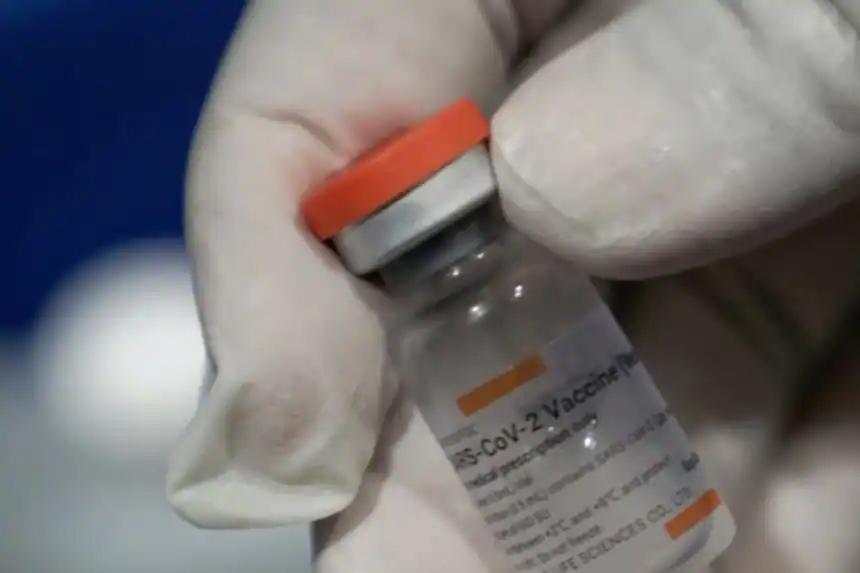
Hong Kong: The vaccine made by Sinovac Biotech Ltd., one of the most widely used in the world, doesn’t provide sufficient antibodies in two doses to neutralize the omicron variant and boosters will likely be needed to improve protection, initial lab findings showed.
According to the Bloomberg, While the first two studies to be released on the Chinese shot and omicron diverged on how much the vaccine’s immune response is degraded, they both indicated the standard two-dose course would not be enough, raising uncertainty over a shot relied on by millions of people in China and the developing world to protect against Covid-19.
Among a group of 25 people vaccinated with two Coronavac doses, none showed sufficient antibodies in their blood serum to neutralize the omicron variant, said a statement from a team of researchers at the University of Hong Kong released late Tuesday night.
The Beijing-based company then released its own findings on Wednesday, saying that seven of 20 people -- 35% -- who received two doses in its study showed sufficient antibodies to neutralize omicron.
The picture improved somewhat when a booster shot was added into the mix, with Sinovac’s lab results showing that among a group of 48 people who had received three doses, 45 of them, or 94%, had sufficient antibodies to neutralize omicron, the company said. It didn’t elaborate on details of its study or whether findings were going to be published in a scientific journal.
The study sizes were small and differences in the age and health profiles of the subjects potentially account for the differences in findings.
While much is still unknown about how Sinovac’s shot reacts to omicron -- including how T cells, the immune system’s weapon against virus-infected cells, will respond -- the initial results are a blow to those who have received the 2.3 billion doses of Coronavac shipped out, mostly in China and the developing world.
With omicron seen to be at least four times as transmissible as the delta variant in a Japan study, the prospect of having to accelerate booster campaigns or even re-vaccinate with a more omicron-specific shot will set back the world’s efforts to exit the pandemic.
Led by Kwok-Yung Yuen, the highly respected professor in infectious diseases, the study at the University of Hong Kong of 50 people has been accepted for publication in the medical journal Clinical Infectious Diseases and is available online as a pre-print.
It also looked at the other vaccine available in Hong Kong, the messenger RNA shot developed by Pfizer Inc. and BioNTech SE. Of 25 people who had received two doses of that vaccine, five had neutralizing ability against the new variant, the scientists said.
That’s in line with findings released last week by the companies, who said a third shot would be sufficient to protect against omicron.
The HKU team did not study people who had received three doses of the Sinovac vaccine.
If Sinovac is found in more conclusive studies to be ineffective against omicron, China, which has managed to insulate the vast majority of its people from Covid-19 with closed borders and strict containment measures, faces the biggest threat from the new variant, said experts.
The government has given out 2.6 billion homegrown shots -- many of them Coronavac -- to its population of 1.4 billion people, but now faces the prospect of having to develop new vaccines before it can shift away from its current isolationist stance.
Among other countries using Coronavac, previous infection waves would have conferred some natural immunity that will help ensure “no major impact” from omicron, said Benjamin Cowling, a professor of epidemiology at the University of Hong Kong.
But the populations in mainland China and Hong Kong have experienced no large-scale infection before, leaving them vulnerable.
“The Chinese authorities have worked hard to have a high vaccination rate across the country but the mutability of the virus means that the impact of those efforts has been significantly reduced,” said Nicholas Thomas, an associate professor at the City University of Hong Kong who has edited several books on foreign policy and public health.
“The two-fold challenge now facing China is how to ensure that their population is again protected from omicron and any future mutations, plus managing the flows of goods and people over their borders when the rest of the world is moving to live with the virus,” he said.
The country has detected two omicron cases so far in returning travelers, with one of them being discovered over two weeks after he entered China.
The Hong Kong University researchers advised members of the public to get a third vaccine dose as soon as possible, while awaiting the next generation of shots. Sinovac, meanwhile, is conducting more research to evaluate the impact of omicron on its vaccine, a company representative said.
Antibodies, which the researchers studied, are one important arm of the immune response that protect people from infection. The other arm of the immune response is cell mediated immunity -- known as T-cell response -- which can protect people from serious illness and death.
Source: Bloomberg

Is this the cure for Alzheimer’s?
- 2 days ago

Saudi-led coalition says destroyed more than 100 Houthi targets
- 2 days ago

What if making your neighborhood safer means breaking the rules?
- 2 days ago

Pakistan calls for immediate de-escalation of Ukraine conflict
- 2 days ago

Who are the violent Israeli settlers in the West Bank?
- a day ago

Xbox is launching a new film and TV division
- 2 days ago
PM Shehbaz calls for comprehensive strategy to combat diabetes
- 2 days ago
Anthropic bans ‘abusive or cruel behavior’ towards Claude
- 2 days ago

No one wants to be “Data Center Dave”
- 2 days ago
UPDATE: DITKA DEAD AT 86...
- a day ago

Disney Plus will stream Super Bowl LXI
- a day ago

President Zardari and PM Shehbaz 'agree' on imposition of emergency in KP: sources
- a day ago