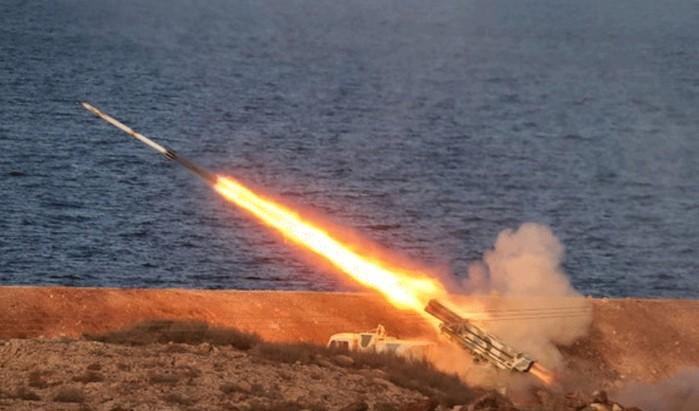
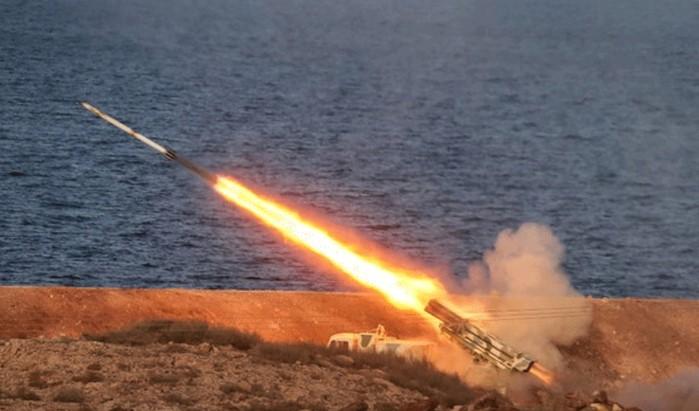
The missiles flew approximately 360 km (224 miles), reaching an altitude of 90 km and a maximum velocity of Mach 5

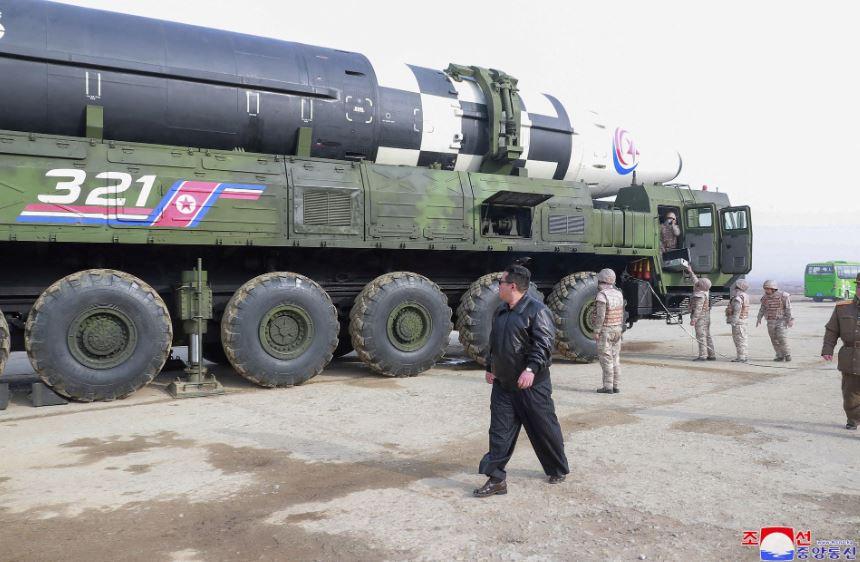
North Korea fired three ballistic missiles towards the sea off its east coast on Thursday, South Korea and Japan said, in its latest tests aimed at advancing its weapons programmes, even as it reported a COVID-19 outbreak for the first time.
Three short-range ballistic missiles were fired at around 18:30 (0930 GMT) from the Sunan area of North Korea's capital, Pyongyang, where an international airport is located and where it fired its largest intercontinental ballistic missile (ICBM), the Hwasong-17, on March 24, South Korea's Joint Chiefs of Staff (JCS) said.
The missiles flew approximately 360 km (224 miles), reaching an altitude of 90 km and a maximum velocity of Mach 5, the JCS said.
U.S. National Security Advisor Jake Sullivan and his South Korean counterpart Kim Sung-han spoke by phone and condemned the latest launch as a violation of U.N. bans, the White House said, but the U.S. military said it did not pose an immediate threat to America or its allies.
Sullivan and Kim also discussed U.S. President Joe Biden's upcoming visit to South Korea, the White House said. Biden is due to visit South Korea and Japan from May 20-24.
The latest launches come amid concerns that North Korea may be about to resume nuclear bomb testing suspended since 2017. U.S. and South Korean officials have said this could happen as early as this month.
Japanese Defence Minister Nobuo Kishi said the missiles flew about 350 km, to the maximum altitude of around 100 km, before landing outside Japan's territorial waters.
"A series of missile launches when the invasion of Ukraine is taking place is unacceptable," he told reporters, adding that Tokyo had lodged a protest against North Korea through its embassy in Beijing.
North Korea's 16th known weapons test this year came hours after it reported its first COVID-19 outbreak, declaring a "gravest national emergency" and ordering a national lockdown.
The launch was also the first since the inauguration this week of conservative South Korean President Yoon Suk-yeol, who has signalled a hard line against North Korea's weapons development.
Yoon's national security office said it "deplored the duplicitous conduct" of firing ballistic missiles and ignoring the plight of its people in the middle of a COVID outbreak.
But it said it would not link humanitarian aid to political differences and the new president's nominee as minister responsible for inter-Korean ties, told his confirmation hearing he would prepare humanitarian assistance for Pyongyang, including COVID treatment, syringes and other medical supplies.
Some analysts have suggested such aid could create an opening to restart stalled diplomacy with North Korea.
However, a spokesperson for the White House National Security Council said the United States has no current plans to share vaccines with North Korea and that Pyongyang had repeatedly refused vaccine donations from the COVAX global vaccine sharing project.
The spokesperson said that while Washington continued to support international efforts aimed at the provision of critical humanitarian aid to the most vulnerable North Koreans, North Korea "continues to exploit its own citizens and divert resources from the country’s people to build up its unlawful nuclear and ballistic weapons programs."
The official said Pyongyang had created significant barriers to the delivery of assistance by closing its borders and rejecting offers of international aid.
The United Nations said it was "monitoring with concern" reports of the COVID-19 outbreak in North Korea.
Deputy U.N. spokesperson Farhan Haq said the United Nations stood ready to help, although it had yet to receive any formal communications on the outbreak. He said that even before the global pandemic, North Korea had nearly 11 million people in need of humanitarian assistance.
"We reiterate our call to allow the entry of international staff, including the United Nations Resident Coordinator, and the unimpeded entry of humanitarian supplies, to allow for a timely and effective response," he said.
In condemning the latest launch, the U.S. State Department said it remained committed to a diplomatic approach with North Korea and reiterated a call for Pyongyang to return to dialogue.
North Korean leader Kim Jong Un vowed late last month to expedite the country's buildup of its nuclear arsenal amid stalled denuclearisation talks with the United States.
SOURCE: REUTERS

Colleges can do more to prevent sexual assault. Here’s where to start.
- a day ago
Saudi forces say intercepted two Houthi missiles targeting Yanbu, Taif
- 17 hours ago

FinMin Aurangzeb, WB discuss Pakistan's economic reform agenda
- a day ago

Pakistan rejects Khalilzad's allegations of arming Afghans
- 17 hours ago

Agha back but no Rizwan for Pakistan following England debacle
- 11 hours ago

JustWatch now streams TV shows and movies, too
- a day ago

Xbox Cloud Gaming’s pay-as-you-go option starts at $3.99 for 10 hours
- 19 hours ago

Trump is trying to overturn an election that hasn’t happened yet
- 2 hours ago
SpaceX will try catching Starship and its booster for first time, Musk says
- a day ago

How to ban gerrymandering when the Supreme Court is stacked against you
- a day ago

Should you let a chatbot manage your money?
- 2 hours ago

PM Shehbaz sets illustrative wheat price at Rs4,500 per 40kg for 2027
- a day ago