Foreign military forces had been in the country for two decades.

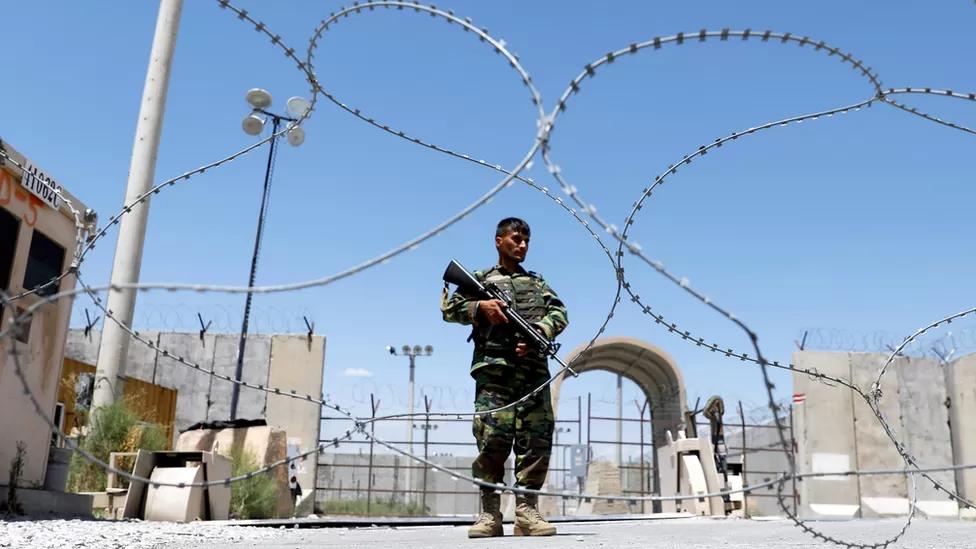
Afghanistan's Taliban government says it will turn some former foreign military bases into economic zones for businesses.
Afghanistan has faced a deepening economic and humanitarian crisis since the Taliban regained control of the country in August 2021.
Foreign military forces had been in the country for two decades.
The decision was announced by acting deputy prime minister for economic affairs Mullah Abdul Ghani Baradar.
"It was decided that the Ministry of Industry and Commerce should progressively take control of the remaining military bases of the foreign forces with the intention of converting them into special economic zones," Mullah Baradar said in a statement on Sunday.
He added that project will begin with sites in the capital of Kabul and the northern Balkh province but did not give further details.
"The Taliban desperately needs to boost its coffers if it is to govern better and attain some domestic legitimacy," Muhammad Faizal Bin Abdul Rahman from the S Rajaratnam School of International Studies in Singapore told the BBC.
"More importantly, the Taliban needs to prove its commitment to economic planning. This includes establishing safe zones near the capital and borders for potential foreign investors such as the Chinese... and to revive regional trade with neighbouring countries," he added.
Afghanistan is estimated to be sitting on natural resources - including natural gas, copper and rare earths - worth more than $1tn (£831.5bn).
However, much of those reserves remain untapped due to decades of turmoil in the country.
In August 2021, the last US military flight left Kabul airport, marking the end of a 20-year presence in Afghanistan and America's longest war.
The conflict has killed tens of thousands of people and displaced millions more.
Since the withdrawal of foreign military forces Afghanistan's finances have since been hit by a number of other major issues. Sanctions have been placed on members of the government, the central bank's overseas assets have been frozen, and most foreign aid - which previously supported its economy - has been suspended.
Earlier this year, the Taliban said it planned to sign a contract with a Chinese firm to drill for oil in northern Afghanistan.
The 25-year deal underscores China's economic involvement in the region.
Beijing has not formally recognised Afghanistan's Taliban administration but it has significant interests in the country, which is at the centre of a region important to China's Belt and Road Initiative.
Launched by Xi Jinping in 2013, the initiative provides financing for emerging countries to build infrastructure like ports, roads and bridges.
SOURCE: BBC

The Supreme Court just handed Republicans a surprisingly decisive midterm loss
- 15 hours ago

AI-assisted documentary tests cinema's boundaries at Venice Film Festival
- a day ago

How the iPhone Duo compares to other folding phones
- 17 hours ago

Gaza film, Malkovich drama vie for Venice top prize
- 6 hours ago
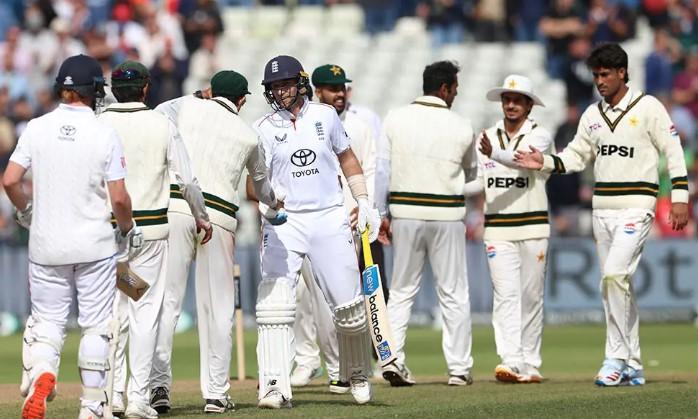
Root takes charge, guiding England to series whitewash over Pakistan
- 4 hours ago

New York marks 25th anniversary of 9/11 attacks
- a day ago

Pakistan condemns drone attacks on KSA’s East-West Pipeline
- 6 hours ago

CJP emphasises district judiciary’s role in building public confidence
- 7 hours ago

Quaid-e-Azam Muhammad Ali Jinnah’s death anniversary observed
- a day ago

Ashrafi receives ‘The Hubert Walter Award for Reconciliation and Interfaith Cooperation 2026’
- 7 hours ago

Australia Mosque in Lahore marks 100 years of Australia–Pakistan connections
- a day ago

The one problem Trump can’t afford
- 15 hours ago