Planned Parenthood has a risky plan to bring abortions back to Wisconsin

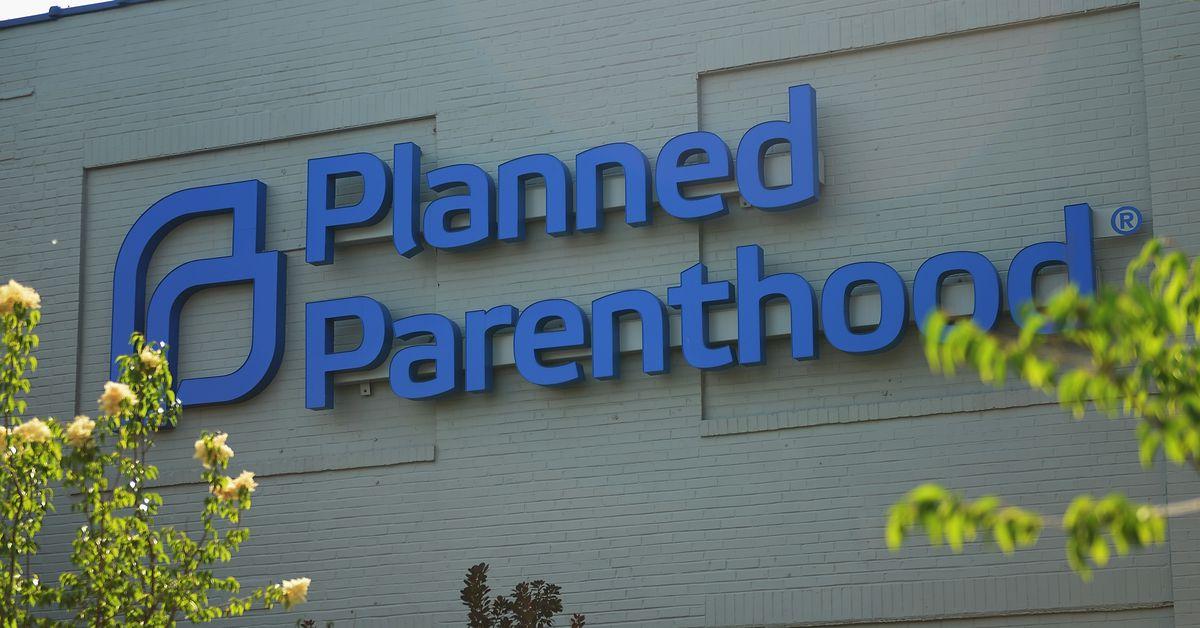
Planned Parenthood made a somewhat surprising announcement on Thursday: It will resume providing abortion care in Wisconsin, even though litigation asking whether abortion is legal in that state has not yet concluded — and no court has yet issued an injunction prohibiting state officials from prosecuting doctors who perform abortions.
Abortions have not been freely available in Wisconsin since the Supreme Court overruled Roe v. Wade more than a year ago — though last July, a Wisconsin state judge did rule that a 174-old state law, which appears to ban abortions throughout the state, does not in fact do so. But that order, in a case called Kaul v. Urmanski, concerned a prosecutor’s attempt to dismiss the lawsuit. The Kaul lawsuit has not yet reached the stage where the judge hands down a legally binding order prohibiting this prosecutor from actually targeting abortion providers.
Significantly, the 1849 statute at issue in the Kaul case makes it a felony for “any person, other than the mother” who “destroys the life of an unborn child.” So, the law cannot plausibly be read to target patients who receive abortions. Planned Parenthood says that it intends to start offering abortions in Wisconsin on Monday, and patients who take advantage of these services should be immune from prosecution under the 1849 law.
Wisconsin abortion providers, however — at least prior to Planned Parenthood’s decision — quite reasonably feared that they could be prosecuted under the 1849 law, although there are strong arguments that this very old ban on abortions was limited or repealed by a later statute.
Planned Parenthood’s announcement also comes about six weeks after Democrats effectively gained control of the state supreme court, which was controlled by conservative Republicans for many years. Justice Janet Protasiewicz, the newest member of that court, campaigned on support for abortion rights, as well as on opposition to a gerrymander that’s given Republicans virtually unbreakable control over the state legislature. And she won her race in a landslide.
Additionally, several Republican lawmakers appear to be backing away from a threat to impeach Protasiewicz — an impeachment that would most likely violate the federal Constitution — in order to prevent her from striking down the state’s gerrymandered maps.
So, while abortion providers cannot yet be certain that it is legal to perform an abortion in Wisconsin, the combination of the July court order, the new state supreme court majority, and the diminished threat of impeachment all suggest that it is very likely that abortion will soon be declared legal in Wisconsin.
So is abortion illegal in Wisconsin or not?
Read in isolation, the 1849 law appears to ban abortion. That statute provides that “any person, other than the mother, who intentionally destroys the life of an unborn child may be fined not more than $5,000 or imprisoned not more than 3 years or both.” A separate provision applies a stricter 15-year penalty to anyone who “intentionally destroys the life of an unborn quick child” (“quick” refers to the point when a fetus begins to move inside the uterus).
In 1985, however, the Wisconsin legislature enacted a different law, which only criminalizes abortion after a fetus is “viable,” meaning that a physician has determined that “there is a reasonable likelihood of sustained survival of the fetus outside the womb” — something that occurs roughly 23 to 25 weeks into a pregnancy. The 1985 law arguably displaces the 1849 law, replacing a total ban on abortion with a new regime permitting abortion up to the point of fetal viability.
Nevertheless, the 1849 law has never been explicitly repealed.
In State v. Black (1994), the state supreme court seemed to resolve this tension between the older and newer laws by construing the older law to apply only to “feticide,” a violent act performed “presumably without the consent of the mother,” and not to “consensual abortions.”
The facts of the Black case are truly horrific. A husband assaulted his pregnant wife five days before her expected delivery date, killing their soon-to-be-born child in the process. The husband then argued that, if he could be prosecuted under the 1849 law, that law could also “be used against a woman or her physician (in the context of performing an abortion).”
In rejecting this argument, the court read the 1849 law narrowly. This older law, the state supreme court ruled, “is not an abortion statute” and it only “proscribes the intentional criminal act of feticide: the intentional destruction of an unborn quick child presumably without the consent of the mother.” Meanwhile, the newer 1985 law governed “consensual abortions.”
Judge Diane Schlipper, a state trial judge, relied heavily on Black in her July order in the Kaul lawsuit, which concluded that the 1849 law “does not prohibit a consensual medical abortion.”
So, while there’s not yet any certainty that Schlipper’s decision will be upheld on appeal — and Schlipper has not yet issued a formal injunction preventing prosecutors from targeting abortion providers — Planned Parenthood is probably not endangering its physicians by resuming abortion care in Wisconsin.
Before Protasiewicz took her seat, there was a very real danger that the state supreme court’s right-wing majority would overrule or ignore Black. But that danger appears to have passed now that Democrats have an effective 4-3 majority on the state supreme court.
Still, Planned Parenthood’s decision to resume abortion care as soon as Monday is quite bold, because it comes before they can be absolutely certain how the Kaul lawsuit will play out.

OpenAI now trains its frontier AI models with no internet access
- 2 hours ago

Jack Dorsey’s Block made an AI model that talks to you like an awkward new friend
- 2 hours ago
Microsoft shuts down its beloved maker space
- 2 hours ago

Apple will label apps that are ‘Made for iPhone Duo’
- 2 hours ago

Trump is trying to overturn an election that hasn’t happened yet
- 9 hours ago

Samsung’s latest 55-inch Frame TV is down to its lowest price yet
- 2 hours ago

PHP: The three little letters wreaking havoc across the web
- 2 hours ago

Should you let a chatbot manage your money?
- 9 hours ago

Delta can turn the iPhone Duo into your favorite folding handheld
- 2 hours ago

Agha back but no Rizwan for Pakistan following England debacle
- 18 hours ago

Trump says Sundar Pichai talked him out of renaming the Atlantic Ocean
- 2 hours ago

Sure, let’s smoosh SpaceX and Tesla together, who cares
- 2 hours ago