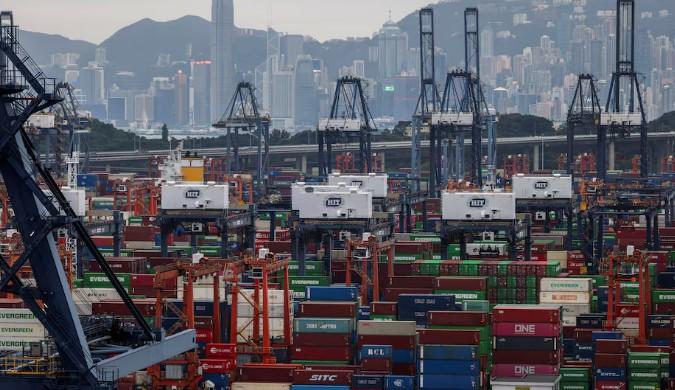
China's stimulus plans also failed to inspire investor confidence

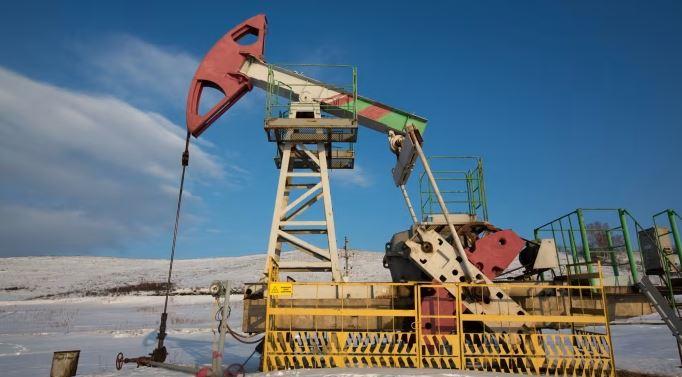
Houston (Reuters): Oil prices declined more than 2% on Monday, wiping out all of last week's gains, as OPEC lowered its 2024 and 2025 global oil demand growth view again while China's oil imports fell for a fifth month in a row.
China's stimulus plans also failed to inspire investor confidence while markets continued to watch for potential Israeli attacks on Iranian oil infrastructure.
Brent crude futures were down $1.72, or 2.2%, at $77.34 per barrel by 12:18 p.m. ET (1618 GMT), while U.S. West Texas Intermediate crude futures fell $1.72, or 2.28%, to $73.82 per barrel. Brent gained 99 cents last week, while WTI climbed $1.18.
OPEC on Monday cut its forecast for global oil demand growth in 2024 and also lowered its projection for next year, marking the producer group's third consecutive downward revision.
China, the world's largest crude oil importer, accounted for the bulk of the 2024 downgrade as OPEC trimmed its growth forecast for the country to 580,000 barrels per day (bpd) from 650,000 bpd.
China's crude imports for the first nine months of the year fell nearly 3% from last year to 10.99 million bpd, data showed.
Declining Chinese oil demand caused by the growing adoption of electric vehicles (EV), as well as slowing economic growth following the COVID-19 pandemic, has been a drag on global oil consumption and prices.
China's deflationary pressures also worsened in September, according to official data released on Saturday. A press conference the same day left investors guessing about the overall size of a stimulus package to revive the fortunes of the world's second-largest economy.
BP warned Friday that its third-quarter profit will take a hit of up to $600 million.
"The lack of a clear timeline and the absence of measures to address structural issues, such as weak consumption and reliance on infrastructure investments, have only increased ambiguity amongst market participants," noted Mukesh Sahdev, the global head of commodity markets-oil at Rystad Energy.
The negative news from China outweighed market concerns over the lingering possibility that an Israeli response to Iran's Oct. 1 missile attack could disrupt oil production.
The U.S. said on Sunday it would send troops to Israel along with an advanced anti-missile system in a highly unusual deployment meant to bolster the country's air defenses.
"While an attack by Israel into Iran is likely to happen, the latest reinforcing measures by the US military may have calmed the responses on both sides," said Dennis Kissler, senior vice president of trading at BOK Financial.
"A nervous trade will remain with most fund managers remaining on the sidelines," Kissler said.
Washington has been privately urging Israel to calibrate its response to avoid triggering a broader war in the Middle East, officials say, withPresident Joe Biden publicly voicing his opposition to an Israeli attack on Iran's nuclear sites and his concerns about a strike on Iran's energy infrastructure.
The dollar also hit a nine-week high on Monday in thin trading. A firmer U.S. currency can hurt demand for dollar-denominated oil from buyers using other currencies.

Trump’s revenge campaign comes for Ilhan Omar
- 3 days ago

West Bank settlers brutally attack a Washington Post journalist
- 2 days ago

Musk says will give SpaceX share to 'every kid in America'
- 18 hours ago

Florida’s uniquely horrifying death penalty system
- 3 days ago

Communism in China and the changing world: from capitalist critique to socialism with Chinese characteristics
- 19 hours ago

FIA offloads 2 passengers at Lahore airport over fake documents, tampered study visa
- 2 days ago

Hands-on with the Apple Home Collection
- 3 days ago

Field Marshal, Saudi envoy discuss regional security dynamics
- 16 hours ago

Army officer martyred, four terrorists killed in Balochistan operations: ISPR
- 18 hours ago

Buying Apple’s wall-mounted HomeView? The mount costs extra
- 3 days ago

Bollywood actor Tiger Shroff shot at in Mumbai, three suspects held: police
- 19 hours ago

Security of Haramain al-Sharifain non-negotiable: DG ISPR
- 20 hours ago