The Supreme Court’s birthright citizenship decision isn’t as devastating as you think
On Friday, the Supreme Court released its long-awaited decision in Trump v. CASA, a case challenging President Donald Trump’s attempt to strip many Americans of citizenship. The Court handed Trump a narrow victory along party lines, with all six Republicans i…

Published ایک سال قبل on جون 29 2025، 7:00 صبح
By Web Desk
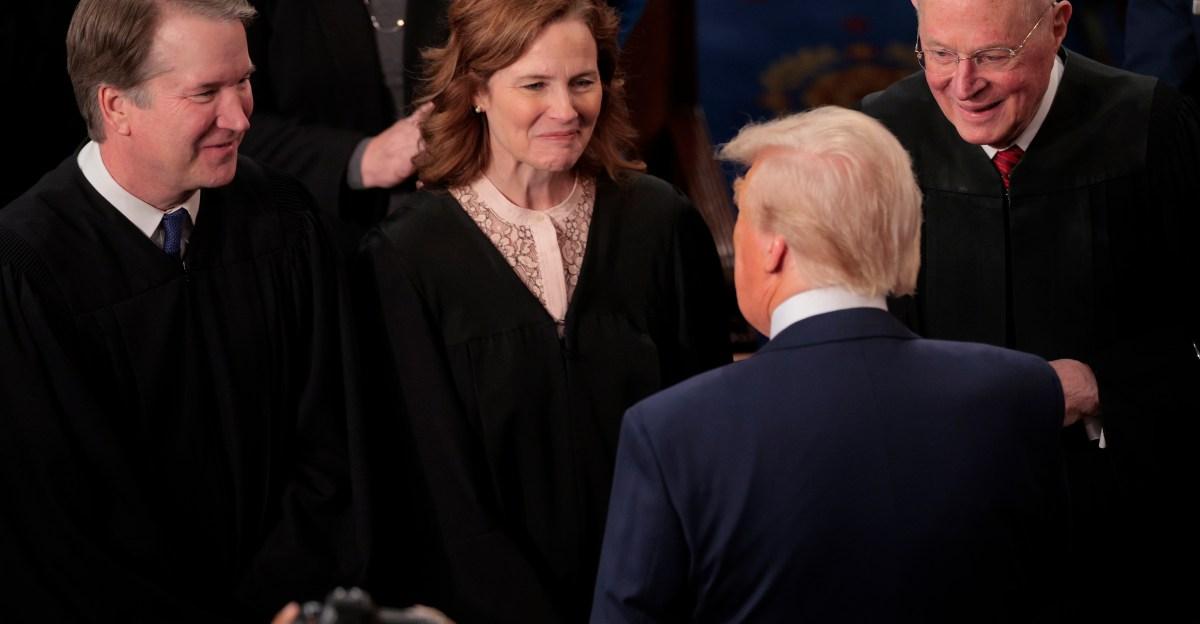
On Friday, the Supreme Court released its long-awaited decision in Trump v. CASA, a case challenging President Donald Trump’s attempt to strip many Americans of citizenship. The Court handed Trump a narrow victory along party lines, with all six Republicans in the majority and all three Democrats dissenting.
The 14th Amendment provides that “all persons born or naturalized in the United States” are citizens, with one narrow exception that does not arise in CASA, so Trump’s executive order trying to strip many babies born in the US of their citizenship is clearly and unambiguously unconstitutional. Multiple lower courts have all reached this same conclusion.
There are three important takeaways from the CASA opinion:
1) It’s not actually about birthright citizenship
The specific issue was whether all the lower courts that struck down the Trump anti-citizenship order may issue a “nationwide injunction,” which would block that order everywhere in the country, or whether they must issue a more narrow injunction that only blocked it in certain states, or for certain families.
Justice Amy Coney Barrett’s majority opinion concludes that a nationwide injunction is not allowed…sort of. Much of the opinion is about why nationwide injunctions should be impermissible, but a key section suggests that, in this case, one might actually be okay.
Specifically, Barrett says that courts may issue injunctions that are broad enough to ensure that a victorious plaintiff receives “complete relief.” This matters because several of the plaintiffs in this case are blue states that object to Trump’s attempt to cancel many Americans’ citizenship. And they argued that it would be unworkable if birthright citizenship was the rule in some states, but not others.
As Barrett summarizes their arguments, “children often move across state lines or are born outside their parents’ State of residence.” Thus, a “‘patchwork injunction’ would prove unworkable, because it would require [the states] to track and verify the immigration status of the parents of every child, along with the birth State of every child for whom they provide certain federally funded benefits.”
In any event, Barrett does not ultimately say whether she finds this argument persuasive, instead concluding that “the lower courts should determine whether a narrower injunction is appropriate” in future proceedings. So the holding of CASA seems to be that universal injunctions should be rare, but they are permissible in some cases, including, possibly, this case.
2) The arguments against universal injunctions are serious
During the Biden administration, MAGA-aligned federal judges in Texas routinely handed down nationwide injunctions on highly dubious grounds. Indeed, this practice so frustrated Biden’s Justice Department that, even after Trump won the 2024 election, Biden’s solicitor general, Elizabeth Prelogar, filed a brief asking the justices to limit their use.
The best argument against these broad orders is that they place too much power in individual judges, and in plaintiffs who can often shape which judge hears their case. As Justice Neil Gorsuch wrote in a 2020 opinion, “there are currently more than 1,000 active and senior district court judges.”In a world with nationwide injunctions, plaintiffs can shop around for the one judge in America who is most likely to be sympathetic to their cause, and potentially secure a court order that no other judge would hand down.
The most immediate beneficiary of Friday’s decision is Trump, who will now get some relief from nationwide injunctions. And it’s notable that the Republican-controlled Supreme Court waited until a Republican was in the White House before cracking down. Nevertheless, the decision in CASA should also benefit future Democratic administrations, assuming that the GOP-controlled Court applies it fairly to presidents of both parties.
3) This decision does not mean that Trump will succeed in killing birthright citizenship
As mentioned above, Barrett leaves the door open to a nationwide injunction in this very case. She also suggests that opponents of Trump’s anti-citizenship order can bring a class action and obtain relief very similar to a nationwide injunction, although plaintiffs seeking to bring class actions must clear additional procedural bars.
The Court, in other words, resolved very little. It appears that nationwide injunctions are still allowed, at least some of the time. And they might even be allowed in this very case.

Boys Noize turns to the club (and an obscure Italian synth) for inspiration on 7LLVSION
- 13 hours ago

Listen to this: Armand Hammer’s Snakes & Ladders
- a day ago

How Uruguay built a national care system from the ground up
- a day ago

FBI, US Agriculture Department breached by hackers: reports
- a day ago

Teachers are reeling from an existential crisis. You’re probably feeling it too.
- a day ago

Pakistan-Indonesia joint exercise 'Elang Strike-III' concludes at Pabbi
- a day ago

EU proposes tax on Big Tech to boost budget
- a day ago

Zelensky reaffirms Ukraine's wish to join NATO
- a day ago

Canva adds an AI ‘off’ button
- 2 days ago
COLTS release QB Daniel Jones...
- 21 hours ago

Satya Nadella says he’s AGI-pilled now
- a day ago

PCB announces central contracts for 38 men's cricketers with key players absent
- a day ago
You May Like




Trending