MLB's 11-man competition committee on Tuesday approved use of the Automated Ball/Strike System in the major leagues in 2026.

Published a year ago on Sep 26th 2025, 6:00 am
By Web Desk
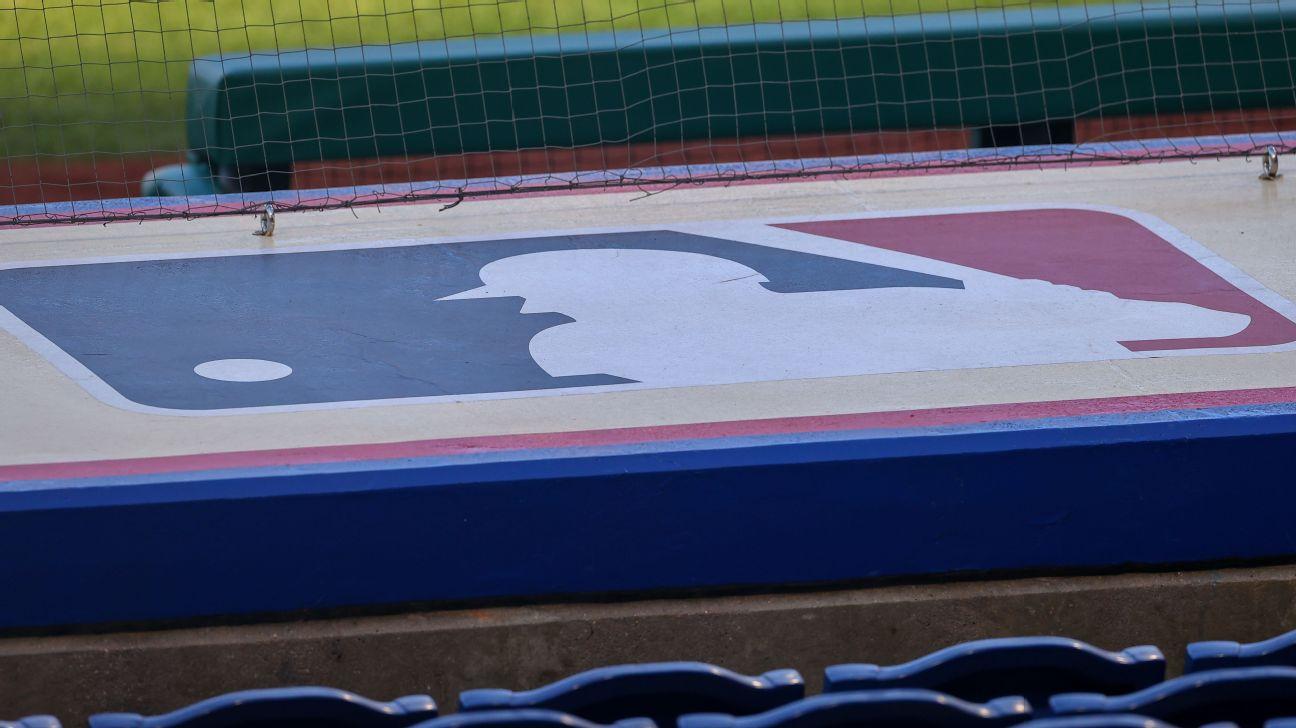
Major League Baseball will implement a challenge system for balls and strikes in the 2026 season after the league's competition committee voted Tuesday to usher in the era of robot umpiring.
Following years of testing in the minor leagues, as well as during spring training and at this year's All-Star Game, MLB forged ahead with a system that will give teams two challenges per game.
Hitters, pitchers and catchers will be the only ones allowed to trigger the system by tapping their head, and if a challenge is successful -- the pitch will be shown on in-stadium videoboards -- teams will retain it.
While the vote in favor of the automated ball-strike challenge system was not unanimous -- some of the four players on the 11-man committee voted no, according to sources -- the vote was a fait accompli, with MLB owners all in favor and in possession of a six-seat majority on the committee.
"I commend the Joint Competition Committee for striking the right balance of preserving the integral role of the umpire in the game with the ability to correct a missed call in a high-leverage situation, all while preserving the pace and rhythm of the game," commissioner Rob Manfred said Tuesday in a statement.
The ABS system uses similar technology to the line-calling system in tennis, with 12 cameras in each ballpark tracking the ball with a margin of error around one-sixth of an inch. The ABS zone will be a two-dimensional plane in the middle of the plate that spans its full width (17 inches). The zone's top will be 53.5% of a player's height and the bottom 27%.
Teams that run out of challenges over the first nine innings will be granted an extra challenge in the 10th inning, while those that still have unused challenges will simply carry them into extras. If a team runs out of challenges in the 10th, it will automatically receive another in the 11th -- a rule that extends for any extra inning.
During the league's spring training test this season, teams combined to average around four challenges per game and succeeded 52.2% of the time, according to the league. Catchers, whose value in framing pitches outside the zone to look like strikes could take a hit due to the new rule, were the most successful at a 56% overturn rate, while hitters were correct 50% of the time and pitchers 41%.
MLB's minor league testing, which started in 2021, led to Triple-A players in 2023 using ABS challenge three days a week and a full ABS system, with every pitch adjudicated by computer, the other three.
Support among league executives grew around the challenge system as the more palatable of the two options for fans, allowing for umpires still to play a role in balls and strikes but to have a backup system in case of blown calls in integral moments.
Adding the robot umps is likely to cut down on ejections. MLB said 61.5% of ejections among players, managers and coaches last year were related to balls and strikes, as were 60.3% this season through Sunday. The figures include ejections for derogatory comments, throwing equipment while protesting calls and inappropriate conduct.
Big league umpires call roughly 94% of pitches correctly, according to UmpScorecards.
Management officials on the competition committee include Seattle chairman John Stanton, St. Louis CEO Bill DeWitt Jr., San Francisco chairman Greg Johnson, Colorado CEO Dick Monfort, Toronto CEO Mark Shapiro and Boston chairman Tom Werner.
Players include Arizona's Corbin Burnes and Zac Gallen, Seattle's Cal Raleigh and the New York Yankees' Austin Slater, with the Chicago Cubs' Ian Happ and Detroit's Casey Mize as alternates. The union representatives make their decisions based on input from players on the 30 teams.
Bill Miller is the umpire representative.
The Associated Press contributed to this report.
Following years of testing in the minor leagues, as well as during spring training and at this year's All-Star Game, MLB forged ahead with a system that will give teams two challenges per game.
Hitters, pitchers and catchers will be the only ones allowed to trigger the system by tapping their head, and if a challenge is successful -- the pitch will be shown on in-stadium videoboards -- teams will retain it.
While the vote in favor of the automated ball-strike challenge system was not unanimous -- some of the four players on the 11-man committee voted no, according to sources -- the vote was a fait accompli, with MLB owners all in favor and in possession of a six-seat majority on the committee.
"I commend the Joint Competition Committee for striking the right balance of preserving the integral role of the umpire in the game with the ability to correct a missed call in a high-leverage situation, all while preserving the pace and rhythm of the game," commissioner Rob Manfred said Tuesday in a statement.
The ABS system uses similar technology to the line-calling system in tennis, with 12 cameras in each ballpark tracking the ball with a margin of error around one-sixth of an inch. The ABS zone will be a two-dimensional plane in the middle of the plate that spans its full width (17 inches). The zone's top will be 53.5% of a player's height and the bottom 27%.
Teams that run out of challenges over the first nine innings will be granted an extra challenge in the 10th inning, while those that still have unused challenges will simply carry them into extras. If a team runs out of challenges in the 10th, it will automatically receive another in the 11th -- a rule that extends for any extra inning.
During the league's spring training test this season, teams combined to average around four challenges per game and succeeded 52.2% of the time, according to the league. Catchers, whose value in framing pitches outside the zone to look like strikes could take a hit due to the new rule, were the most successful at a 56% overturn rate, while hitters were correct 50% of the time and pitchers 41%.
MLB's minor league testing, which started in 2021, led to Triple-A players in 2023 using ABS challenge three days a week and a full ABS system, with every pitch adjudicated by computer, the other three.
Support among league executives grew around the challenge system as the more palatable of the two options for fans, allowing for umpires still to play a role in balls and strikes but to have a backup system in case of blown calls in integral moments.
Adding the robot umps is likely to cut down on ejections. MLB said 61.5% of ejections among players, managers and coaches last year were related to balls and strikes, as were 60.3% this season through Sunday. The figures include ejections for derogatory comments, throwing equipment while protesting calls and inappropriate conduct.
Big league umpires call roughly 94% of pitches correctly, according to UmpScorecards.
Management officials on the competition committee include Seattle chairman John Stanton, St. Louis CEO Bill DeWitt Jr., San Francisco chairman Greg Johnson, Colorado CEO Dick Monfort, Toronto CEO Mark Shapiro and Boston chairman Tom Werner.
Players include Arizona's Corbin Burnes and Zac Gallen, Seattle's Cal Raleigh and the New York Yankees' Austin Slater, with the Chicago Cubs' Ian Happ and Detroit's Casey Mize as alternates. The union representatives make their decisions based on input from players on the 30 teams.
Bill Miller is the umpire representative.
The Associated Press contributed to this report.
National Assembly passes resolution endorsing federal govt's imposition of emergency, governor's rule in KP
- 17 hours ago
The liver transplant system tried to fix its sex bias. Did it work?
- a day ago

K-pop star Sunmi loves Notion and ear cleaning videos
- 3 hours ago

Gold prices decline after one day's increase in Pakistan
- 16 hours ago
Microsoft 365 Family subscribers will finally be able to share AI benefits
- 3 hours ago

The rise and fall of a MAGA princess
- an hour ago
Nobel Peace Prize winner Navi Pillay blasts Trump's 'unlawful' sanctions against ICC
- 12 hours ago
CDF Munir reaffirms resolve to strengthen Pakistan-Russia ties
- 12 hours ago
The Supreme Court may be about to make America’s prisons much crueler
- an hour ago
Two US cities could soon ban one of the world’s most controversial foods
- a day ago
‘Pure insanity’: Mathematicians will need years to make sense of OpenAI’s latest drop
- 3 hours ago
Pakistan, Oman vow to expand bilateral cooperation in multiple fields
- 14 hours ago
You May Like
Trending