
This story was originally published by the Guardian and is reproduced here as part of the Climate Desk collaboration. Changes in polar bear DNA that could help the animals adapt to warmer climates have been detected by researchers in a study thought to be the…

Published 10 months ago on Dec 20th 2025, 7:00 am
By Web Desk
This story was originally published by the Guardian and is reproduced here as part of the Climate Desk collaboration.
Changes in polar bear DNA that could help the animals adapt to warmer climates have been detected by researchers in a study thought to be the first time a statistically significant link has been found between rising temperatures and changing DNA in a wild mammal species.
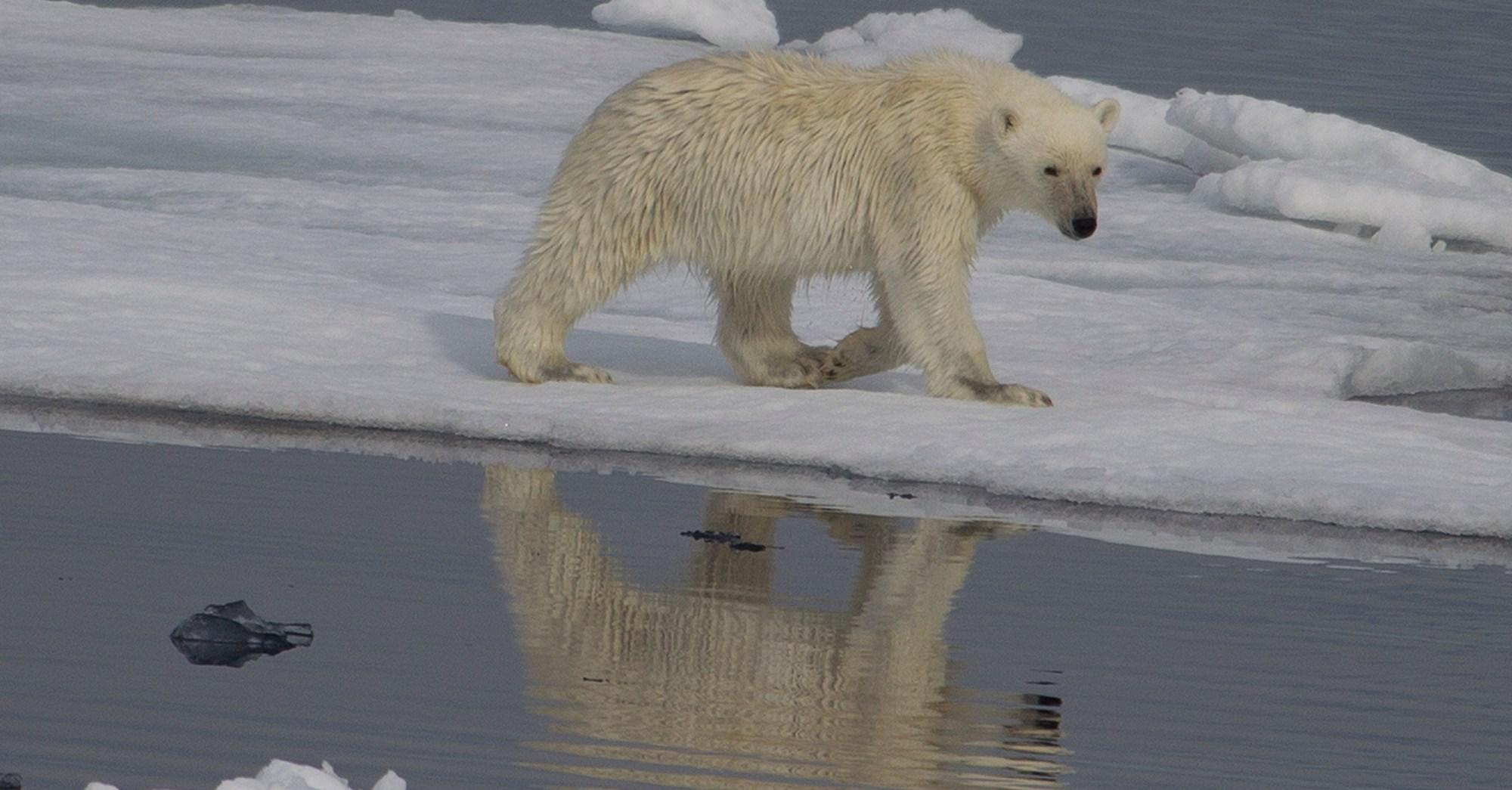
Climate breakdown is threatening the survival of polar bears. Two-thirds of them are expected to disappear by 2050 as their icy habitat melts and the weather becomes hotter.
Now, scientists at the University of East Anglia have found that some genes related to heat stress, aging, and metabolism are behaving differently in polar bears living in southeast Greenland, suggesting they may be adjusting to warmer conditions.
The researchers analysed blood samples taken from polar bears in two regions of Greenland and compared “jumping genes” — small, mobile pieces of the genome that can influence how other genes work. Scientists looked at the genes in relation to temperatures in the two regions and at the associated changes in gene expression.
“DNA is the instruction book inside every cell, guiding how an organism grows and develops,” said lead researcher Alice Godden. “By comparing these bears’ active genes to local climate data, we found that rising temperatures appear to be driving a dramatic increase in the activity of jumping genes within the southeast Greenland bears’ DNA.”
[Image: Skjoldungen Fjord on the southeast coast of Greenland. The region has been experiencing glacier melt with higher intensity and extent over the last decades due to atmospheric warming. https://platform.vox.com/wp-content/uploads/sites/2/2025/12/GettyImages-2239134117.jpg?quality=90&strip=all]
As local climates and diets evolve as a result of changes in habitat and prey forced by global heating, the genetics of the bears appear to be adapting, with the group of bears in the warmest part of the country showing more changes than the communities farther north. The authors of the study have said these changes could help us understand how polar bears might survive in a warming world, inform understanding of which populations are most at risk, and guide future conservation efforts.
This is because the findings, published on Friday in the journal Mobile DNA, suggest the genes that are changing play a crucial role in how different polar bear populations are evolving.
“This finding is important because it shows, for the first time, that a unique group of polar bears in the warmest part of Greenland are using ‘jumping genes’ to rapidly rewrite their own DNA, which might be a desperate survival mechanism against melting sea ice,” Godden said.
Temperatures in northeast Greenland are colder and less variable, while in the southeast, there is a much warmer and less icy environment, with steep temperature fluctuations.
DNA sequences in animals change over time, but this process can be accelerated by environmental stress such as a rapidly heating climate.
There were some interesting DNA changes, such as in areas linked to fat processing, that could help polar bears survive when food is scarce. Bears in warmer regions had more rough, plant-based diets compared with the fatty, seal-based diets of northern bears, and the DNA of south-eastern bears seemed to be adapting to this.
Godden said, “We identified several genetic hotspots where these jumping genes were highly active, with some located in the protein-coding regions of the genome, suggesting that the bears are undergoing rapid, fundamental genetic changes as they adapt to their disappearing sea ice habitat.”
The next step will be to look at other polar bear populations, of which there are 20 around the world, to see if similar changes are happening to their DNA.
This research could help protect the bears from extinction. But the scientists said it was crucial to stop temperature rises accelerating by reducing the burning of fossil fuels.
“We cannot be complacent; this offers some hope but does not mean that polar bears are at any less risk of extinction,” Godden said. “We still need to be doing everything we can to reduce global carbon emissions and slow temperature increases.”

Here are all the new HomePod Mini 2 colors
- a day ago

Cold weather and high prices could flip the Senate
- 21 hours ago

Will November stop Trump’s agenda?
- 21 hours ago

Pakistan warns India against any misadventure: FO
- a day ago

Buying Apple’s wall-mounted HomeView? The mount costs extra
- 14 hours ago

Jodar apologises for swearing at ball kid in Shanghai
- a day ago

Trump’s revenge campaign comes for Ilhan Omar
- 21 hours ago

Character.AI files for bankruptcy
- a day ago

Florida’s uniquely horrifying death penalty system
- 21 hours ago

The Ocarina of Time remake feels remarkably modern — and surprisingly terrifying
- a day ago

Hands-on with the Apple Home Collection
- 14 hours ago

Indian police detain 'cockroach' movement founder Dipke ahead of protest
- a day ago
You May Like




Trending