With Allah's bessings, Pakistan defeated enemy many times larger in 'Marka-e-Haq: ISPR DG
The DG ISPR said that Pakistan had defeated an enemy five times larger in a multi-domain war

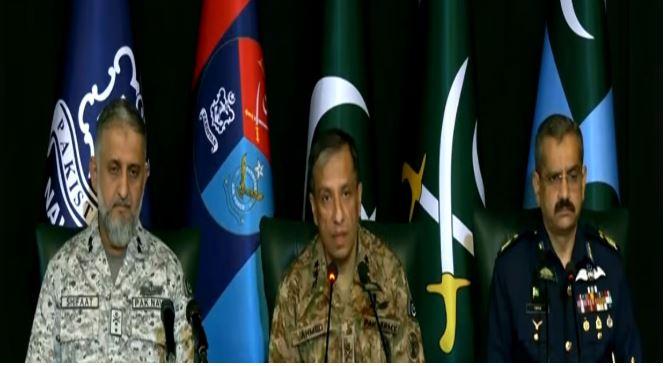
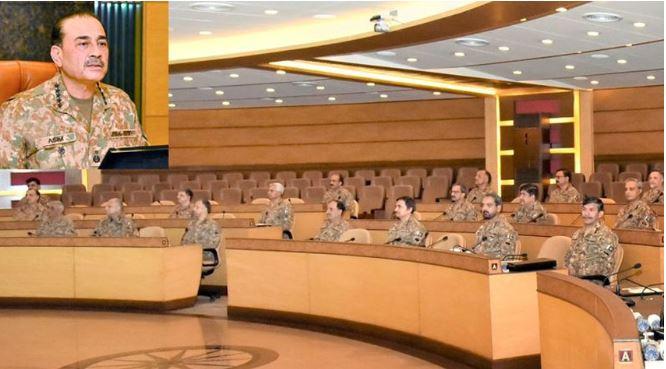
Rawalpindi: Lieutenant General Ahmed Sharif Chaudhry, Director General ISPR, has said that by the grace of Allah, Pakistan defeated an enemy many times larger than itself in the “Battle for Truth.”
Speaking at a press conference alongside officers of the Pakistan Air Force and Pakistan Navy on the completion of one year of the “Battle for Truth,” he said that, through Allah’s blessings and mercy, the armed forces fulfilled the expectations of the nation.
The DG ISPR said that Pakistan had defeated an enemy five times larger in a multi-domain war. He added that not only Pakistani children but even Indian children know this reality, although India refuses to acknowledge it.
He further stated that India had deceptively built a narrative accusing Pakistan of terrorism, while in reality India itself is involved in terrorist activities. According to him, the world is no longer willing to accept India’s fabricated claims without question.
He also remarked that one year had passed since the Pahalgam incident, yet the questions raised by Pakistan remain unanswered. He asked who the individuals behind the incident were and challenged India to specify which alleged terrorist camp it had targeted.
The military spokesperson said that Kashmir is not a part of India but an internationally recognized disputed territory. He accused India of orchestrating terrorism against its own people and then placing the blame on others, adding that India should learn to speak the truth.
Lieutenant General Ahmed Sharif Chaudhry further stated that Indian politicians appear more like warmongers than statesmen. He warned that if such rhetoric continues, India should confront Pakistan directly. Delivering what he described as a clear and unequivocal message, he said: “Do whatever you want — conventional or unconventional — we are ready and will respond with full force. This conflict extends across land, air, sea, cyberspace, and even the realm of ideas.”
Director General Inter-Services Public Relations, Lieutenant General Ahmed Sharif Chaudhry, has said Pakistan inflicted a complete defeat several times to a bigger enemy with multi-domain operations in Marka-e-Haq.
The DG ISPR said the armed forces lived up to the expectations of the nation in Marka-e-Haq.
Ahmed Sharif Chaudhry presented in detail the ten strategic outcomes of Marka-e-Haq.
He said the first outcome was that Indian narrative of painting Pakistan as a source of terrorism was buried forever. He emphasized that the international community fully understands that Pakistan is not a perpetrator, but a victim of state-sponsored terrorism of India.
He said the second result is the consolidation of Pakistan as a net security stabilizer in the region. He said we are peace loving country that seeks peace within and peace without.
The DG ISPR regretted that the Indian side dangerously resorted to escalation on the basis of a lie and fabricated drama while on the other side, Pakistan and its armed forces handled the situation with maturity. He said Pakistan is the biggest ambassador of stability in the region.
The DG ISPR said the third strategic outcome of Marka-e-Haq is the politicization of Indian military leadership and militarization of Indian political leadership.
He said the fourth consequence was the global recognition of Indian efforts to externalize their internal problems and internalize external problems while using terrorism as a state tool.
The DG ISPR said Jammu and Kashmir is not an internal problem of India. It is an internationally recognized dispute, emphasizing it has been on the UN Security Council agenda for several decades and there are many UNSC resolutions on it.
Ahmed Sharif Chaudhry said the fifth result exposed true face of Indian media and its discredited information operations. The sixth outcome was that Marka-e-Haq transformed character of warfare. He said this covered multi-domain operations, non-combat warfare, synergy, proxies and information. He said Pakistan is prepared for the war in all domains including air, sea, land, information and cyber.
Elaborating the seventh outcome, the DG ISPR said Pakistan proved its potential and resilience to combat multifaceted challenges posed by traditional and nontraditional security threats. He said the next consequence is the loud and clear reestablishment of deterrence and reaffirmation of the fact that there is no space for war between two nuclear neighbours.
The DG ISPR said the ninth result was that Pakistan was recognized as a geopolitically significant and responsible middle power at the global stage. He said that the last, but most important consequence, was the unshakeable synergy between the people, the government and the armed forces which we call Bunyan-um-Marsoos effect.
Lieutenant General Ahmed Sharif Chaudhry said terrorism in Pakistan is being carried out by India, and Afghanistan is being used as a base of operations. He mentioned that there is a surge in terrorist incidents in Pakistan following Marka-e-Haq.
Highlighting Pakistan's military capabilities, the DG ISPR said the armed forces with the support of the nation will defend Pakistan's territorial integrity and sovereignty at all costs.
Briefing media, the Deputy Chief of Naval Staff said Pakistan Navy's continuous surveillance prevented India from harming Pakistan’s maritime economic interests.
He said Pakistan Air Force and the Pakistan Navy were ready to hit Indian ship Vikrant during the Marka-e-Haq, but it did not dare come out of its safe haven. He said Pakistan Navy is fully aware of defending country's sea frontiers and maritime interests.
Speaking on the occasion, the Deputy Chief of Air Staff informed that eight Indian fighter jets, including four Rafael, one Sukhoi Su-30, one Mirage 2000, one Mig-29 and one expensive multirole unmanned system, were shot down. In addition to this, a number of Indian aircraft were severely damaged and many of them are irrecoverable.
The Deputy Chief of Air Staff further said sixteen Indian airbases, key operational infrastructure of strong military relevance, Brahmos storage sites, critical command and control centers, including one at Barnala, and two S-400 batteries were successfully targeted.
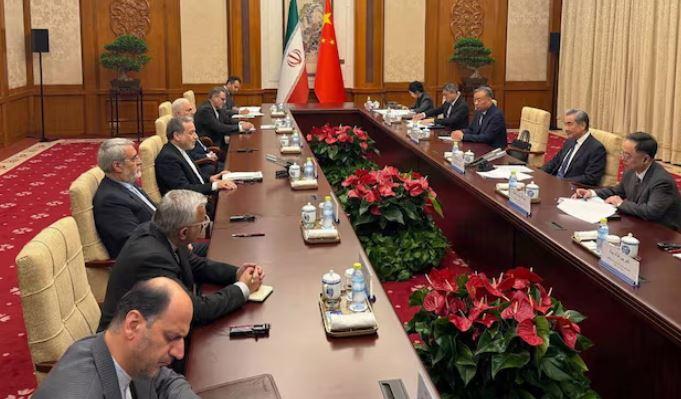
Iran foreign minister meets Chinese counterpart a week before Trump's Beijing trip
- a day ago
Heather Cox Richardson grades America
- 11 hours ago
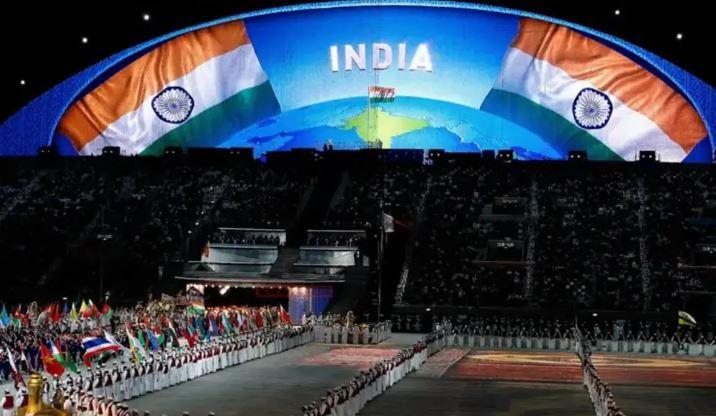
India opens door to Pakistani athletes for international events but no bilateral series
- 20 hours ago

Graham Platner’s triumph, explained by a Maine reporter
- 2 hours ago
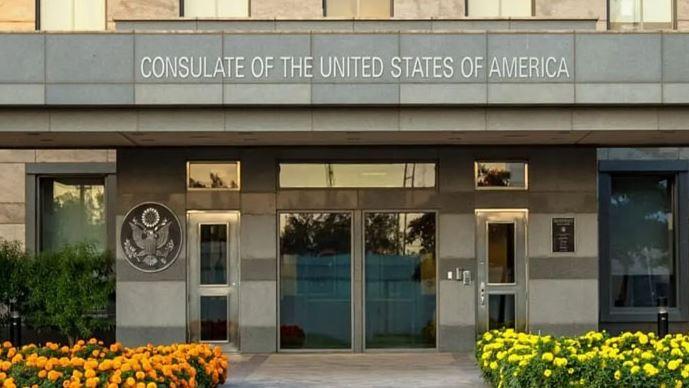
US Consulate in Peshawar announces closure in phases
- a day ago

Trump says Cuba is “next.” What does that mean?
- 2 hours ago

How weddings got (even more) expensive
- 11 hours ago
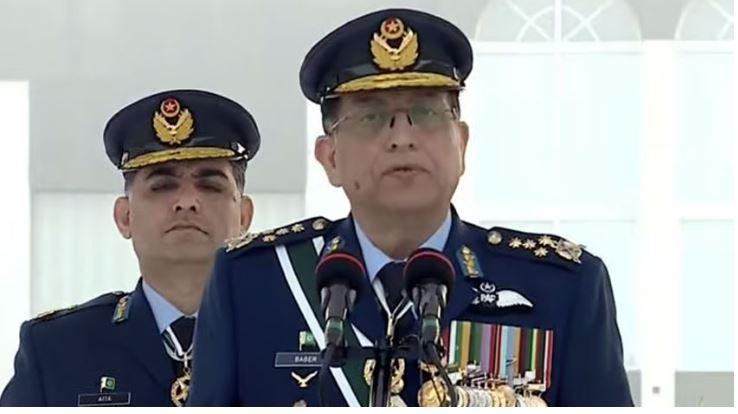
PAF displayed its capability, resilience, dominance in Marka-e-Haq: Air Chief
- 2 hours ago
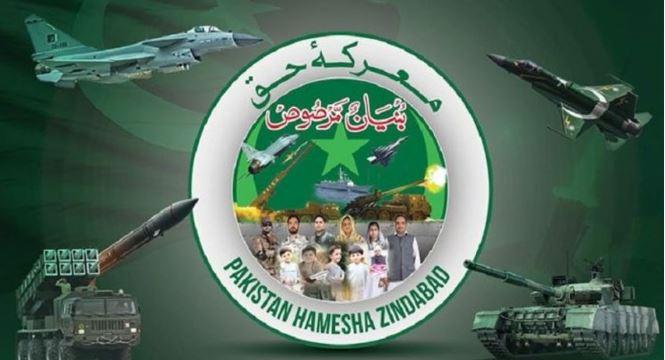
Pakistan Armed Forces are proudly commemorating first anniversary of Marka-e-Haq
- 21 minutes ago
Why Trump says the US-Iran war is over
- 11 hours ago

What Trump’s ballroom could cost you
- 11 hours ago

CMA CGM vessel attacked in Strait of Hormuz as shipping halted by US-Iran war
- 20 hours ago