Pakistan Bureau of Statistics (PBS) says this surge has pushed the annual inflation rate to a staggering 34.05 percent, significantly impacting the country's economy.

Islamabad: The ongoing issue of inflation in Pakistan shows no signs of improvement, with the latest weekly report revealing a significant increase of 0.33 percent.
According to the Pakistan Bureau of Statistics (PBS), this surge has pushed the annual inflation rate to a staggering 34.05 percent, significantly impacting the country's economy.
The weekly inflation, as measured by the Sensitive Price Indicator (SPI), witnessed a rise of 0.33 percent for the combined consumption group during the week ending on June 22. Compared to the corresponding week of the previous year, the SPI for the combined consumption group has seen a substantial increase of 34.05 percent.
Among the 51 essential items monitored by the SPI through a survey of 50 markets in 17 cities, the prices of 20 items showed an upward trend, 12 experienced a decline, while 19 remained unchanged. The collective increase in prices for the 20 essential items amounted to 39.22 percent, while the collective reduction in rates for the 12 goods stood at 23.53 percent.
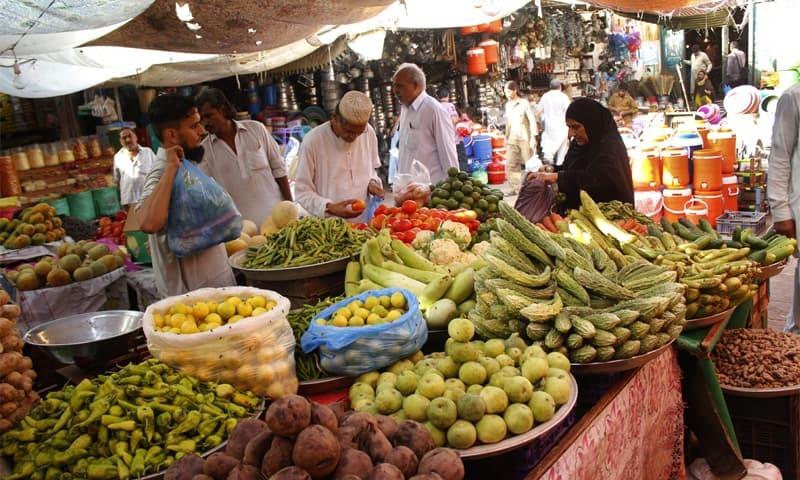
There has been a significant surge in food item prices, including wheat flour (4.95 percent), potatoes (2.60 percent), sugar (2.49 percent), powdered salt (1.31 percent), pulse mash (1.14 percent), and non-food item matchboxes (1.12 percent). However, some relief was observed in the prices of bananas (5.56 percent), LPG (4.30 percent), onions (4.03 percent), tomatoes (1.63 percent), vegetable ghee (2.5 kg) (1.51 percent), vegetable ghee (1 kg) (0.68 percent), and cooking oil (5 liters) (0.62 percent).
On a year-on-year basis, several commodities experienced a decrease in their average prices, including onions (25.31 percent), tomatoes (23.90 percent), pulse masoor (4.52 percent), and diesel (3.89 percent). Conversely, certain items recorded a significant increase in their average prices compared to the previous year, such as wheat flour (116.00 percent), cigarettes (115.24 percent), tea packets (113.55 percent), gas charges for q1 (108.38 percent), rice basmati broken (76.65 percent), rice irri-6/9 (76.24 percent), potatoes (68.24 percent), bananas (59.11 percent), men's sponge chappals (58.05 percent), chicken (57.48 percent), powdered salt (51.61 percent), bread (49.74 percent), and pulse mash (47.76 percent).

Does AI need an antitrust exemption so it doesn’t kill everyone????
- 6 hours ago

Trump's Board of Peace to unveil $2.45bn Gaza recovery plan, reports
- 17 hours ago

Trump’s new press ban
- 19 hours ago

The quiet campaign to stop Kamala 2028 is growing louder
- a day ago

Security researchers used Claude to help them hack into OpenAI
- 6 hours ago

Trump gets a Greenland deal
- 4 hours ago

Pakistan downs eight drones launched from Afghan side: security sources
- 20 hours ago

Pakistan Navy, Coast Guards thwart major smuggling attempt in Balochistan
- 21 hours ago

The psychology behind Trump’s obsession with DC renovations
- 4 hours ago

It’s not your imagination — dating has gotten way more combative lately
- 4 hours ago

The uncomfortable truth about aquariums
- 4 hours ago

How to be an AI minimalist
- a day ago