Pre-COP 28: Fighting climate change won’t be easy for Pakistan without collective efforts
Caretaker Federal Minister for National Food Security and Research Dr Kausar Abdullah Malik says citizens must take steps to protect water resources to achieve sustainable development.

Islamabad : Caretaker Federal Minister for National Food Security and Research Dr Kausar Abdullah Malik has stressed the need for collective efforts to address the challenges of climate change, water security, and food security in Pakistan.
“Citizens must take steps to protect water resources to achieve sustainable development,” the minister said while addressing participants of a Pre-COP 28 conference on “Accelerating the Water-Food Climate Nexus Transformation Pathways for Pakistan” organised by the International Water Management Institute (IWMI) in Islamabad on Monday.
He mentioned that efforts were underway to implement laser land leveling technology to minimise water usage in irrigation while also promoting water safety. He also emphasized the need to raise public awareness about the significance of water and its safety.
Dr. Kausar further highlighted the importance of water safety to improve agriculture, food systems, and economic development. He warned that failure to take immediate and bold measures could result in further deterioration of water security.
Mark Smith, Director General of IWMI, pointed out that although Pakistan only accounts for a negligible share of global emissions, the country bears a disproportionate burden of the impacts of climate change.
In his inaugural address, Dr Mark identified that although Pakistan is responsible for less than 1% of the world's planet-warming gases, it is still ranked as the eighth most vulnerable country to the climate crisis. He explained that around 92% of Pakistan is classified as semi-arid to arid, and most of the population relies on limited water resources from rivers and aquifers.
“We will support the Ministry of Climate Change in creating a position paper on water and climate change for CoP28. The government, policymakers, and provinces of Pakistan must work together to combat climate change,” he added.
On the occasion, British High Commissioner Jane Marriott OBE emphasized the importance of implementing climate resilience strategies in Pakistan, which is considered one of the topmost climate-vulnerable countries and ranks 32nd in preparedness. She highlighted the need to address the challenges of food and water governance, gender equality, and poverty reduction in the country by tackling the impacts of climate change. Marriott added that the UK is supporting Pakistan in its efforts to address these challenges.
She mentioned that the UK will invest in AI-powered solutions to tackle climate change in Pakistan, where Lahore has been declared the most polluted city and Pakistan ranks third among countries battling this issue.
Ms. Danielle Cashen, Deputy High Commissioner of the Australian High Commission, stated that Pakistan is facing severe water scarcity. By 2025, only 36% of the population will have access to safely managed water and only 1% of wastewater will be treated.
“Water, climate change and food security are interconnected and multisectoral solutions are needed to help Pakistan overcome these challenges
“Australia and Pakistan work together on agriculture within water scarce and salinity affected landscapes. Together we investigate adaptation strategies and tools with communities and farmers to provide transparent & and consistent seasonal water allocation within the Indus Basin,” she added.
Poland’s Ambassador Maciej Pisarski, at the event, stressed the importance of focusing on issues that matter to both Poland and Pakistan to expand cooperation between the two countries. He suggested that addressing climate change together could provide a multitude of opportunities for collaboration.
He shared how Polish Water Technologies can help in addressing climate-related challenges. The partnership between Polish Water Technologies and IWMI can offer a comprehensive solution to Pakistan's climate issues. This includes the provision of cost-effective and efficient water purification technologies, the construction of eco-friendly wastewater treatment plants, and the reinforcement of flood prevention measures in Pakistan by Polish companies.
On the occasion, Kate Somvongsiri, Mission Director for USAID, stated that addressing climate change is a global challenge that requires building linkages across populations, geographies, organizations, and sectors. She emphasized that the US government is committed to this approach.
While concluding the conference, Dr Mohsin Hafeez, Director IWMI, said climate change poses a significant threat to our water, food, energy, and environmental systems. Unfortunately, the way our government departments and provinces are utilizing water resources is inadequate to tackle Pakistan's complex range of challenges. Hence, we must improve governance in all sectors to overcome these challenges.

Indian police detain 'cockroach' movement founder Dipke ahead of protest
- 16 hours ago

Character.AI files for bankruptcy
- 5 hours ago

The Ocarina of Time remake feels remarkably modern — and surprisingly terrifying
- 5 hours ago

KFC picks Coca-Cola as US soda supplier, ditches longtime partner PepsiCo
- 19 hours ago

Cold weather and high prices could flip the Senate
- 3 hours ago

Will November stop Trump’s agenda?
- 3 hours ago

Here are all the new HomePod Mini 2 colors
- 5 hours ago

Trump’s revenge campaign comes for Ilhan Omar
- 3 hours ago
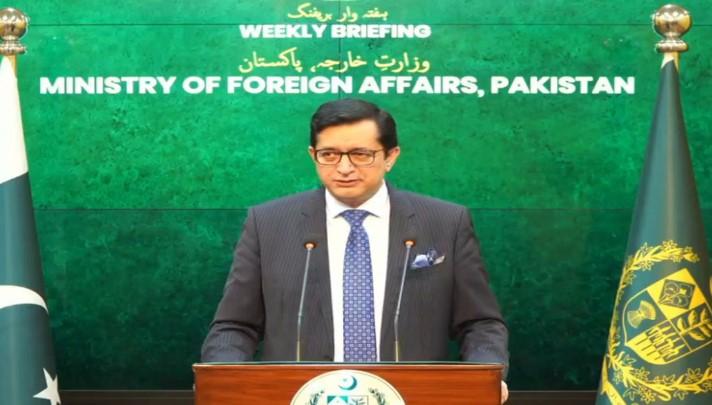
Pakistan warns India against any misadventure: FO
- 15 hours ago

Tesla unveils next generation Roadster sports EV with SpaceX thrusters
- 18 hours ago

Florida’s uniquely horrifying death penalty system
- 3 hours ago

Jodar apologises for swearing at ball kid in Shanghai
- 13 hours ago