President Vladimir Putin signed a law withdrawing Russia's ratification of the global treaty banning nuclear weapons tests.

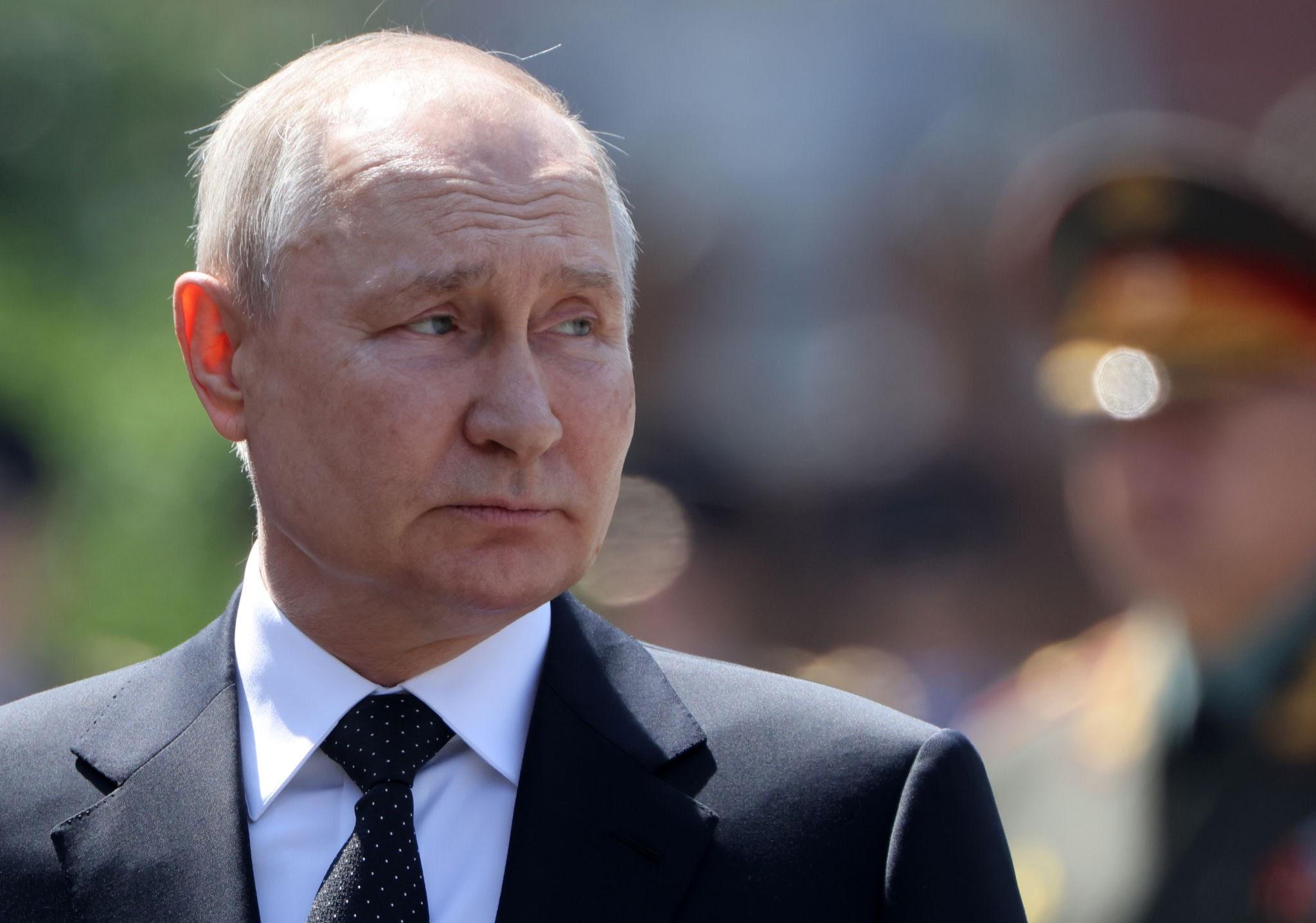
President Vladimir Putin on Thursday signed a law withdrawing Russia's ratification of the global treaty banning nuclear weapons tests, a step condemned by the organisation which promotes adherence to the landmark arms control pact.
The move, though expected, is evidence of the deep chill between the United States and Russia, whose ties are at their lowest level since the 1962 Cuban missile crisis over the war in Ukraine and what Moscow casts as Washington's attempts to stymie the emergence of a new multipolar world order.
Moscow says its deratification of the Comprehensive Nuclear Test Ban Treaty (CTBT) is merely designed to bring Russia into line with the United States, which signed but never ratified the treaty. Russia will not resume nuclear testing unless Washington does, say Russian diplomats.
Nor, they say, will the move change the nuclear posture of Russia, which has the world's largest nuclear arsenal, or the way it shares information about its nuclear activities as Moscow will remain a treaty signatory.
But some Western arms control experts are concerned that Russia may be inching towards a nuclear test to intimidate and evoke fear amid the Ukraine war.
Putin said on Oct. 5 that he was not ready to say whether or not Russia should resume nuclear testing after calls from some Russian security experts and lawmakers to test a nuclear bomb as a warning to the West.
Such a move, if it did happen, could usher in a new era of big power nuclear testing.
Robert Floyd, head of the Comprehensive Nuclear-Test-Ban-Treaty Organization, whose job is to promote recognition of the treaty and build up its verification regime to ensure no nuclear tests go undetected, condemned Russia's step.
'Deeply regrettable'
"Today’s decision by the Russian Federation to revoke its ratification of the Comprehensive Nuclear-Test-Ban Treaty is very disappointing and deeply regrettable," Floyd, who had tried to lobby senior Russian officials to get them to change their mind, said on X, formerly known as Twitter.
The treaty established a global network of observation posts that can detect the sound, shockwaves or radioactive fallout from a nuclear explosion.
Post-Soviet Russia has not carried out a nuclear test. The Soviet Union last tested in 1990 and the United States in 1992. No country except North Korea has conducted a test involving a nuclear explosion this century.
Andrey Baklitskiy, senior researcher at the United Nations Institute for Disarmament Research, has said Russia's deratification of the CTBT is part of a "slippery slope" towards resuming testing.
It is part of a disturbing trend in recent years that has seen arms control pacts scrapped or suspended, he said last month on X.
"We don’t know what steps will follow and when, but we know where this road ends. And we don’t want to go there," he said.
Putin's approval of the de-ratification law was posted on a government website which said the decision took immediate effect. Russia's parliament has already approved the step.
Courtesy: Reuters
ROMO OUT AT CBS AFTER DUI...
- 5 hours ago
Civilian deaths: Pakistan lodges strong protest with India over border firing incident
- 18 hours ago

The secret to using AI without getting dumber
- 19 hours ago
India beat Pakistan in final to complete cricket double
- 20 hours ago
Israeli strike kills five, including four women, in Gaza, health officials say
- 19 hours ago

SteelSeries’ new mice are super light, with ultra-wideband and swappable batteries
- a day ago

More kids are using AI for companionship — and it’s making them lonely
- a day ago
OpenAI’s new agent is a shot at Meta — but can it compete with free?
- 21 hours ago

Gold prices plummet in Pakistan, global markets
- 17 hours ago

Meta’s Muse AI sent a YouTuber’s address to a stranger
- a day ago
Disney World solved a problem that could save America billions every year
- a day ago
How did the Cornell rape case go so wrong?
- 4 hours ago