
This story was originally published by Grist and is reproduced here as part of the Climate Desk collaboration. In 2007, the Supreme Court ruled that the Environmental Protection Agency has the authority to regulate greenhouse gases, because they meet the Clea…

Published 2 years ago on Mar 1st 2025, 12:00 pm
By Web Desk
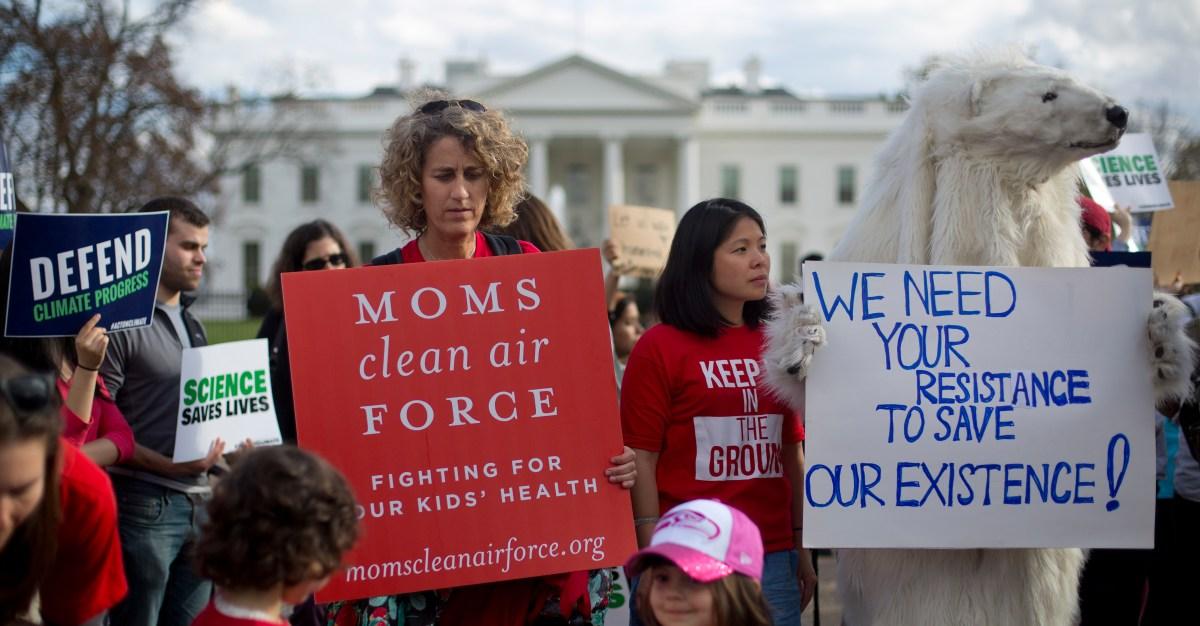
This story was originally published by Grist and is reproduced here as part of the Climate Desk collaboration.
In 2007, the Supreme Court ruled that the Environmental Protection Agency has the authority to regulate greenhouse gases, because they meet the Clean Air Act’s definition of air pollutants. It was a pivotal moment for climate regulation in the United States. That ruling led the EPA to find that six key greenhouse gases, including carbon dioxide, endanger public health and welfare.
The agency then utilized this so-called endangerment finding to issue rules limiting tailpipe emissions from vehicles during the Obama and Biden administrations — a key tool for reducing the nearly 30 percent of US emissions attributable to transportation. Over the years, the EPA has depended on its endangerment finding to regulate climate-warming gases from coal plants, aircraft, and other industrial sources.
The finding, which underpins several major EPA rules, is now at risk. According to reporting by the Washington Post, EPA administrator Lee Zeldin has recommended that the White House strike down the endangerment finding. Trump officials do not appear to have made a decision, but the move has long been on Republicans’ wish list. Project 2025, an initiative led by the conservative Heritage Foundation to outline policies for the second Trump administration, suggests establishing a system to “update the 2009 endangerment finding.”
But experts told Grist that such a dramatic policy shift will not be easy, given that the finding is grounded in laws passed by Congress and has been upheld by courts on numerous occasions.
[Image: Environmental Protection Agency administrator Lee Zeldin. https://platform.vox.com/wp-content/uploads/sites/2/2025/02/GettyImages-2196949508.webp?quality=90&strip=all]
“It would be very difficult for the EPA to reverse that finding,” said Romany Webb, deputy director of the Sabin Center for Climate Change Law at Columbia University. “There is a huge body of scientific evidence that demonstrates that greenhouse gas emissions contribute to climate change, and that climate change endangers public health and welfare, which is the test under the statute.”
A Trump attempt to reverse the finding will itself almost certainly be challenged in court. Litigants could point to legislation passed in 2022, when Congress took steps to cement the endangerment finding in law. The Inflation Reduction Act, the landmark law expected to reduce carbon emissions by roughly a third by 2030, included provisions that amended the Clean Air Act to explicitly define carbon dioxide and five other greenhouse gases as air pollutants.
“The fact that Congress has specified in such a recent statute that greenhouse gases qualify as air pollutants under the Clean Air Act further adds to the difficulty that EPA would face in revoking the endangerment finding,” Webb said.
The finding has also been cemented in case law. Over the last 15 years, industry groups and climate skeptics have filed numerous challenges against the endangerment finding. None have succeeded. The courts have repeatedly reaffirmed the EPA’s authority to regulate greenhouse gases. If new litigation were to be filed, it would likely end up before the DC Circuit Court of Appeals, which typically hears cases related to federal policymaking. That court upheld the agency’s authority in 2012, noting that its interpretation of the law is “unambiguously correct.” As recently as December 2023, the Supreme Court declined to hear a case challenging the finding.
During Trump’s first term, the Competitive Enterprise Institute, a conservative think tank, and three other groups petitioned the EPA to reconsider the endangerment finding. But the Trump EPA declined to do so on its last day in office, noting that several EPA rules — including some issued by the Trump administration — depended on the finding.
If the White House does direct the EPA to reverse the endangerment finding — and if Congress moves to repeal provisions of the Inflation Reduction Act that codify the finding — it would set the stage for the Trump administration to unravel several key climate regulations. It would be doing so at a time when the effects of climate change are hard to ignore.
“Americans are already suffering devastating impacts from the climate pollution that is fueling worsening disasters like heat waves and floods, more intense fires and hurricanes, and dangerous smog levels,” Vickie Patton, general counsel at the nonprofit Environmental Defense Fund, said in a statement. “Such an effort would be reckless, unlawful, and ignore EPA’s fundamental responsibility to protect Americans from destructive climate pollution.”
Editor’s note: Environmental Defense Fund is an advertiser with Grist. Advertisers play no role in Grist’s editorial decisions.

Florida’s uniquely horrifying death penalty system
- 5 hours ago

Trump’s revenge campaign comes for Ilhan Omar
- 5 hours ago

Jodar apologises for swearing at ball kid in Shanghai
- 15 hours ago

Character.AI files for bankruptcy
- 7 hours ago
Cold weather and high prices could flip the Senate
- 5 hours ago

Pakistan warns India against any misadventure: FO
- 17 hours ago

Tesla unveils next generation Roadster sports EV with SpaceX thrusters
- 19 hours ago

Here are all the new HomePod Mini 2 colors
- 7 hours ago

KFC picks Coca-Cola as US soda supplier, ditches longtime partner PepsiCo
- 21 hours ago

Indian police detain 'cockroach' movement founder Dipke ahead of protest
- 17 hours ago

The Ocarina of Time remake feels remarkably modern — and surprisingly terrifying
- 7 hours ago
Will November stop Trump’s agenda?
- 5 hours ago
You May Like



Trending