In 2024, global growth came in at 3.3 percent

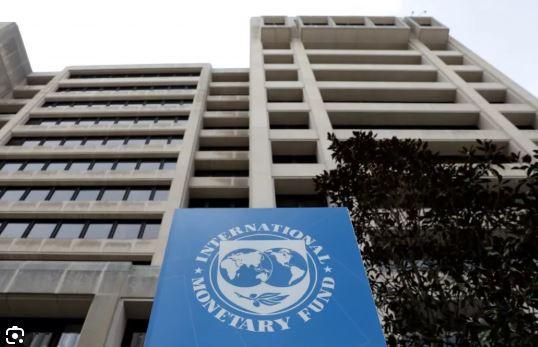
WASHINGTON (AFP): The IMF raised its global growth forecast Tuesday as efforts to circumvent Donald Trump’s sweeping tariffs sparked a bigger-than-expected surge in trade, while the US president stepped back from some of his harshest threats.
But the International Monetary Fund still sees growth slowing this year, even as it lifted its 2025 projection to 3.0 percent – up from 2.8 percent in April – in its World Economic Outlook update.
In 2024, global growth came in at 3.3 percent.
Looking ahead, the IMF expects the world economy to expand 3.1 percent next year, an improvement from the 3.0 percent it earlier predicted.
Despite the upward revisions, “there are reasons to be very cautious,” IMF chief economist Pierre-Olivier Gourinchas told AFP.
“Businesses were trying to frontload, move stuff around, before the tariffs were imposed, and so that’s supporting economic activity,” he said.
“There is going to be payback for that. If you stock the shelves now, you don’t need to stock them later in the year or into the next year,” he added.
This means a likelihood of reduced trade activity in the second half of the year, and into 2026.
“The global economy has continued to hold steady, but the composition of activity points to distortions from tariffs, rather than underlying robustness,” the IMF’s report said.
Since returning to the White House, Trump has imposed a 10 percent levy on almost all trading partners and steeper duties on autos, steel and aluminum.
But he paused higher tariffs on dozens of economies until August 1, a significant delay from April when they were first unveiled.
Washington and Beijing also agreed to lower for 90 days triple-digit duties on each other’s goods, in a pause set to expire August 12, although talks that could lead to a further extension of the truce are ongoing.
Trump’s actions so far have brought the US effective tariff rate to 17.3 percent, significantly above the 3.5 percent level for the rest of the world, the IMF said.
US inflation hit
Among major economies, US growth for 2025 was revised 0.1 percentage points up, to 1.9 percent, with tariff rates anticipated to settle at lower levels than initially announced in April.
The US economy is also set to see a near-term boost from Trump’s flagship tax and spending bill.
Growth for the euro area was adjusted 0.2 percentage points higher to 1.0 percent, but this partially reflected a jump in Irish pharmaceutical exports to the United States to avoid fresh duties.
Among European economies, Germany is still expected to avoid contraction while forecasts for France and Spain remained unchanged at 0.6 percent and 2.5 percent respectively.
While the IMF anticipates global inflation to keep declining, with headline inflation cooling to 4.2 percent this year, it warned that price increases will remain above above target in the United States.
“The tariffs, acting as a supply shock, are expected to pass through to US consumer prices gradually and hit inflation in the second half of 2025,” the IMF report said.
Elsewhere, Trump’s duties “constitute a negative demand shock, lowering inflationary pressures,” the report added.
China challenges
Growth in the world’s number two economy China, however, was revised sharply upwards by 0.8 percentage points to 4.8 percent.
This reflects stronger-than-expected activity in the first half of 2025, alongside “the significant reduction in US-China tariffs,” the IMF said.
But Gourinchas warned that China is still experiencing headwinds, with “fairly weak” domestic demand.
“There is relatively little consumer confidence, the property sector is still a black spot in the Chinese economy, it’s not been completely addressed,” he added. “And that is resulting in a drag on economic activity going forward.”
Meanwhile, growth in Russia was revised 0.6 percentage points down, to 0.9 percent.
This was in part due to Russian policies, but also oil prices which are set to remain relatively subdued compared to 2024 levels, Gourinchas said.
“That is a source of revenues for the Russian economy, and that’s also weighing down on their economic prospects,” he added.
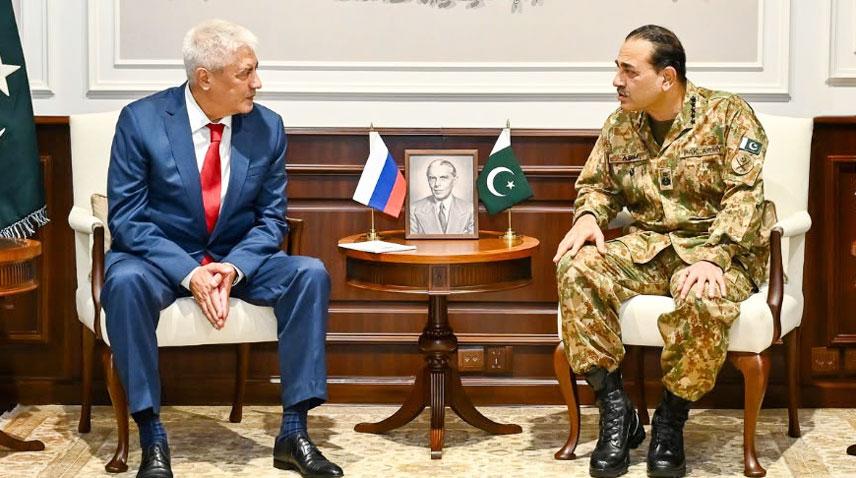
CDF Munir reaffirms resolve to strengthen Pakistan-Russia ties
- 14 گھنٹے قبل
National Assembly passes resolution endorsing federal govt's imposition of emergency, governor's rule in KP
- 20 گھنٹے قبل

The liver transplant system tried to fix its sex bias. Did it work?
- ایک دن قبل
Pakistan, Oman vow to expand bilateral cooperation in multiple fields
- 17 گھنٹے قبل

Microsoft 365 Family subscribers will finally be able to share AI benefits
- 5 گھنٹے قبل

K-pop star Sunmi loves Notion and ear cleaning videos
- 6 گھنٹے قبل

Gold prices decline after one day's increase in Pakistan
- 18 گھنٹے قبل
Two US cities could soon ban one of the world’s most controversial foods
- ایک دن قبل
The rise and fall of a MAGA princess
- 4 گھنٹے قبل

The Supreme Court may be about to make America’s prisons much crueler
- 4 گھنٹے قبل
‘Pure insanity’: Mathematicians will need years to make sense of OpenAI’s latest drop
- 5 گھنٹے قبل
Nobel Peace Prize winner Navi Pillay blasts Trump's 'unlawful' sanctions against ICC
- 15 گھنٹے قبل