Canada remains embroiled in a trade dispute with United States, its biggest trading partner

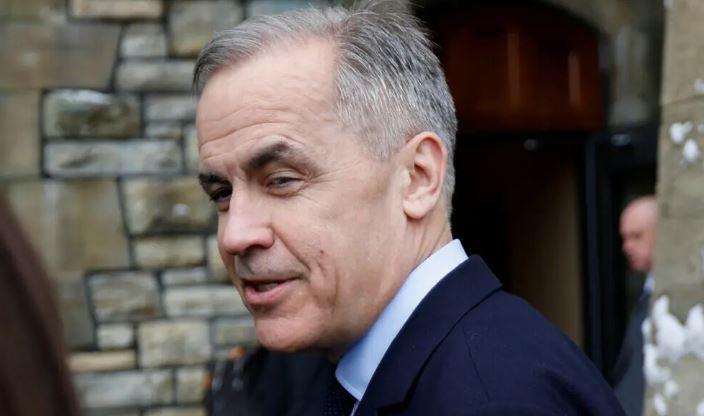
GYEONGJU, South Korea/BEIJING (Reuters): Canada’s Prime Minister Mark Carney agreed to visit China after meeting with President Xi Jinping on Friday, in an encounter that may have marked a turning point but offered no breakthroughs on trade.
Xi and Carney met on the sidelines of the Asia-Pacific Economic Cooperation (APEC) forum in Gyeongju, South Korea, which was part of Carney’s tour of Asia aimed at deepening trade and security ties in the region as Canada strives to reduce its dependence on the U.S.
The last formal meeting between the leaders of Canada and China happened in 2017 when then-Prime Minister Justin Trudeau had a brief exchange with Xi at a meeting in San Francisco.
Canada remains embroiled in a trade dispute with the United States, its biggest trading partner.
China is Canada’s second-biggest trading partner, but recent disputes have complicated relations.
“The meeting signals a change in tone and an openness to relations at the highest levels, but this is not a return to strategic partnership,” said Vina Nadjibulla, vice president of the Asia Pacific Foundation of Canada. “Canada needs to proceed with caution because there’s nothing to suggest the Chinese Communist Party’s actions have changed since the prime minister named China as a foreign security threat.”
She said Carney should keep talking with Chinese leaders but stay mindful of China’s threats to Canada’s security interests, including its efforts to play a greater role in Arctic affairs.
Carney has previously stressed the need to restart broad engagement with China after years of worsening ties.
In recent years, Canadian citizens were detained and executed in China, and Canada’s security authorities concluded that China interfered in at least two federal elections.
Carney and Xi discussed trade issues including agriculture and agri-food products, such as canola, as well as seafood and electric vehicles, Carney’s office said.
“Prime Minister Carney accepted President Xi’s invitation to visit China at a mutually convenient time,” it said in a statement.
China announced preliminary anti-dumping duties on Canadian canola imports in August, a year after Canada said it would levy a 100% tariff on imports of Chinese electric vehicles.
XI SAYS CHINA IS WILLING TO WORK WITH CANADA
Xi told Carney that China values Canada’s stated readiness to improve bilateral relations, according to state broadcaster CCTV, adding that China was willing to work with Canada to put ties back on track.
Earlier on Friday, Carney told a business event that the world of rules-based liberalised trade and investment had passed, adding that Canada aimed to double its non-U.S. exports over the next decade.
Nadjibulla said China should not be viewed as the solution to Canada’s issues with the U.S., however.
“We should not diversify away from the U.S. and go deeper into China,” she said. “Canada’s overdependence on both the U.S. and China has been shown to be a vulnerability we cannot afford.”
Joint Session of Parliament ratifies emergency, governor’s rule in KP
- 14 hours ago

At least 30 children, two teachers killed in Peshawar school roof collapse
- 16 hours ago

The Supreme Court may be about to make America’s prisons much crueler
- a day ago

Pakistan pursuing investment, export-led growth: FinMin Aurangzeb
- 10 hours ago

Ukraine claims Starlink is suddenly disrupting service for its military
- an hour ago

Five terrorists killed in Washuk IBO, Balochistan: ISPR
- 16 hours ago

My AI doppelganger tells me what to eat
- an hour ago

The rise and fall of a MAGA princess
- a day ago
US military weighs use of ‘mother of all bombs’ in potential future strikes on Iran, CNN says
- 15 hours ago

The Nothing Headphone A are half off for the first time
- an hour ago

National Grid Company of Pakistan unveils new brand identity as “National Grid Pakistan”
- 12 hours ago

How Apple can win the smart home
- an hour ago