In the wake of a US military operation to capture Venezuelan President Nicolás Maduro over the weekend, an atmosphere of uncertainty has settled on the South American country. Maduro, who appeared in a US federal courtroom in New York today, is in US custody…

Published 9 months ago on Jan 7th 2026, 7:00 am
By Web Desk
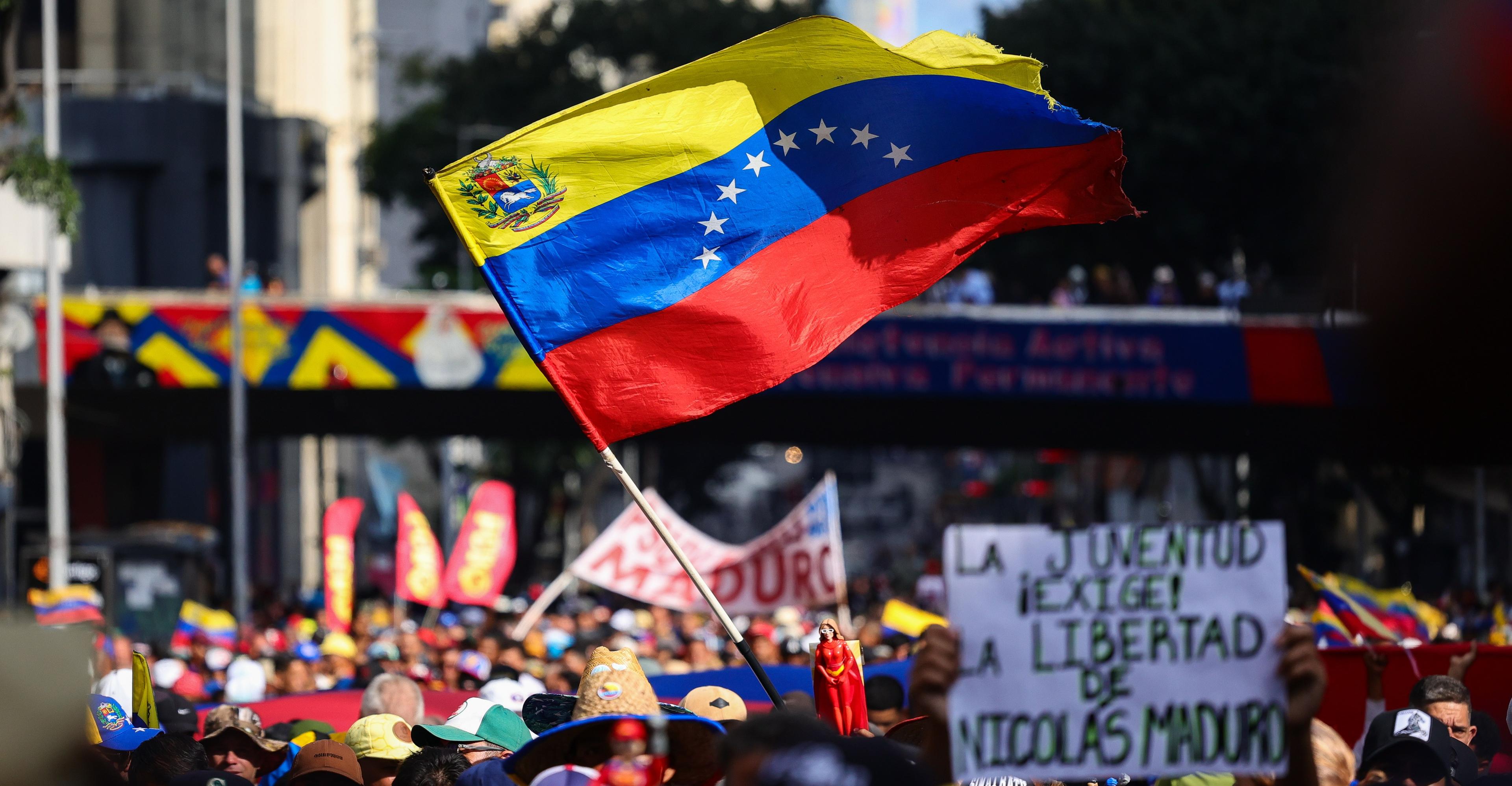
In the wake of a US military operation to capture Venezuelan President Nicolás Maduro over the weekend, an atmosphere of uncertainty has settled on the South American country.
Maduro, who appeared in a US federal courtroom in New York today, is in US custody. Meanwhile, Vice President Delcy Rodríguez has stepped up to be Venezuela’s interim leader — and has already received fresh threats from President Donald Trump if she refuses to comply with US guidance.
Amid the tumult, how are people in Venezuela feeling? Ana Vanessa Herrero, a reporter based in Caracas, says that the mood among Venezuelans has been something of a mixed bag. Some are celebrating; some are losing sleep over the conflict; others are gathering supplies in case the US launches more attacks — which Trump said the US is prepared to do.
Today, Explained co-host Noel King spoke with Herrero about what she’s seeing and hearing in Venezuela, and what the sentiment in Venezuela tells us about what might happen next.
Below is an excerpt of their conversation, edited for length and clarity. There’s much more in the full podcast, so listen to Today, Explained wherever you get podcasts, including Apple Podcasts, Pandora, and Spotify.
It’s great to be able to talk to you, especially since you filled us in on what was going on a few weeks ago. What’s going on now?
Everything’s going on. Since Saturday, people have been wondering what is going to happen next. In just 48 hours, Venezuelans experienced not only the first bombing and the first glimpse of war that they have experienced for hundreds of years now, but also they had to face the fact that Nicolas Maduro is no longer here. And that happened just in a couple of hours. That is an historic moment for Venezuelans who oppose Maduro, but also for those who follow him.
What are people in the streets saying? And is it safe to be out on the street today?
I tried to wait as long as I could to see what was going on [Saturday], and then to my surprise, no military on the streets, no cops on the streets, no danger whatsoever. People were just wandering and trying to line up in front of supermarkets and pharmacies to get water, food, supplies, whatever they could just to avoid being off guard in case something else happened.
The same image was repeated on Sunday. And now, people are just trying to get back to normal. We see malls opening [for] a shorter period of time, maybe for a few hours.
Such calm after such a storm is not something that you would expect. And some people tell me that it’s not normal. I spoke to someone, an elderly woman, and she said that in all of her years living in Venezuela and being born here, she felt so stressed that she just wanted to go to sleep and figure it out later. And I hear a lot of people are having trouble sleeping. They’re not feeling safe going to bed because they’re scared that the bombings could resume.
Even when I hear a sound that sounds like a plane, I immediately start looking around, getting nervous, trying to figure out what’s going on.
Let’s talk about Delcy Rodriguez. Who is she and who is she aligned with?
Delcy Rodriguez has been a long-time critic of not only the US policies against Venezuela, but against South America. And she has been a fierce critic of Trump and Trump’s approach against Nicolas Maduro. She has a very, very strong leftist background. She is the daughter of a leftist leader, and she was very close to [leftist dictator] Hugo Chavez, who gave her the first chance to be part of the government with him. And then she became a powerful name after Chavez died, working closely with Nicolas Maduro. So no wonder why her sudden change of tone is raising some eyebrows.
You say her tone is changing. What exactly has been happening with her?
Well, on Saturday she said that what happened to Maduro was a kidnapping and it was illegal, and she urged the US government and Trump to bring him back to Venezuela.
And then less than 24 hours later, or maybe a day later, she sat down with all the ministers of the former Maduro government and she invited the US to work together on a joint agenda. And she didn’t explain further, but I think there’s no need. That phrase alone was enough to raise some eyebrows.
What do you think happened exactly? Why’d she change her tune?
I’m not sure, but I can suspect that the threats that Donald Trump made against her if she didn’t comply [with US demands] had something to do with it. We don’t know. I mean, is she going to change laws to favor the US? Is she going to resume the diplomatic relations between the US and Venezuela? We have no idea what working together on a joint agenda means, but for sure it’s interesting to hear.
We do know what is motivating the United States here, in part because President Trump came right out on Saturday, gave a press conference and said, “We want Venezuela’s oil.” In Venezuela, how did people hear that remark? What was the response?
Well, people are so focused on how to survive the next few hours and days. That wasn’t part of the conversation up until very recently.
I have been talking to a lot of people on the ground and some of them are addressing that issue, but not all of them. So the ones who tell me that, some of them say they don’t want anyone running the country — Venezuela for Venezuelans.
On the other hand, you have the other extreme, and it’s people saying, “You know what? If the US wants to run the country, then great, as long as they didn’t do it with Nicolas Maduro.” What they all agree on is that they really don’t know what that means, “running the country.” And I think no one knows.
Ana, what are people hoping for next? When you ask people what they would like to see happen, what do you hear?
They would like elections. The mood around people who are actually talking about the future, elections are a huge part of it. In 2024, as you can recall, Venezuela had presidential elections and those results were not recognized by Nicolas Maduro, who claimed himself as a victor without any proof. Now, I think people have that feeling of, “We now need our fair elections again.” I mean, we need to, and the Constitution says that in case of an absolute total void of power in the presidency, then the vice president should fill that void immediately and call for elections in the next 30 days. We don’t know if that is going to happen because the circumstances right now are unprecedented for Venezuelans.
Venezuelans right now are trying to get out of the state of shock and they’re trying to get as much food and water as they can, because they’re accustomed to problems, turmoil and tragedy, and they feel that something else might happen.
Hands-on with the Apple Home Collection
- a day ago
FIA offloads 2 passengers at Lahore airport over fake documents, tampered study visa
- an hour ago
Will November stop Trump’s agenda?
- a day ago
Cold weather and high prices could flip the Senate
- a day ago
The Ocarina of Time remake feels remarkably modern — and surprisingly terrifying
- 2 days ago
Here are all the new HomePod Mini 2 colors
- 2 days ago
Jodar apologises for swearing at ball kid in Shanghai
- 2 days ago
Florida’s uniquely horrifying death penalty system
- a day ago
Buying Apple’s wall-mounted HomeView? The mount costs extra
- a day ago
Character.AI files for bankruptcy
- 2 days ago
West Bank settlers brutally attack a Washington Post journalist
- 11 hours ago
Trump’s revenge campaign comes for Ilhan Omar
- a day ago
You May Like
Trending