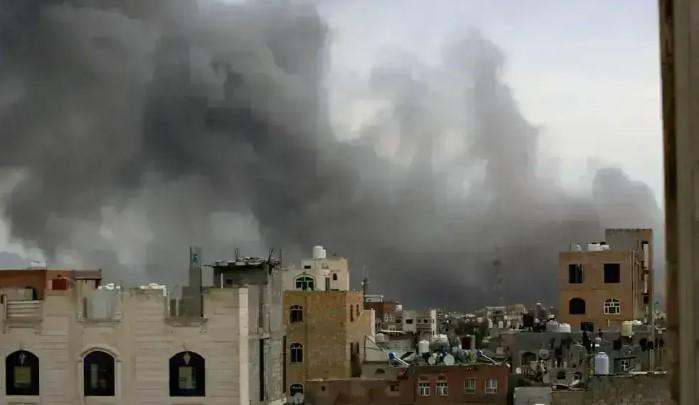
The downgrade is sharper than for advanced economies, underscoring that much of the developing world remains more exposed to oil shocks, currency weakness and swings in investor sentiment

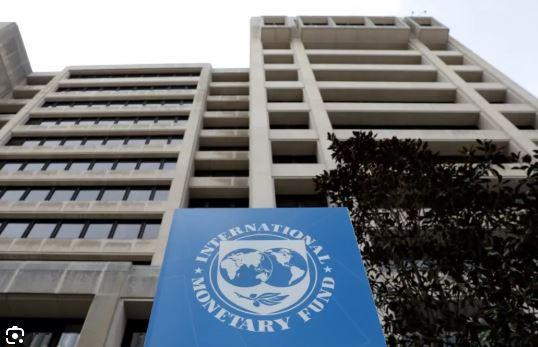
NEW YORK (Reuters): The IMF on Tuesday lowered its 2026 growth forecast for emerging market and developing economies to 3.9% from its view of 4.2% in January, with higher energy and food costs and uncertainty from the war in the Middle East expected to hurt more vulnerable, commodity-importing countries the hardest.
The downgrade is sharper than for advanced economies, underscoring that much of the developing world remains more exposed to oil shocks, currency weakness and swings in investor sentiment. The global lender said the war’s impact would vary widely and depend on a country’s proximity to the conflict, trade and financial links, exposure to remittances and energy dependence.
“The current hostilities in the Middle East pose immediate policy trade-offs: between fighting inflation and preserving growth and between supporting those affected by the rising cost of living and rebuilding fiscal buffers,” the IMF said in its World Economic Outlook.
It said the countries most at risk are commodity-importing emerging economies with existing weaknesses where higher import bills, weaker currencies and reduced capital inflows could feed inflation and intensify financing stress.
The softer outlook still rests on a relatively benign assumption. The IMF’s reference forecast is based on a global scenario in which the conflict remains contained and relatively short-lived, with disruption beginning to ease by the middle of 2026. But the benign scenario is already drifting.
“We are somewhere in between the reference scenario and the adverse scenario,” according to Pierre-Olivier Gourinchas, the IMF’s chief economist. “And of course, every day that passes and every day that we have more disruption in energy, we are drifting closer towards the adverse scenario.” In the IMF’s adverse scenario, the global growth forecast slows this year from 3.1% to 2.5%.
Gourinchas also said the fund is monitoring the effect of a stronger US dollar on inflation in developing economies, as it is a typical transmission channel for tighter financial conditions in emerging markets.
Middle East and Central Asia face biggest impact of war
The broad emerging-markets aggregate in the reference scenario also masks sharp regional divergence. Emerging and developing Asia is still expected to post the fastest growth among major developing regions, but growth there is seen slowing to 4.9% in 2026 from 5.5% in 2025, before easing further to 4.8% in 2027.
China’s 2026 growth forecast was cut to 4.4%, just 0.1 percentage point lower than the January forecast, as lower U.S. tariff rates and stimulus measures offset the impact from the Middle East war. India was a notable exception, as its 2026 growth forecast ticked up by 0.1 point to 6.5%, with tariff relief and momentum carried over from 2025 more than offsetting the impact of costlier energy.
The largest economic impact will be, as expected, concentrated in nations closer to the conflict. The IMF slashed its 2026 forecast for the Middle East and Central Asia by 2.0 percentage points to 1.9%, one of the biggest revisions in the report, before a projected rebound to 4.6% in 2027 under its reference scenario. For the narrower Middle East and North Africa grouping, the 2026 growth forecast was cut by an even steeper 2.8 points to 1.1%.
Saudi Arabia’s 2026 growth forecast was lowered by 1.4 points to 3.1%. Iran’s outlook saw one of the largest country-level revisions, with 2026 growth cut by 7.2 points from January to -6.1%. Growth in Egypt, a commodity importer, is expected to slow to 4.2% in 2026.
Sub-Saharan Africa’s growth is forecast to slow more modestly to 4.3% in 2026 from 4.5% in 2025, though the IMF said oil importers without a strong resource cushion would be under greater strain.
Growth in Latin America and the Caribbean was revised higher by 0.1 point to 2.3% for 2026, helped by exporters such as Brazil, where higher oil prices provide some relief.

LUMS workshop pushes power sector indigenisation
- 4 hours ago

Agriculture Journalists Association elects new leadership
- 4 hours ago
UPDATE: DITKA DEAD AT 86...
- 2 days ago
Pakistan calls for immediate de-escalation of Ukraine conflict
- 2 days ago

Rear Admiral Shifaat Ali Khan promoted as Vice Admiral
- 7 hours ago
Pakistan, IMF reaffirm commitment to macroeconomic stability
- 7 hours ago

Closure of Riyadh airport extended after deadly Houthi strike
- 3 hours ago
Who are the violent Israeli settlers in the West Bank?
- 2 days ago

Mushshak training aircraft crashes near Quetta; two pilots martyred
- 8 hours ago
President Zardari and PM Shehbaz 'agree' on imposition of emergency in KP: sources
- 2 days ago

Disney Plus will stream Super Bowl LXI
- 2 days ago
FinMin Aurangzeb reaffirms support for V20's climate finance agenda
- 7 hours ago