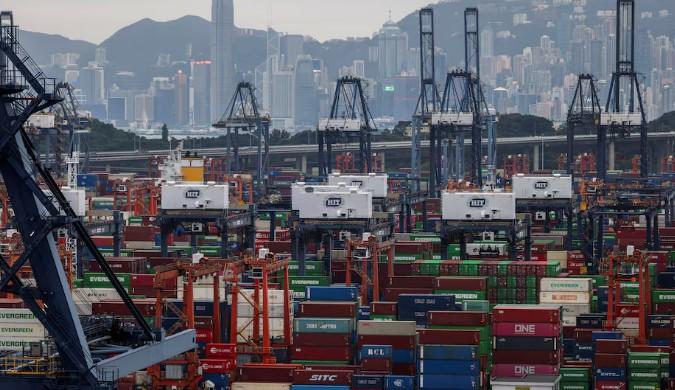
The FAO Food Price Index, which tracks monthly changes in a basket of internationally traded food commodities, averaged 133.3 points in August, up from July’s revised reading of 130.8

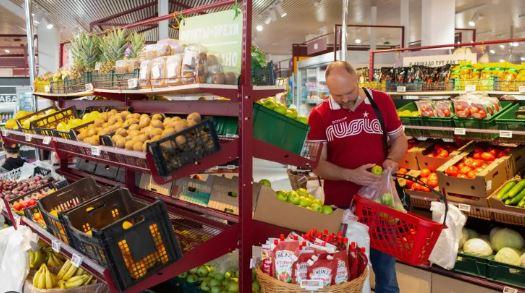
PARIS (REUTERS) -- World food prices rose in August to their highest since late 2022, as adverse weather and war disruption in the Black Sea heightened concern over supply of staples, the United Nations’ Food and Agriculture Organization said on Friday.
Extreme heat and drought in Europe, the threat of a severe El Nino weather pattern and trade upheaval caused by the Ukraine and Iran wars have unsettled agricultural markets, pushing grain prices to three-year highs and sugar to a one-year peak.
The FAO Food Price Index, which tracks monthly changes in a basket of internationally traded food commodities, averaged 133.3 points in August, up from July’s revised reading of 130.8.
That was the highest score since November 2022, though nearly 17% below a record peak from March 2022, after Russia’s full-scale invasion of Ukraine.
“August’s increase in global food prices is a warning that the risk premium is returning to food markets: climate shocks, geopolitical tensions and disrupted trade logistics are converging to tighten supply expectations,” FAO Chief Economist Maximo Torero said in a statement.
The FAO’s price benchmarks for cereals, vegetable oils, sugar, meat and dairy all rose in August.
The extreme weather in Europe affected prospects for the maize (corn) and sugar beet harvests as well as livestock output, while the anticipated El Nino phenomenon fueled concerns for palm oil and sugar output in Asia, it said.
Escalating attacks in the Black Sea have curtailed grain shipments from Russia and Ukraine in their 4-1/2-year-old war, while the U.S.-Iran conflict was straining flows of fertilizer for crops.
Among food categories, FAO’s cereals price index rose 2.2% month-on-month to its highest since May 2024, and the vegetable oil index edged up 0.6% to its highest since June 2022.
The agency’s sugar benchmark jumped 11.9% to its highest since June 2025, with lower production in Brazil’s crucial center-south region adding to weather concerns in Europe and Asia.
In a separate report, the agency cut its 2026 global cereal production forecast by 3.4 million metric tons from a previous estimate in July to 2.980 billion tons, now 2.0% below 2025 in the largest annual decline since 2018.
Projected output would still be the second-largest on record, however.
Forecast world cereal stocks at the close of 2026/2027 were revised down 1.1% to 947.2 million tons, now only marginally above the previous season.
A reduced estimate of coarse grain stocks outweighed an upward revision for wheat that reflected an anticipated build-up in Russian and Ukrainian stocks due to shipping disruption, the FAO said.

Trump’s revenge campaign comes for Ilhan Omar
- 3 days ago

Musk says will give SpaceX share to 'every kid in America'
- 9 hours ago

FIA offloads 2 passengers at Lahore airport over fake documents, tampered study visa
- a day ago

Hands-on with the Apple Home Collection
- 3 days ago

Florida’s uniquely horrifying death penalty system
- 3 days ago

Communism in China and the changing world: from capitalist critique to socialism with Chinese characteristics
- 10 hours ago

Army officer martyred, four terrorists killed in Balochistan operations: ISPR
- 9 hours ago

Bollywood actor Tiger Shroff shot at in Mumbai, three suspects held: police
- 10 hours ago

Field Marshal, Saudi envoy discuss regional security dynamics
- 6 hours ago

West Bank settlers brutally attack a Washington Post journalist
- 2 days ago

Security of Haramain al-Sharifain non-negotiable: DG ISPR
- 11 hours ago

Buying Apple’s wall-mounted HomeView? The mount costs extra
- 3 days ago