
The bill includes $7.1 billion for the Pacific Deterrence Initiative and a statement of congressional support for the defense of Taiwan, measures intended to counteract China’s influence in the region.

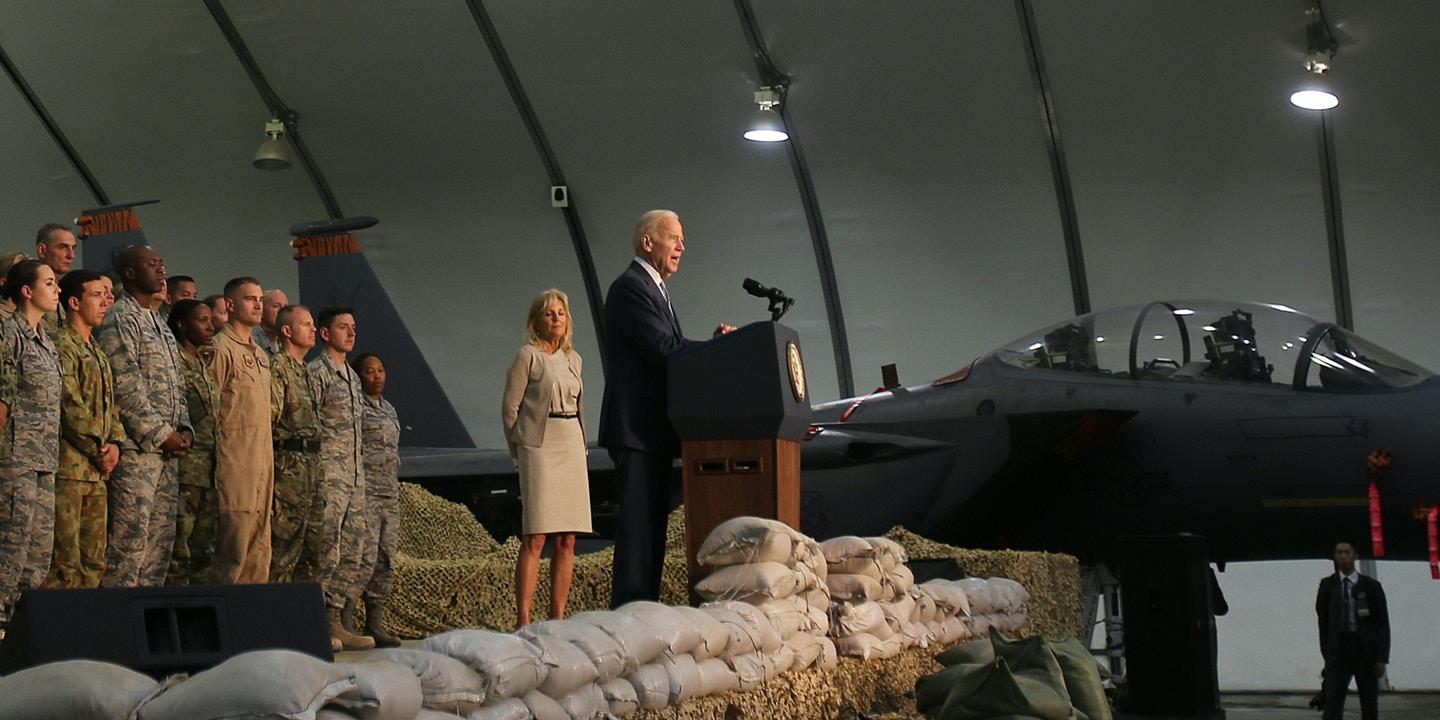
President Joe Biden signed the National Defense Authorization Act into law Monday, authorizing $768.2 billion in military spending, including a 2.7% pay raise for service members, for 2022.
The NDAA authorizes a 5% increase in military spending, and is the product of intense negotiations between Democrats and Republicans over issues ranging from reforms of the military justice system to COVID-19 vaccine requirements for soldiers.
“The Act provides vital benefits and enhances access to justice for military personnel and their families, and includes critical authorities to support our country’s national defense,” Biden said in a statement.
The $768.2 billion price tag marks $25 billion more than Biden initially requested from Congress, a prior proposal that was rejected by members of both parties out of concerns it would undermine U.S. efforts to keep pace militarily with China and Russia.
The new bill passed earlier this month with bipartisan support, with Democrats and Republicans touting wins in the final package.
Democrats applauded provisions in the bill overhauling how the military justice system handles sexual assault and other related crimes, effectively taking prosecutorial jurisdiction over such crimes out of the hands of military commanders.
Republicans, meanwhile, touted success in blocking an effort to add women to the draft, as well as the inclusion of a provision that bars dishonorable discharges for service members who refuse the COVID-19 vaccine.
The bill includes $7.1 billion for the Pacific Deterrence Initiative and a statement of congressional support for the defense of Taiwan, measures intended to counteract China’s influence in the region.
It also includes $300 million for the Ukraine Security Assistance Initiative, a show of support in the face of Russian aggression, as well as $4 billion for the European Defense Initiative.
In his statement, the president also outlined a number of provisions his administration opposes over what he characterized as “constitutional concerns or questions of construction.”
Those planks include provisions that restrict the use of funds to transfer or release individuals detained at the Guantanamo Bay detention center, which the Biden administration is moving to close. Biden’s statement saidthe provisions “unduly impair” the executive branch’s ability to decide when and where to prosecute detainees and where to send them when they’re released, and could constrain U.S. negotiations with foreign countries over the transfer of detainees in a way that could undermine national security.
The law also has provisions barring goods produced by forced Uyghur labor in China from entering the U.S., and it begins to lay out plans for the new Global War on Terror Memorial, which would be the latest addition to the National Mall.
SOURCE: AP

Sri Lanka give Green Shirts crushing defeat
- 2 hours ago
NA passes resolution on peaceful settlement of Kashmir dispute
- 8 hours ago

What do you do when your love and your life are in two different places?
- 2 days ago

Jordan strikes militant groups in Syria after church attack
- 7 hours ago

Sure, let’s smoosh SpaceX and Tesla together, who cares
- 2 days ago

Jordan arrests three in dawn raid over church attack
- a day ago

US singer Chris Brown spared jail after pleading guilty over UK nightclub incident
- a day ago
Pakistan condemns Houthi missile attacks on Saudi Arabia
- a day ago

Trump says Sundar Pichai talked him out of renaming the Atlantic Ocean
- 2 days ago

Pakistan, US explore new avenues for energy cooperation
- a day ago

PHP: The three little letters wreaking havoc across the web
- 2 days ago

Delta can turn the iPhone Duo into your favorite folding handheld
- 2 days ago