Japan gears to experiment with space-based solar energy, as it aims to beam solar power from space.


Tokyo: Japan is gearing up for a groundbreaking endeavor in space-based solar energy as it aims to beam solar power from space by 2025.
Building on a successful milestone achieved in 2015, the country, in partnership with JAXA (Japan's space administration), is determined to advance the technology's feasibility.
Led by Kyoto University professor Naoki Shinohara, a Japanese public-private partnership will launch small satellites into orbit to test the transmission of solar energy to ground-based receiving stations hundreds of miles away.
The concept of using orbital solar panels and microwaves for power transmission was proposed in 1968, and countries like China and the US have since explored its potential.
Space-based solar arrays offer an attractive solution, as they can collect energy around the clock without being affected by weather conditions.
However, the technology's practicality remains a challenge.
Producing a 1-gigawatt array, equivalent to a nuclear reactor's output, would currently cost around $7 billion.

Pakistan Customs foils smuggling attempt at Islamabad Airport, seizes contraband worth Rs660mn
- 9 hours ago

More Republicans are breaking from Trump. Is it too little, too late?
- 19 hours ago

A sinkhole swallowed Nicolas Cage’s driveway. Yours might be next.
- 19 hours ago

Malaysia beat Pakistan by 5-4 goals in Asian Games match
- 5 hours ago

Security forces kill 33 terrorists in Balochistan: ISPR
- a day ago

WHO renews commitment to support Pakistan in fight against childhood cancer
- a day ago

PIA faces over Rs10mn in baggage delay penalties at airports across Pakistan
- 9 hours ago

Susan Collins is the abortion rights movement’s biggest test of 2026
- 19 hours ago
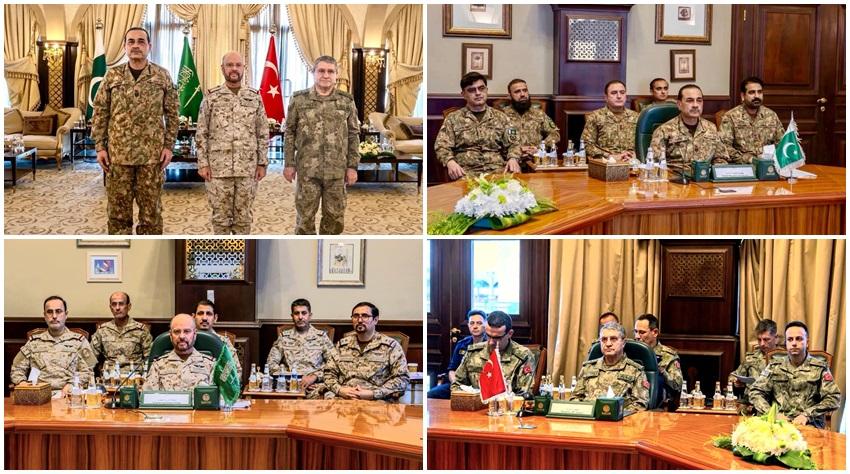
Pakistani, Saudi, Turkish military chiefs discuss ways to back KSA under Makkah defence pact
- a day ago

Why Americans are warming to China
- 19 hours ago

China, US agree to $30bn tariff cut, AI dialogue during Xi visit
- 11 hours ago

Any attempt to divert Pakistan's share of waters will be treated as an act of war: PM Shehbaz
- a day ago