‘There are Rs9.4 trillion in cash circulation, which need to be brought into formal economy’


Islamabad: Federal Minister for Finance Muhammad Aurangzeb announced said on Thursday that artificial intelligence (AI) will be utilized to increase tax collection while raising concerns over the disproportionate tax burden in Pakistan.
Speaking at a conference on “Retail Reimagined: Innovate, Collaborate & Thrive”, organised by The Pakistan Retail Business Council (PRBC), the minister said that the country’s retail sector, which contributes a significant 19% to the country’s GDP, is paying a mere 1% in taxes, sparking concerns over the sector’s lack of contribution to the national exchequer.
He stressed that the disproportionate burden of taxes on the manufacturing, services industry, and salaried class is unsustainable.
“We need to bring other segments, including agriculture, real estate, retail, and wholesale, into the tax net.” He lauded provincial government for taking measures towards this end by passing bills in their respective assemblies for imposing agricultural taxes.
He said the government has been engaging with the retail sector, requesting them to formalise their businesses and pay their due share of taxes. For national interest, “we cannot afford to have people taking a free ride anymore,” adding documentation was key to achieving this goal.
Later, while speaking to the media, he announced that artificial intelligence would be utilised to increase tax collection.
The finance czar added that there is Rs9.4 trillion rupees in cash circulation, which needed to be brought into the formal economy, acknowledged that this could not be done overnight however the government was determined to move in the right direction.
The economy, the minister added, has taken a significant turn for the better, with macroeconomic stability firmly in place as currency has stabilised, foreign exchange reserves have increased and inflation has receded with the policy rate decreasing significantly leading Kibor to recede from 23% to around 11%.
These positive developments have not gone unnoticed as foreign investors are once again taking notice of Pakistan’s economic potential. Institutional flows are returning to the country, with investments pouring in on both the debt and equity sides.
The minister further said Pakistan was actively engaged with international rating agencies, with a clear goal in sight to upgrade its credit rating to the “Single B” category.
Aurangzeb said the country has already made significant strides in this direction, with a notable upgrade in the last calendar year. Building on this momentum, Pakistan is hopeful of securing a further upgrade, which would have far-reaching implications for its economic prospects.
A “Single B” rating would not only enhance Pakistan’s credibility in the eyes of international investors but also pave the way for the country to diversify its funding base and regain access to national capital markets. This, in turn, would help Pakistan to establish itself as a “bankable brand” once again, marking a significant milestone in its economic revival.
He further said the government was focusing on achieving sustainable and inclusive growth instead of being caught in boom-and-bust cycles like in past.
The minister said structural reforms in taxation, energy, state-owned enterprises (SOEs), and public finance were underway. A major overhaul of the taxation system is underway, with a focus on end-to-end digitisation to promote transparency, reduce leakage, and combat corruption
The introduction of faceless customs has already shown promising results, with 80% of imports being cleared within 18-19 hours, down from 118 hours. This streamlined process has eliminated the facilitation money culture, fostering a more efficient and trustworthy tax authority.
In the energy sector, efforts are being made to transition towards competitive energy, the finance minister added.
He said, a cabinet committee, chaired by him, was spearheading reforms in 43 ministries having 400 departments, adding 20 ministries have already been taken to task and the process would be completed by June end.
The finance minister elaborated that the private sector was being positioned to take the lead in driving the country’s growth, with the government providing a policy framework and ensuring policy continuity.
To achieve fiscal discipline, the government has initiated a right-sizing exercise and implemented pension reforms, with new civil bureaucracy recruits now on a defined contribution system.

Tesla unveils next generation Roadster sports EV with SpaceX thrusters
- 6 hours ago

Microsoft and Japan took down a cybercrime network behind over a billion scam messages
- 9 hours ago

Jodar apologises for swearing at ball kid in Shanghai
- 2 hours ago

The Fitbit Edge is for folks who don’t want to go totally screenless
- 9 hours ago

Indian police detain 'cockroach' movement founder Dipke ahead of protest
- 4 hours ago

Microsoft’s new AI chip makes it less reliant on Nvidia’s GPUs
- 9 hours ago

Halo’s co-creator wrote a novel about AI taking over the world
- 9 hours ago

KFC picks Coca-Cola as US soda supplier, ditches longtime partner PepsiCo
- 7 hours ago

The AI race is back on
- 9 hours ago
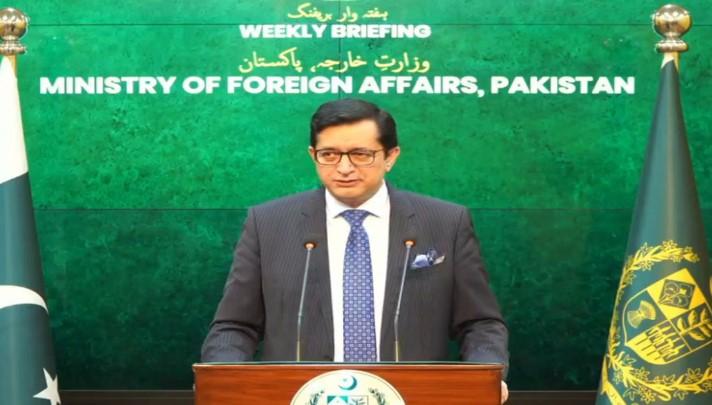
Pakistan warns India against any misadventure: FO
- 3 hours ago

Your flu shot can’t wait
- 16 hours ago
Trump is taking his midterms anger out on Ukraine
- 16 hours ago