
President Donald Trump’s tariffs have had a chaotic week. First, they were on, then they were great, then they were maybe off, then definitely off (but just for now). After the Trump administration enacted its 25 percent tariffs on most Mexican and Canadian g…

Published 2 years ago on Mar 12th 2025, 12:00 pm
By Web Desk
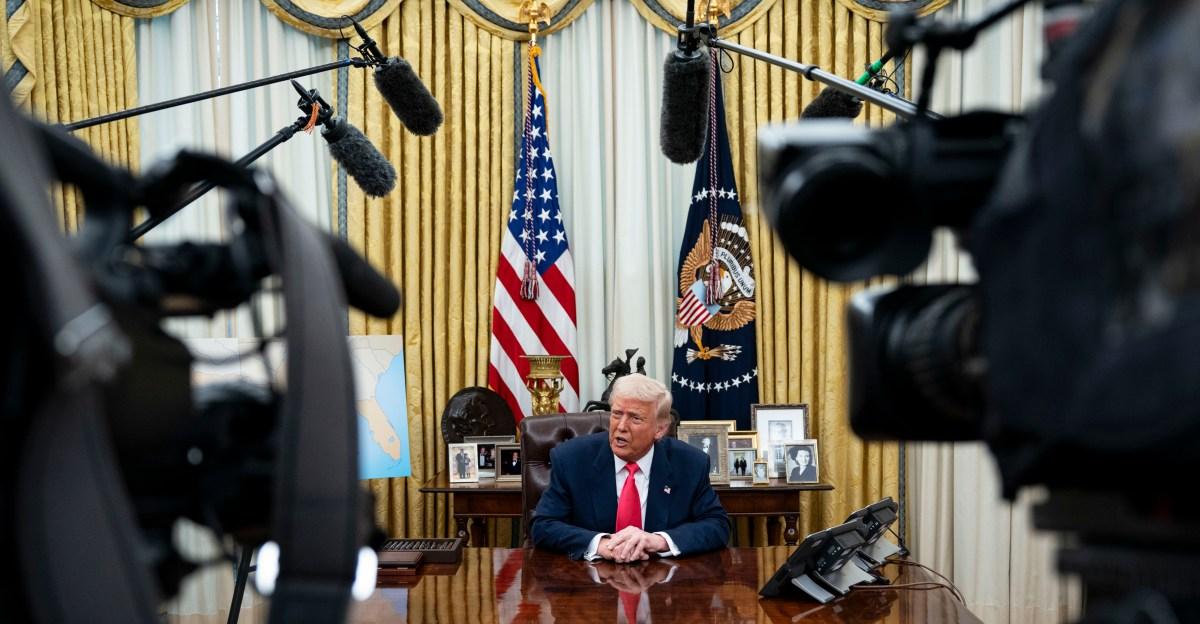
President Donald Trump’s tariffs have had a chaotic week. First, they were on, then they were great, then they were maybe off, then definitely off (but just for now).
After the Trump administration enacted its 25 percent tariffs on most Mexican and Canadian goods on Tuesday, stocks immediately fell. As of Thursday, the S&P 500 had fallen almost four percent since the beginning of the week.
For now, those tariffs appear to be on hold. After creating a temporary carve-out for goods imported by US car manufacturers on Wednesday, Trump announced on Thursday that he would pause tariffs on many, but not all Mexican and Canadian goods for another month.
Canada’s retaliatory tariffs are expected to remain in effect, at least for now. It’s unclear whether Mexico will proceed with its planned tariffs on US goods, which were expected to be announced Sunday.
The turnabout was surprising: Trump initially claimed that he would not consider any exceptions to the tariffs, and praised them at length during his speech to Congress Tuesday.
The White House hasn’t said what made Trump change his mind. But it is possible that the shock his tariffs caused to the stock market entered into his decision-making.
Trump certainly gave the markets a lot of attention during his first term, when he frequently touted the record highs the stock market reached under his tenure, appearing to view it as a direct reflection of the strength of his economic policies.
It’s worth mentioning that presidents don’t have much control over the economy, and Trump arrived in office when the economy was already pretty strong. However, his decision-making often appeared to be influenced by the stock market.
In 2018, he publicly criticized Federal Reserve Chair Jerome Powell for raising interest rates, claiming that it was driving down the stock market: “The only problem our economy has is the Fed. They don’t have a feel for the Market,” he posted on social media.
And in early 2019, when the markets dipped in response to Trump’s tariffs on China, he walked back or delayed some of the tariffs.
His 2017 corporate tax cuts, which reduced the maximum tax rate from 39 percent to 21 percent, also seemed designed to be market-friendly, and investors are hoping that he’ll extend those cuts this year.
One other economic indicator that may have influenced Trump’s tariff policy is one that the president seems to have developed a new focus on during his second term: a benchmark known as the 10-year Treasury bond yield.
That yield is the interest rate that the federal government pays to Treasury bondholders each year on loans that mature after 10 years.
The 10-year Treasury yield is considered a key indicator of the strength of the US economy and affects borrowing costs for everything from the $12.6 trillion mortgage market to $5.8 trillion in bank lending. The current yield is about 4.2 percent.
That rate isn’t set by the government but rather determined by Wall Street through an auction process. If financial institutions are feeling good about the US’s financial outlook, their bids at these bond auctions may be lower. If they’re predicting economic turbulence and staring down a national debt crisis, as is currently the case, those bids may be higher.
In the immediate aftermath of Trump’s reelection, the 10-year Treasury rate rose sharply. It’s come down since peaking in January, but rose again amid the uncertainty and fear created by Trump’s tariffs.
Treasury Secretary Scott Bessent has said that lowering the Treasury yield could bring financial relief to struggling Americans, and Trump heralded a “big, beautiful drop” in Treasury yields during his address to Congress on Tuesday.
It’s difficult to say what’s driving Trump’s tariff policymaking for certain. But based on past behavior, the stocks and bond markets seem like important factors to watch.
This piece originally ran in the Today, Explained newsletter. For more stories like this, sign up here.

PHP: The three little letters wreaking havoc across the web
- a day ago

OpenAI now trains its frontier AI models with no internet access
- a day ago

Trump says Sundar Pichai talked him out of renaming the Atlantic Ocean
- a day ago
Jack Dorsey’s Block made an AI model that talks to you like an awkward new friend
- a day ago

Pakistan condemns Houthi missile attacks on Saudi Arabia
- an hour ago

Samsung’s latest 55-inch Frame TV is down to its lowest price yet
- a day ago

Microsoft shuts down its beloved maker space
- a day ago

Delta can turn the iPhone Duo into your favorite folding handheld
- a day ago

Apple will label apps that are ‘Made for iPhone Duo’
- a day ago
Sure, let’s smoosh SpaceX and Tesla together, who cares
- a day ago

Trump is trying to overturn an election that hasn’t happened yet
- a day ago
What do you do when your love and your life are in two different places?
- 10 hours ago
You May Like



Trending