For the second time in a year, Elon Musk appears to be trying to bribe voters — and election law experts say it’s probably illegal. Musk offered Thursday to “personally hand over” a total of $2 million to two individuals who have already voted in the closely…

Published a year ago on Apr 4th 2025, 7:00 am
By Web Desk
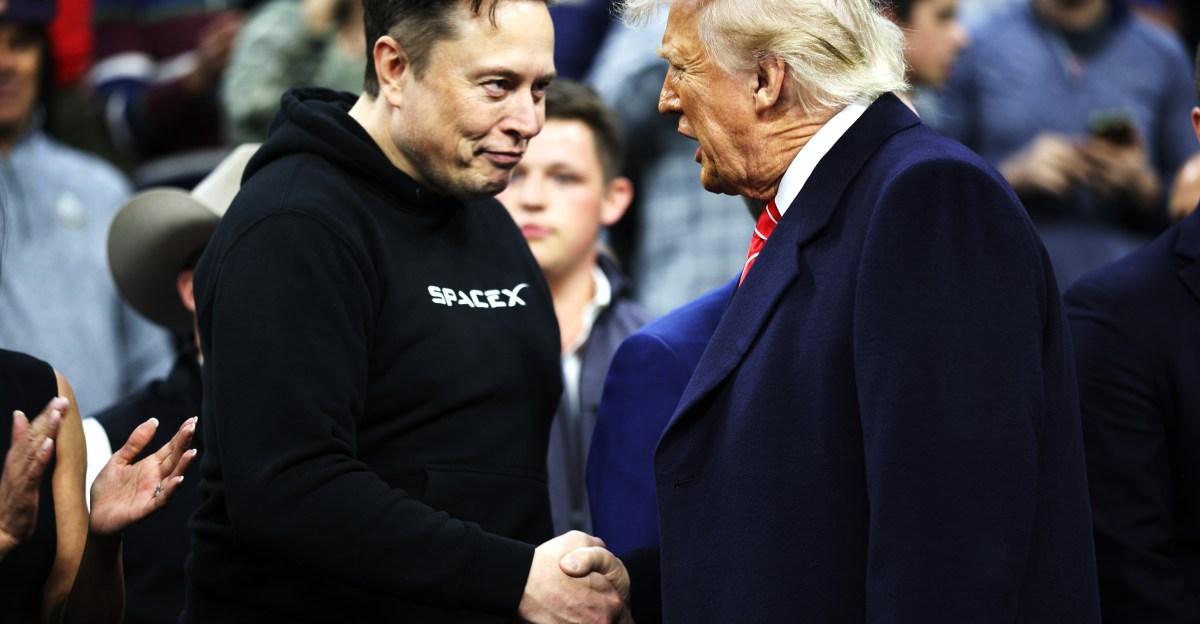
For the second time in a year, Elon Musk appears to be trying to bribe voters — and election law experts say it’s probably illegal.
Musk offered Thursday to “personally hand over” a total of $2 million to two individuals who have already voted in the closely watched Wisconsin Supreme Court race. (It’s unclear whether the payment is conditional on voting for Musk’s preferred candidate.)
Following threats of potential legal blowback, however, he said that the recipients of the $1 million reward would instead be chosen on the basis of their ability to be effective spokespeople for a petition against “activist judges.” His PAC has also offered $100 to anyone who signs the petition.
Musk’s spending has already made the supreme court race the most expensive in Wisconsin history.
The stakes are high: The election will determine the court’s ideological balance — and potentially the future of abortion rights, electoral maps, and unions in the critical battleground state.
It’s the second time in two years that control of the court has been up for grabs. It’s also the second time that Musk has promised cash rewards to voters, and last time, he didn’t face any repercussions. Here’s what we know.
When was the last time Musk tried something like this?
In 2024, Musk’s PAC orchestrated a $1 million daily giveaway to registered voters in battleground states. The PAC initially said the recipients would be selected randomly in a lottery that the Philadelphia district attorney argued was a violation of state election law. Election law experts also argued that it violated federal law prohibiting cash payments for registering to vote or casting a ballot, including as part of a lottery.
The PAC later claimed that recipients were selected not via lottery, but based on whether they could be effective spokespeople for the PAC, which ultimately spent more than $200 million to help elect Trump. That was enough to satisfy a Pennsylvania judge, who allowed that giveaway to go ahead, but the scheme spurred further lawsuits that are still ongoing.
So, are Musk’s payments legal?
In a blog post Friday, election law expert Rick Hasen, a professor at UCLA Law, said probably not. He pointed to Wisconsin state law, which states that paying voters to turn out is a crime. There is also a federal prohibition on vote-buying, but that doesn’t kick in when there are no federal candidates on the ballot, and it’s not clear that Trump’s Department of Justice would even prosecute Musk if it could, Hasen wrote.
Still, it’s alarming that the richest man in the world could be trying to buy votes in a highly contested and consequential election — and that at least one state court has already greenlighted a similar scheme before. Wisconsin Democratic Party chair Ben Wikler said in a statement Friday, “Musk can have his day in court, but he cannot buy the court.”

An Israeli documentary about Gaza is sweeping the world – and Israelis are furious
- 6 hours ago
Your robotaxi might be a narc
- 8 hours ago
Planning Minister Iqbal inaugurates upcoming anti-polio drive
- 20 hours ago

Voters mostly don’t like AI and data centers, but neither party seems to have an edge
- a day ago

All seven Khwarij involved in Kohat mosque blast neutralized
- 20 hours ago
Apple Home’s new security camera features cost up to $60 a month
- a day ago
Snap is launching a new Specs AI tool, and it’s coming to iOS and Mac
- 8 hours ago

Afghan soil must not be used for terrorism: DG ISPR
- 18 hours ago
Trump extends push for $100,000 H-1B visa fee by another year
- 20 hours ago

Microsoft announces Windows and Surface event for October 7th
- a day ago
Bose’s next open earbuds have more bass, more volume, and more battery life
- 8 hours ago
How bad healthcare can derail a woman’s entire life
- a day ago
You May Like
Trending