This development comes shortly after India unilaterally suspended the Indus Waters Treaty

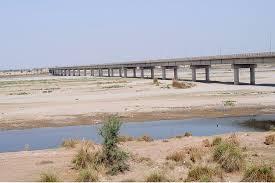
Lahore: India has suddenly released a large amount of water into the Chenab River, creating serious concern in Pakistan over what is being seen as an act of "water aggression."
This development comes shortly after India unilaterally suspended the Indus Waters Treaty (IWT), which has governed water sharing between the two countries for over six decades.
The flow of water in the Chenab River at Head Marala increased sharply overnight. At 9 p.m. on Monday, the water flow was just 3,100 cusecs, but by Tuesday it had jumped to 26,000 cusecs. This sudden change has alarmed Pakistani officials.
Punjab’s Irrigation Minister Kazim Pirzada said the increase in water flow was not natural. “We have seen changes in the river that don’t normally happen. One day the river had normal flow, and the next it dropped drastically,” he said. “This will mostly affect areas that don’t have other water supply options,” he added.
The Chenab is one of three western rivers that, under the 1960 Indus Waters Treaty, were assigned to Pakistan. India can use the water for irrigation and limited electricity generation, but it is not allowed to alter flows or store large amounts of water. On April 23, however, India suspended the treaty, claiming that Pakistan was linked to the deaths of 26 Indian tourists in Pahalgam.
Pakistan has strongly rejected the accusation and warned that any move by India to block or alter river flows would be considered an “act of war.” Information Minister Attaullah Tarar repeated this warning in the National Assembly on Tuesday. “If India tries to block our water, Pakistan will respond strongly,” he said.
Meanwhile, India has reportedly begun a “reservoir flushing” operation at the Salal and Baglihar dams, located in Indian Illegally Occupied Jammu and Kashmir (IIOJK). This process involves releasing sediment-heavy water downstream to clean out the dam’s reservoir. It can cause a sudden rise in water levels downstream, followed by a reduction in flow as the reservoir is refilled.
Normally, under the Indus Waters Treaty, India is required to inform Pakistan before carrying out such operations. However, this time no prior notice was given.
On Tuesday, an Indian newspaper reported that India had also lowered the spillway gates at Baglihar dam to reduce water flow into Pakistan. The Punjab irrigation minister said this appeared to be a deliberate attempt to stop Pakistan from using the water.
Experts say that while India cannot completely stop the flow of water to Pakistan due to geography, it can control the timing of water releases. Even small delays in releasing water can damage Pakistan’s agriculture. The Jinnah Institute warned that changes in water timing can upset sowing seasons and reduce crop production.
Adding to Pakistan’s worries, India is also speeding up work on four under-construction hydroelectric projects in IIOJK. According to a Reuters report, Indian Prime Minister Narendra Modi’s government has ordered authorities to fast-track construction of the projects, which have a total capacity of over 3,000 megawatts.
These projects include:
Pakal Dul (1,000 MW)
Kiru (624 MW)
Kwar (540 MW)
Ratle (850 MW)
All are located on the Chenab River, which mainly serves Pakistan. The report says the Indian government wants construction on these dams to begin between June 2026 and August 2028. India’s state-run company NHPC is responsible for the projects.
Pakistan and India are already locked in a legal dispute over the Ratle project at the Permanent Court of Arbitration in The Hague. Pakistan has objected to its design and storage capacity, saying it violates the terms of the Indus Waters Treaty.
In a speech in New Delhi, Indian Prime Minister Modi said, “India’s water will be used for India.” He suggested that India would stop water from flowing into Pakistan as a national interest.
Pakistan sees these developments as dangerous, especially given that water from the Chenab and other rivers is critical for its agriculture. Officials warn that if India continues to use water as a political weapon, it could seriously damage Pakistan’s economy and create regional instability.
Brook scores fastest double century in ODI history in rampant England's 429-4
- 9 hours ago

AMD is bringing FSR 4.1 to Xbox consoles and handhelds
- a day ago
Two killed, 8 injured in attack on airport in Saudi oil city Dammam
- 11 hours ago

The French youth revolt
- 21 hours ago

Why your health insurance is dropping GLP-1 coverage
- 21 hours ago

This chart shows just how rapidly Ebola is spreading
- 21 hours ago
The case for data centers, explained by a person who wants you to like them
- 21 hours ago

Some Google Home Speakers caught downloading hundreds of gigs of data
- a day ago
Pakistan, EU agree to cement counterterrorism cooperation
- 8 hours ago

PM calls for promoting Pak-Maldives trade, investment ties
- 3 hours ago

Trump is coming for your credit card rewards. That’s good.
- 21 hours ago

Major European mobile carriers are teaming up for a ‘direct’ satellite program without Starlink
- a day ago