
If you feel like the internet is full of slop and rage bait these days, you aren’t alone. Anger is fueling the internet so much that Oxford decided to make rage bait the word of 2025. But if you were born in the 1980s or 1990s, you probably remember a differ…

Published 9 months ago on Jan 6th 2026, 7:00 am
By Web Desk
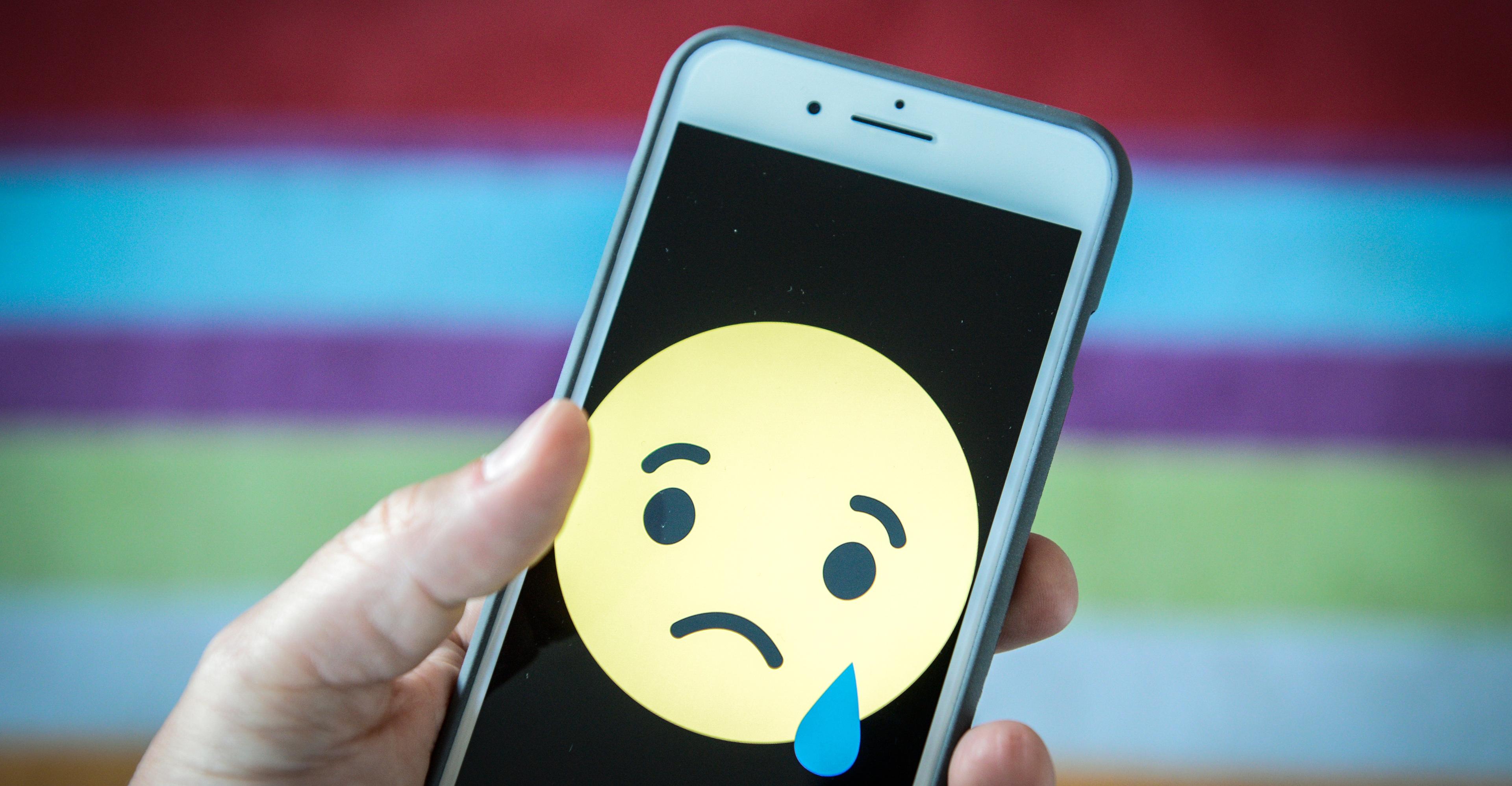
If you feel like the internet is full of slop and rage bait these days, you aren’t alone.
Anger is fueling the internet so much that Oxford decided to make rage bait the word of 2025. But if you were born in the 1980s or 1990s, you probably remember a different time: the days of logging into a computer at your local library or in your family room, printing song lyrics, writing in your LiveJournal, or mulling over your MySpace Top 8.
Those days are long behind us, but Max Read remembers this era too. He’s a writer and has a Substack called Read Max, all about technology and culture. “I would go to link aggregating sites like FARK,” he said on a recent episode of Explain It to Me, Vox’s weekly call-in podcast. “When I was a little older, Metafilter was another one. There’d be discussions in the comments and you would get linked out to other websites that you could find and discover web comics and bloggers and whatever else.”
Read says it was a much different landscape than the one we have online now.
“There were fewer mega platforms — by which I mean these huge sites that became the whole internet for people. Facebook, Instagram, Twitter, TikTok, places where you go and you can spend hours without ever leaving that particular website,” he said.
So what caused this shift in the internet? And was the change inevitable? Read tells us on the latest episode of Explain It to Me. Below is an excerpt of our conversation, edited for length and clarity.
You can listen to the full episode on Apple Podcasts, Spotify, or wherever you get podcasts. If you’d like to submit a question, send an email to askvox@vox.com or call 1-800-618-8545.
[Media: https://playlist.megaphone.fm/?e=VMP6536389084]
What changed and when did it change? How did the internet get this way?
I would say there’s two big shifts. The first one happened almost 20 years ago. In 2006, Facebook introduced the newsfeed. People revolted, they hated it. But what Facebook was seeing on the back end was that all of their numbers were up. Engagement was up, time on site was up, visitors were up. People kept coming back from more. And the feed has become the paradigm for how we engage with the internet ever since.
Then the second change — which is an acceleration of something that was already happening — was TikTok introducing the For You page as a concept. You go to TikTok because TikTok has this incredibly dialed-in algorithm that’s going to show you weird videos as you scroll through it. That’s the other change that created this really wholly separate kind of antisocial internet that we’re on now.
Has the algorithm killed the internet?
Yes and no.
I think it’s worth keeping in mind the algorithm also brought the internet to what it is today: [the] size it is today, the engagement.
I think something that is worth grappling with is what Mark Zuckerberg would say if he was on this podcast with us: you guys can complain about this. But every single time we’ve made one of these moves, the numbers have shown that people spend more time on Facebook. They want to be there more. They enjoy the time spent. They feel like it was better spent.
Are we conflating time spent and actually liking a thing ?
One thing to think about is that all of the metrics that Facebook is gathering tell us something fairly narrow. But it is also true that when they interview people, people will say they felt like their time was better spent with the algorithmic, FYP-type feeds than with the way Facebook was 10 years ago.
Was this trashy, toxic internet inevitable? Can a website grow and make money and be a place that brings in an audience without ruining itself?
I think a website that shows us a different path is Wikipedia, which is as big by the numbers as basically any of the platforms we’re talking about, and is arguably more essential to the web as we know it than even Facebook.
In that sense, to answer your question, no, it’s not inevitable in the absolute sense that a huge important website will turn into shit. The culture of Wikipedia as formulated by Jimmy Wales and the many people who’ve worked at the Wikimedia Foundation over the years — and by the volunteers who contribute and edit and monitor and otherwise work on Wikipedia — the culture of Wikipedia has been a really important factor in ensuring that it maintains itself as a free resource for anyone online.
I think that part of the problem with many of the big platforms we’re talking about isn’t merely that there’s a set of structural incentives that is pushing them into the darker corners of what they’re doing, but that the overall culture of Silicon Valley isn’t one that values any of the things we’re talking about.
Max, you and I are millennials. Could it be that we’ve just aged out of the internet? That we are no longer the target audience?
I mean, I hate to break it to you. We are old…
Unfortunately, we have reached middle age. Millennials like us, we were the protagonists of the internet for a really long time, because we were the people who grew up on it. We were the people who in our office knew the most about it. We were the people who created most of the content first on most of the social networks.
And we’re not the protagonists anymore. Some of that is aging-out. Some of that is, there are people who are even more raised by the internet than we were, who have been online for an even higher percentage of their lives.
And I think the other part of it is that the internet we see on all these websites now is really a truly global internet. In some sense there’s a lot of stuff we don’t see. There’s also a lot of stuff we see that just isn’t for us.
That’s maybe slightly separate from the question of “Are the structures of the internet worse off than they were 20 years ago?” Because I think it’s true, but the old internet’s gone, it’s not coming back. So it’s people — I think people are aged. The best you can do is retreat to your group chats.

Trump’s revenge campaign comes for Ilhan Omar
- 3 days ago
Communism in China and the changing world: from capitalist critique to socialism with Chinese characteristics
- 18 hours ago

Hands-on with the Apple Home Collection
- 3 days ago

Musk says will give SpaceX share to 'every kid in America'
- 17 hours ago
Florida’s uniquely horrifying death penalty system
- 3 days ago

Security of Haramain al-Sharifain non-negotiable: DG ISPR
- 19 hours ago

Bollywood actor Tiger Shroff shot at in Mumbai, three suspects held: police
- 18 hours ago

Field Marshal, Saudi envoy discuss regional security dynamics
- 15 hours ago

Army officer martyred, four terrorists killed in Balochistan operations: ISPR
- 17 hours ago

Buying Apple’s wall-mounted HomeView? The mount costs extra
- 3 days ago

FIA offloads 2 passengers at Lahore airport over fake documents, tampered study visa
- 2 days ago

West Bank settlers brutally attack a Washington Post journalist
- 2 days ago
You May Like



Trending