
Nobody tells you how expensive breaking up is. (Or maybe they did and I didn’t want to hear it.) Overnight, your expenses soar, your safety net vanishes, your financial goals shift from long-term dreams into short-term survival. You might need to pack up and …

Published 7 months ago on Mar 9th 2026, 4:00 pm
By Web Desk
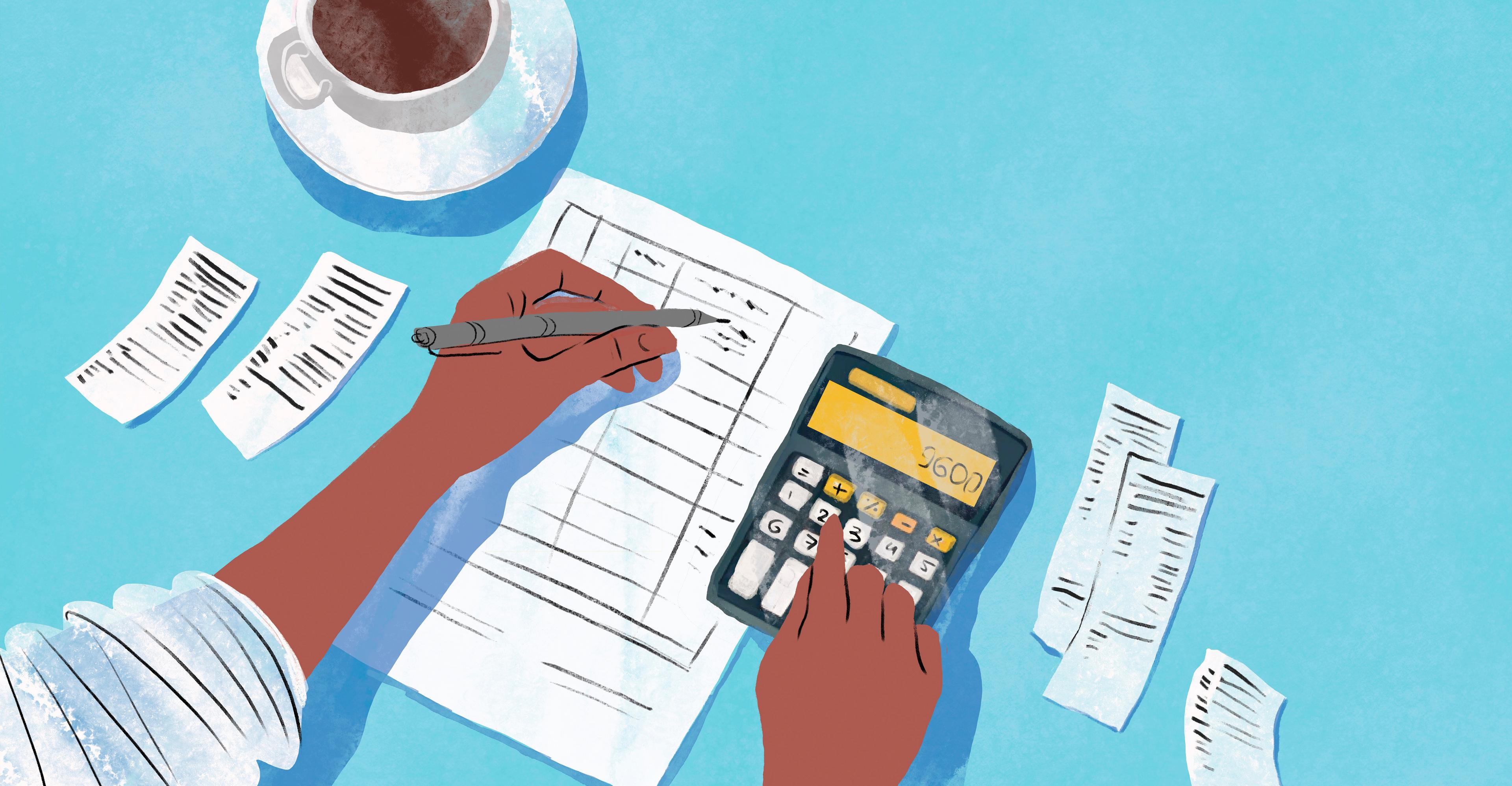
Nobody tells you how expensive breaking up is. (Or maybe they did and I didn’t want to hear it.) Overnight, your expenses soar, your safety net vanishes, your financial goals shift from long-term dreams into short-term survival. You might need to pack up and move unexpectedly, purchase furniture you didn’t budget for. Your dollars went further when two people contributed to the rent, the bills, the groceries, the dinners out. Now, you must recalibrate from a financial “we” to a sole earner “me.”
When marriages dissolve, there is a clearer roadmap for how to divvy up shared assets, guided by the laws of your state, attorneys, and mediators, according to financial therapist Amanda Clayman. Unmarried couples are largely on their own to navigate the breakup process despite sometimes being just as financially intertwined.
Breakups are immensely painful on their own, but with the additional challenge of sorting out your new financial reality, the transition can be even more difficult. Getting your financial life together post-breakup goes beyond budgeting and is just as much about how you want your money to make you feel in this new phase of life. “Let there be a relationship between data and emotion,” Clayman says, “because data often surfaces emotion, and that’s not an enemy in this process.”
Take stock and make an exit plan
If the breakup was acrimonious and you are concerned about your ex draining a joint bank account, you may want to remove your share of the funds, Clayman says, and you should close all shared accounts once you’ve both removed your portions of the money. (You might consider taking your money out before breaking up if you don’t feel confident your partner will honor an equitable split.)
In order to divide your shared funds, you’ll need a clear picture of the extent to which you and your ex’s finances are merged. Go through two months of personal and joint bank statements and make a list of all the subscriptions, plans, loans, and accounts you share with your ex. This may include the lease, joint bank accounts and credit cards, any bills that may or may not autopay out of this account, streaming subscriptions, and shared purchases you’re still paying off (like a car).
Then, go through each bill and account — from Netflix to the water payment — and revoke your ex’s access, change passwords and associated email addresses, or open a new account in your name. For instance, if you’re staying in the apartment you shared, you might need to call the electric company and get the bill transferred to your name if it was previously held by your partner. “You’re more in protect mode than build mode or maintenance,” says Scott Rick, an associate professor of marketing at the University of Michigan. “You’re just ensuring that you aren’t sharing accounts and having unexpected names on things, and surgically removing this person financially from your life.”
When it comes to shared debt, like a loan for a car you both drove, decide which of you will take over the payments and the car itself, Rick says. Although each of you might have contributed equally, it may not be worth the pain of a protracted battle or shared custody. The sooner you can decide who has ownership, the better. “My impression is that people are often better off just cutting their losses,” he says, “not feeling compelled to keep interacting with someone who’s bringing them pain.”
Set a time frame for when you’d like this disentangling process to be completed, Clayman says. If you both struggle to come up with a timeline or are disagreeing on how to split certain shared expenses, Clayman and Rick recommend bringing in outside help, whether that’s a mediator or financial therapist, or even a trusted friend or family member. “Just an outside perspective to help find solutions if the two of you aren’t in the best head space,” Rick says. “This outside person can take into account, ‘This person’s struggling financially, maybe more than this other person, so maybe we can find a win-win arrangement here.’”
Track your spending before making major decisions
Often, after a major life transition, people act hastily as a means of retaining a sense of control. You might be motivated to downsize your apartment, cancel all your streaming services, and severely constrict your spending — and based on your income, which hasn’t changed, that might be wise. But unless you comprehensively track your spending, you won’t know the extent to which you need to tighten the purse strings.
If you’re moving, perhaps unexpectedly and suddenly, you’ll need to make an immediate decision on where you’ll live, what you can afford, and what necessities you’ll want to furnish this new place. Try to look for a flexible arrangement, like a sublease or a month-to-month lease. Since you might not be staying in this place long, avoid stocking up on expensive furniture purchases that you’ll have to move in a few months or that might not fit in your longer-term home. Instead, browse your local Buy Nothing group or Facebook Marketplace to find free or heavily discounted items to get you through the transition.
Clayman recommends giving yourself three to six months to pay attention to your cashflow. Because your lifestyle and way of living will inevitably change, so will your spending. Instead of buying groceries for two people, you’re shopping for one and your food may last longer. You might not notice these trends right away unless you actively monitor them. Rick suggests manually entering each expenditure into a spreadsheet to have a conscious understanding of where your money is going. Making emotional purchases does help alleviate sadness, Rick has found in his research, so don’t feel guilty for the occasional impulse buy just because. But don’t bury your head in the sand when it comes to how much you’re actually spending.
Use this monitoring period as a time to reflect on what you want to spend your money on, as opposed to what you and your partner collectively wanted to spend. You might decide saving for a vacation is no longer a priority and instead want to put those dollars toward dinners with friends. “Instead of coming from a place of lack where I used to have so much money, and I didn’t really have to think about this, and I could just do what I wanted, now it’s like, I have fewer dollars. Let me really ask myself, what is the most important thing to me?” Clayman says.
After a few months, you’ll start to observe trends: My rent is eating up way too much of my monthly take-home pay; I’m spending a lot on little treats and Ubers; the electric bill actually went down now that only I live here. Then, you can start making some changes, whether that’s looking for a new place to live or curbing your shopping. “Just say, ‘I’m going to give myself three months to gather data on this,’” Clayman says. “That gives us three months to process the feelings. It gives us three months to stress test the idea of living alone or getting a roommate. We’re using money to create a structure for analysis and decision-making.”
However, you might not have the luxury of time or savings to make these gradual adjustments. In this case, problem-solving mode will be your default: finding somewhere to live (even if that’s crashing with family or friends), selling items for extra cash, and identifying immediate savings opportunities (shopping at discount grocery stores instead of organic markets or doing your nails at home). Apps like Rocket Money can help you pinpoint specific subscriptions to cancel.
Embrace the fresh start
Beyond the logistical considerations, breakups offer an opportunity to reevaluate your spending and financial goals. Perhaps your partner was largely in control of paying the bills and tracking cash flow. Now, you can take more agency and consider why you felt comfortable with such a dynamic. “Why do I have all of these attachments around the idea of being taken care of?” Clayman says. “What is that revealing to me?”
A breakup, as painful as it is, disrupts routine, and with that comes the chance to build something new. The weekly takeout and movie ritual you held with your partner might not jive with your current lifestyle — and you can put those funds toward something that better aligns with your values. “When we have a big life transition, the gift of that life transition is that you are forced to become conscious and to reevaluate your circumstances,” Clayman says. “Think of how we embrace that opportunity to live more consciously and to feel our feelings and to process what it means before we just go and put down new stakes in this new territory.”

Corruption is finally breaking through to voters this time
- 15 hours ago
Star QB Jalen Hurts out for season after blood clots discovered in lungs...
- 16 hours ago

Pakistan, Maldives agree to enhance bilateral trade volume from $13mn to $200mn in next two years
- 8 hours ago

World Iodine Deficiency Day is being observed today
- 8 hours ago

Apple’s HomeView has an app problem
- 17 hours ago

At least 10 killed in Rajanpur road mishap
- 8 hours ago

Yemen's Houthis deny launching drones towards Saudi Arabia's Medina
- 4 hours ago

The Tesla Roadster could have stayed vaporware
- 17 hours ago

Sony’s WH-1000XM6 headphones are $130 off today only
- 17 hours ago

Meta and Apple team up to make Muse AI models run better on Macs
- 8 hours ago

Benn Jordan on Flock, privacy, and the new surveillance backlash
- 8 hours ago

Google is making inline links more prominent in AI responses
- 17 hours ago
You May Like






Trending