SPDC and WHO Proposes 37% Tobacco Tax Increase to Save Lives and Boost Revenue
The proposal comes as the government prepares to outline its budgetary agenda, in a bid prioritize public health and economic prosperity through targeted tobacco tax reforms.

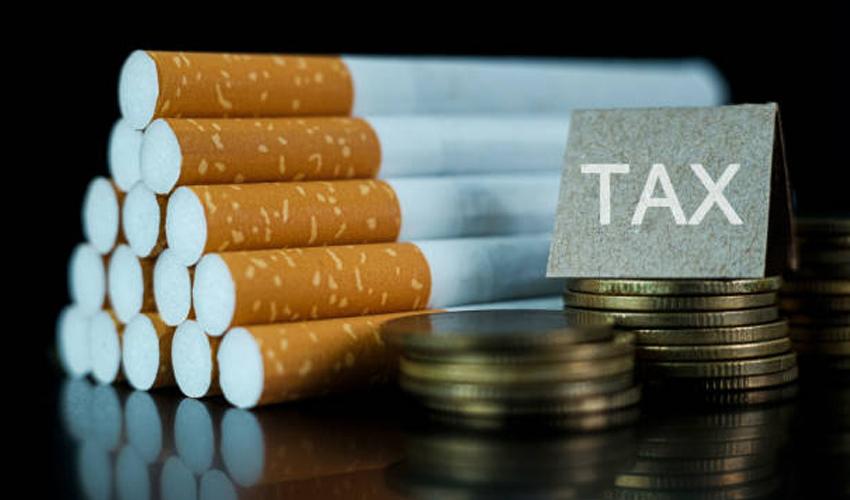
Islamabad: The Social Policy Development Centre (SPDC) has proposed 37% increase in Federal Excise Duty (FED) on tobacco products to reinforce the gains already achieved and to advance further in enhancing public health outcomes and revenue collection.
“Pakistan can save as many as 265,000 lives, generate an additional revenue of Rs 37.7 billion and push 757,000 people to quit smoking through increasing the FED by 37 percent,” said the SPDC policy paper name
“Recovering Healthcare Costs and Saving Lives” that aligns recommendation of World Health Organization (WHO) and Campgain for Tobbaco Free Kids (CTFK).
The proposal comes as the government prepares to outline its budgetary agenda, in a bid prioritize public health and economic prosperity through targeted tobacco tax reforms.
Pakistan has two-tiered system of FED on cigarettes. The country made significant strides and increased the FED on cigarettes in 2022-23 with substantial increase in FED. The current FED share in retail prices is 48 percent and 68 percent respectively for low and high tiers.
The SPDC says that if the rates (FED) are not increased and the trend is not maintained, it can negatively affect both the revenue and public health efforts. Therefore, FED should be further adjusted, in line with international standards, to take the tax share of retail prices towards 70 percent.
The proposal seeks to take the FED share to 54 percent or Rs 154 and 72.1 percent or Rs 452 for economy and premium brands, respectively.
The proposal is backed by the gains of previous tax adjustments, which have demonstrated tangible reductions in smoking rates and significant financial gains for the government.
According to details, revenue collection from July 2023 to January 2024 has reached Rs 122 billion and figure expected to surpass Rs 200 billion by year-end.
Beyond revenue generation, it helped in reducing smoking rates and potentially recouping 17.8% of total healthcare costs associated with smoking-related illnesses in Pakistan.
Addressing the argument that the increase in FED would result in increase of illicit trade, the SPDC said that research studies have proved that this argument lacks empirical support, with evidence showing that tobacco companies manipulate production figures to influence tax policies and evade taxes.
In addition, it said that the track and trace system is expected to reduce counterfeiting, curb illicit trade and keep check on frontloading.
Pakistan is among the country where smoking has high prevalence. The data shows that a staggering 31.6 million adults—equivalent to nearly 20% of the adult population—use tobacco products in Pakistan.
Alarmingly, tobacco consumption is responsible for approximately 160,000 deaths annually, accounting for a considerable 1.4% of the country’s GDP in healthcare expenses each year.

Hands-on with the Apple Home Collection
- a day ago

West Bank settlers brutally attack a Washington Post journalist
- 14 hours ago

Trump’s revenge campaign comes for Ilhan Omar
- 2 days ago

Jodar apologises for swearing at ball kid in Shanghai
- 2 days ago
Cold weather and high prices could flip the Senate
- 2 days ago

Character.AI files for bankruptcy
- 2 days ago

FIA offloads 2 passengers at Lahore airport over fake documents, tampered study visa
- 5 hours ago
Will November stop Trump’s agenda?
- 2 days ago

The Ocarina of Time remake feels remarkably modern — and surprisingly terrifying
- 2 days ago

Buying Apple’s wall-mounted HomeView? The mount costs extra
- a day ago

Here are all the new HomePod Mini 2 colors
- 2 days ago

Florida’s uniquely horrifying death penalty system
- 2 days ago