
It’s “virtually certain” that 2024 will go down in the books as the hottest year yet. The planet is on track to pass a worrying threshold when it comes to global average temperatures, warns the European Union’s Copernicus Climate Change Service.
Technology
- Home
- Technology
- News
2024 is going to smash heat records
Global temperatures soared in 2024, likely cruising past a key threshold.

Published 2 years ago on Nov 15th 2024, 10:00 am
By Web Desk
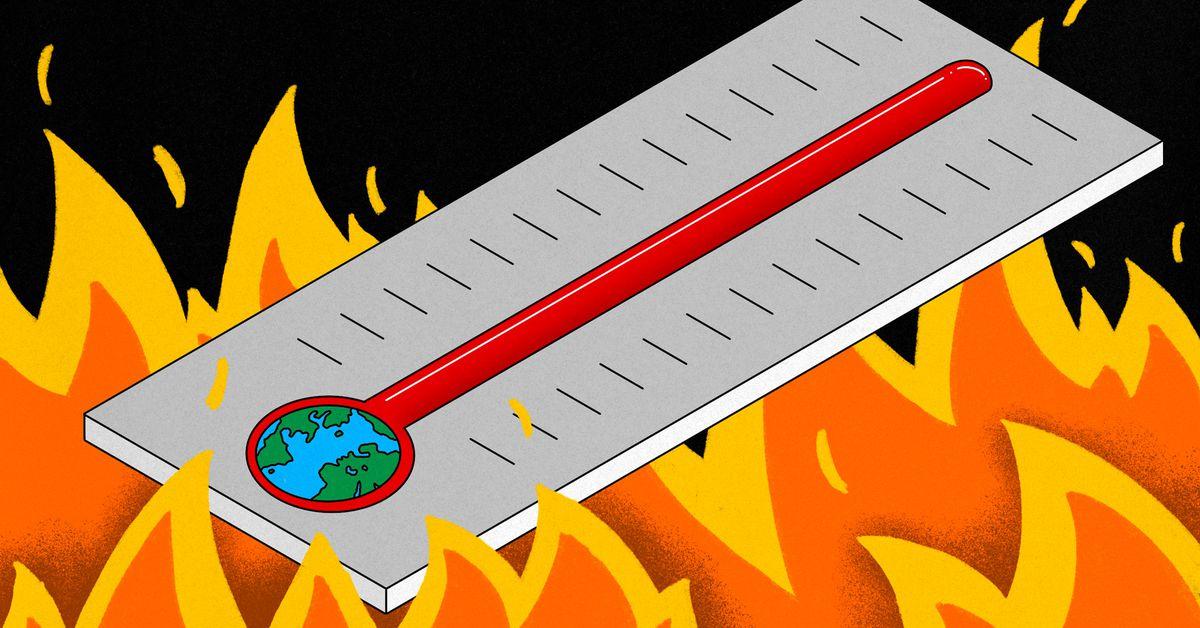
After a scorching summer, and with countries making slow progress on climate change, it’s not too surprising that 2024 is going to be off the charts. Greenhouse gas emissions from fossil fuels are pushing temperatures higher, forcing communities around the world to adapt to harsh new realities.
“Humanity’s torching the planet and paying the price.”
“Humanity’s torching the planet and paying the price,” UN Secretary-General António Guterres said in remarks yesterday.
Both Copernicus and the World Meteorological Organization released analyses yesterday saying 2024 is on track to be the hottest year on record — passing 2023, which was the record-holder until this year. The average temperature anomaly for the remainder of the year would have to fall close to zero for 2024 not to break the record.
It’s been a year of anomalies. More than 1,300 people died as temperatures soared in Saudi Arabia during the annual pilgrimage to Mecca in June. At the time, the Northern Hemisphere was in the middle of its hottest summer on record, beating 2023. While that’s based on a Copernicus analysis of data stretching back to 1940, separate research using markers in ancient tree rings found that the summer of 2023 in the Northern hemisphere was probably the hottest in at least 2,000 years. (Unfortunately, there’s less of this data available in more arid and tropical regions in the Southern Hemisphere.)

:format(webp)/cdn.vox-cdn.com/uploads/chorus_asset/file/25721737/C3S_PR_202410_Fig2_timeseries_global_temperature_anomalies_ref1850_1900_allmonths.png)
This is likely also the first year that global average temperatures have risen more than 1.5 degrees Celsius higher than they were before the industrial revolution. That might not sound like much, but it exceeds the most ambitious target set in the Paris climate accord — an international treaty to keep warming from surpassing 1.5 to 2 degrees Celsius over the long term. Our planet’s climate remained relatively stable for the last 11,000 years or so, supporting the rise of agriculture and civilization as we know it, until the industrial revolution. The Paris agreement aims to keep global temperatures within roughly the same temperature range. But without a transition to cleaner energy to get rid greenhouse gas emissions from fossil fuels, global temperatures will continue to rise.
Countries face a deadline to submit updated national climate plans under the Paris agreement next year, and will send delegates to meet in Baku, Azerbaijan next week for the annual United Nations climate summit. The results of the US election this week will make it harder to make progress, however. The US is the world’s biggest historical emitter of planet-heating carbon dioxide, and president-elect Donald Trump has said he’d take the US out of the Paris accord.

Security of Haramain al-Sharifain non-negotiable: DG ISPR
- 13 hours ago

Musk says will give SpaceX share to 'every kid in America'
- 11 hours ago

Bollywood actor Tiger Shroff shot at in Mumbai, three suspects held: police
- 12 hours ago

Field Marshal, Saudi envoy discuss regional security dynamics
- 8 hours ago

FIA offloads 2 passengers at Lahore airport over fake documents, tampered study visa
- 2 days ago

Communism in China and the changing world: from capitalist critique to socialism with Chinese characteristics
- 12 hours ago

Trump’s revenge campaign comes for Ilhan Omar
- 3 days ago

Hands-on with the Apple Home Collection
- 3 days ago

Buying Apple’s wall-mounted HomeView? The mount costs extra
- 3 days ago

Army officer martyred, four terrorists killed in Balochistan operations: ISPR
- 11 hours ago

Florida’s uniquely horrifying death penalty system
- 3 days ago

West Bank settlers brutally attack a Washington Post journalist
- 2 days ago
You May Like






Trending