
Shortly after midnight early Saturday morning, the Supreme Court handed down a brief order forbidding the Trump administration from removing a group of Venezuelan immigrants from the United States without due process. The facts of this case, known as A.A.R.P…

Published a year ago on Apr 22nd 2025, 7:00 am
By Web Desk
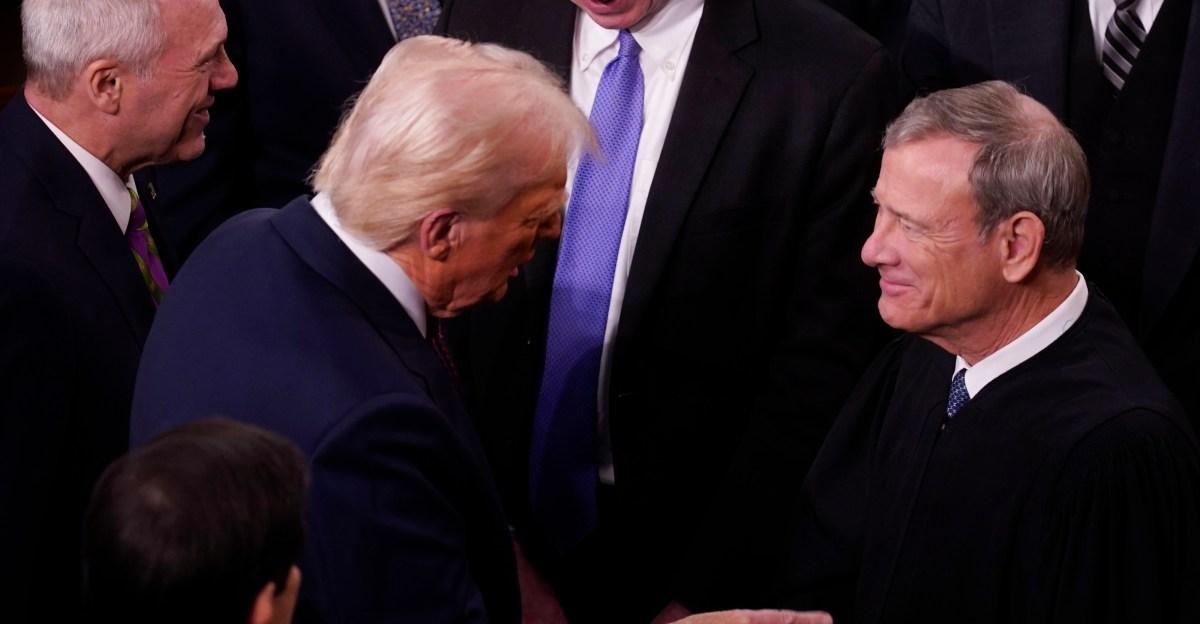
Shortly after midnight early Saturday morning, the Supreme Court handed down a brief order forbidding the Trump administration from removing a group of Venezuelan immigrants from the United States without due process.
The facts of this case, known as A.A.R.P. v. Trump, are uncertain and rapidly developing. Much of what we do know about the A.A.R.P. case comes from an emergency application filed by immigration lawyers at the ACLU late Friday night. According to that application, the government started moving Venezuelan immigrants around the United States to a detention facility in Texas, without offering much of an explanation about why it was doing so.
Sometime on Friday, an unknown number of these immigrants — the ACLU claims “dozens or hundreds” — were allegedly given an English-language document, despite the fact that many of them only speak Spanish, indicating that they’ve been designated for removal from the country under the Alien Enemies Act. That law only permits the government to deport people during a time of war or military invasion, but President Donald Trump has claimed that it gives him the power to remove Venezuelans who, he alleges, are members of a criminal gang.
Immigrants who were previously deported under this dubious legal justification were sent to a prison in El Salvador, which is known for widespread human rights abuses. Following those deportations, the Supreme Court ruled the government must give any immigrant whom Trump attempts to deport under this wartime statute “notice and an opportunity to challenge their removal.”
The ACLU lawyers argue the government is attempting to defy this order, claiming that the immigrants at the Texas facility were told that their “removals are imminent and will happen today” — a timeline that did not provide a real opportunity to challenge their removal. In a Friday hearing on the matter, the government did not give an exact timeline for deportations, but said it “reserve[d] the right” to deport the immigrants as soon as Saturday, and that the government was in compliance with the Supreme Court’s first order.
Assuming that the facts in the ACLU’s application are correct, this rushed process, where immigrants are moved to a facility without explanation, given a last-minute notice that many of them do not understand, and then potentially sent to El Salvador before they have a meaningful opportunity to challenge that removal, does seem to violate the Supreme Court’s April 7 decision in Trump v. J.G.G.
The Court’s late-night order in A.A.R.P. appears to be crafted to ensure that this notice and opportunity for a hearing mandated by J.G.G. actually takes place. It is just one paragraph and states that “the Government is directed not to remove any member of the putative class of detainees from the United States until further order of this Court.” It also invites the Justice Department to respond to the ACLU’s application “as soon as possible.”
Justices Clarence Thomas and Samuel Alito dissented from the A.A.R.P. order. Though neither has explained why yet, the order says that a statement from Alito will come soon.
Thus far, the Supreme Court has been extraordinarily tolerant of Trump’s efforts to evade judicial review through hypertechnical procedural arguments. Though the J.G.G. decision required the Trump administration to give these Venezuelan immigrants a hearing, for example, it also guaranteed that many — likely most — of those hearings would take place in Texas, which has some of the most right-wing federal judges in the country.
Though it is just one order, Saturday’s post-midnight order suggests that the Court may no longer tolerate procedural shenanigans intended to evade meaningful judicial review. If the ACLU’s application is accurate, the Trump administration appears to have believed that it could comply with the Court’s decision in J.G.G. by giving men who are about to be deported a last-minute notice that many of them cannot even understand. Whether most of the justices choose to tolerate this kind of malicious half-compliance with their decisions will likely become clear in the coming days. The Court’s A.A.R.P. order suggests that they will not.
Still, it remains to be seen how this case will play out once it is fully litigated. The post-midnight order is only temporary. And it leaves open all of the most important issues in this case, including whether Trump can rely on a wartime statute to deport people during peacetime.

UN chief lauds Pakistan’s efforts to promote dialogue, mediation
- 3 hours ago

Djokovic wins China Open as de Minaur retires injured
- 6 hours ago

OpenAI won’t go public until its models are safe
- 20 hours ago

Medvedev disqualified from China Open semi after hitting ball into crowd
- a day ago

Apple’s ‘HomePad’ will reportedly launch on October 13th
- 20 hours ago

US withdraws all bomber aircraft from UK airbase used during Iran war
- a day ago

Two Saudi airports targeted on Monday as fighting with Yemen's Houthis escalates
- 9 hours ago

What color is a tennis ball?
- 18 hours ago

The best early October Prime Day deals happening now
- 20 hours ago

Pakistan’s economy projected to grow 4pc this year: FinMin Aurangzeb
- 9 hours ago

The Sonos Ace Ultra are the headphones Sonos should have made the first time
- 20 hours ago

Pakistan successfully test-launches Fatah-4 cruise missile
- 3 hours ago
You May Like







Trending