About 10.3 million cases of the highly contagious infection were reported in 2023

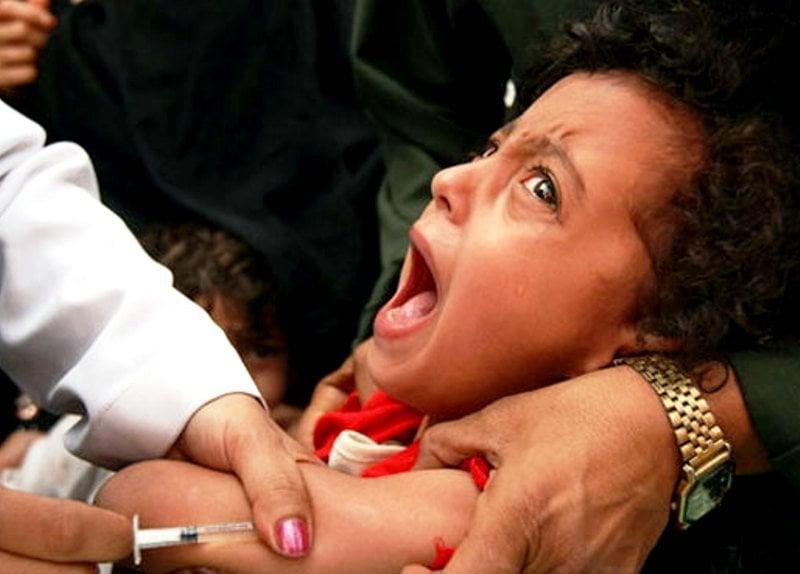
(Reuters): The World Health Organisation (WHO) and the United States Centers for Disease Control and Prevention (CDC) have revealed that measles cases rose 20% last year, globally.
According to the health agencies, this dramatic climb was driven by a lack of vaccine coverage in the world's poorest countries and those riddled with conflict.
Nearly half of all the large and disruptive outbreaks occurred in the African region where the number of deaths increased by 37%, they said.
"At this moment, every single country in the world has access to the measles vaccine, so there's no reason why any child should be infected with the disease and no child should die from measles," WHO's Natasha Crowcroft, a senior technical adviser on Measles and Rubella, told reporters.
Measles is caused by an airborne virus that mostly affects children under the age of five, but it is preventable with two doses of the measles shot. However, immunisation coverage was "inadequate" globally, the WHO and the CDC said.
About 10.3 million cases of the highly contagious infection were reported in 2023, compared with 8.65 million reported in the previous year, a report by the two agencies showed.
The number of deaths associated with the disease fell 8% to 107,500 due to improved access to health services and vaccines in high-income countries, such as Europe where cases surged last year.
Regardless of the decline, the death toll was "unacceptable", the agencies said.
The "biggest and the most overwhelming" cause of the spike in cases is the systems' failure to reach children with vaccines, said WHO's Crowcroft. However, vaccine hesitancy has also played a role.
Vaccine hesitancy has been on the rise since the COVID-19 pandemic as people lost confidence in the importance of routine childhood vaccines against diseases such as measles and polio.
More than 22 million children missed their first dose of measles vaccine in 2023, the agencies said.
That year, disruptive measles outbreaks were reported in 57 countries due to gaps in vaccination coverage, representing a nearly 60% jump from 36 countries in the previous year, the report said.
Apart from the African region, a substantial upsurge in cases was reported in the Eastern Mediterranean, European, Southeast Asian and Western Pacific regions, the report said.
This chart shows just how rapidly Ebola is spreading
- 21 hours ago
Brook scores fastest double century in ODI history in rampant England's 429-4
- 9 hours ago

Pakistan, EU agree to cement counterterrorism cooperation
- 8 hours ago

Two killed, 8 injured in attack on airport in Saudi oil city Dammam
- 11 hours ago

The French youth revolt
- 21 hours ago

Why your health insurance is dropping GLP-1 coverage
- 21 hours ago

Major European mobile carriers are teaming up for a ‘direct’ satellite program without Starlink
- a day ago

Trump is coming for your credit card rewards. That’s good.
- 21 hours ago

PM calls for promoting Pak-Maldives trade, investment ties
- 3 hours ago

Some Google Home Speakers caught downloading hundreds of gigs of data
- a day ago

AMD is bringing FSR 4.1 to Xbox consoles and handhelds
- a day ago

The case for data centers, explained by a person who wants you to like them
- 21 hours ago