‘Pakistan has reached a milestone in the enactment of important legislation against child marriages’


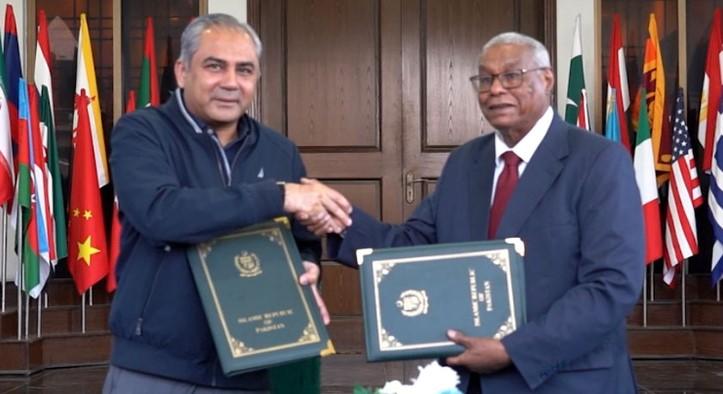
Islamabad: President Asif Ali Zardari has signed the Islamabad Capital Territory Child Marriage Restraint Bill, 2025, into law, marking a significant step forward in Pakistan’s efforts to safeguard children’s rights and curb child marriage.
The bill, which sets the minimum legal age of marriage at 18, was signed on May 29 following its passage by both houses of Parliament.
The announcement was confirmed via a presidential notification shared by PPP Senator Sherry Rehman on social media platform X.
"Pakistan has reached a milestone in the enactment of important legislation against child marriages," Rehman said, hailing the law as a "symbol of a new era of reforms" and a long-awaited victory for the rights of women and children.
Rehman acknowledged the stiff opposition the bill faced from conservative and religious quarters but noted that it was ultimately passed due to persistent advocacy and political will. "This bill is not just a law; it is a commitment that our girls have the right to education, health, and a prosperous life," she added. She also praised the efforts of PPP Chairman Bilawal Bhutto-Zardari, fellow lawmakers, opposition members, and the public for their support and urged other provinces to follow suit with similar legislation.
Despite the widespread support from civil society and human rights advocates, the bill met strong resistance from several religious groups. The Council of Islamic Ideology (CII) declared that categorizing marriage under the age of 18 as rape was inconsistent with Islamic teachings. Maulana Jalaluddin, a CII member affiliated with JUI-F, argued that such legislation contradicts the Quran, Sunnah, and the traditions of Pakistani society. He went so far as to accuse lawmakers of advancing a "Western conspiracy" to undermine the country's family structure.
Jalaluddin also criticized the legislative process, claiming the bill was passed "in secrecy" without proper consultation with the CII. "The assembly cannot be above the Holy Quran and Sunnah," he said, calling on President Zardari to reject the bill in order to prevent "anarchy" in society.
In defense of the bill, PPP MNA Sharmila Faruqi, who introduced the legislation in the National Assembly, urged critics to view the issue through the lens of human rights rather than religion. "We are not against marriage," she said, "but marrying girls as young as 13 or 14 is unjust, especially when they can’t vote, get a national identity card, or hold a driver’s license."
Faruqi pointed to a 2022 Federal Shariat Court ruling, which affirmed the state's authority to determine the legal age of marriage, further reinforcing the bill's constitutional and religious validity.

PML-N candidate Asad Hanif Jutt wins PP-203 Chichawatni by-election
- 2 days ago

How Democrats can make good on their new mandate
- a day ago

OpenAI is stepping back from NDAs for data center projects
- 17 hours ago

Binance says hackers used fake job interviews and an internal AI tool to pull off the $6.3 billion heist
- 2 days ago

Here’s what it’s like to use Audio Intelligence on the Apple Watch
- 2 days ago
Jhelum DC removed over attempt to postpone exam for 'VIP visit'
- 2 days ago

Peak Design expands its collection of wireless charging accessories
- 8 hours ago

Please stop asking me when the AI bubble will pop
- 17 hours ago

Gemini for Home now plugs into AT&T’s smart security system
- a day ago

Train collision in Egypt’s Giza province kills four and injures 88, health ministry says
- 2 days ago

Qualcomm is betting big on data centers as smartphone sales sink
- a day ago

Canva is announcing changes and layoffs affecting 22 percent of its staff
- 17 hours ago