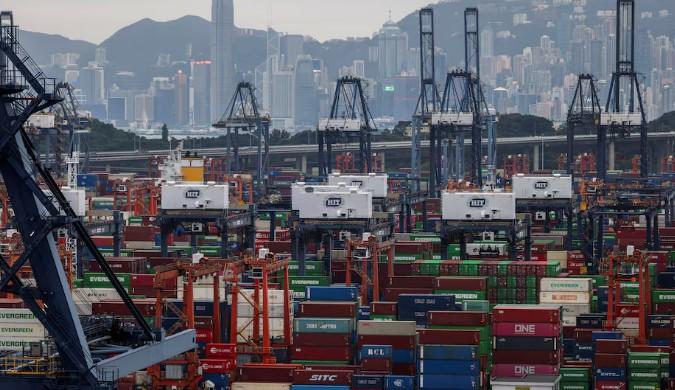
Brent crude futures rose $1.84, or 2pc, to $95.51 a barrel

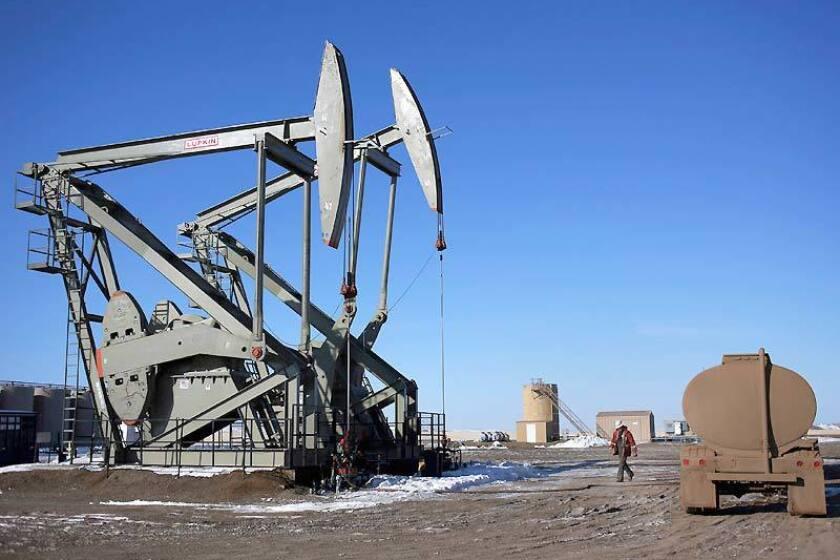
Oil prices jumped by more than 3% on Friday before paring some gains after health authorities in China eased some of the country's heavy COVID-19 curbs, raising hopes for improved economic activity and demand in the world's top crude importer.
Brent crude futures rose $1.84, or 2%, to $95.51 a barrel by 12:11 p.m. EDT (1711 GMT), extending a 1.1% rise from the previous session.
U.S. West Texas Intermediate (WTI) crude futures gained $2.00, or 2.3%, to $88.47 a barrel, after climbing 0.8% in the previous session.
The easing curbs include shortening quarantine times for close contacts of cases and inbound travellers by two days, as well as eliminating a penalty on airlines for bringing in infected passengers.
The benchmark oil contracts were headed for weekly declines of about 3% due to rising U.S. oil inventories, and lingering fears over capped fuel demand in China, but late-week gains limited the losses.
"China’s changing response to stubbornly high COVID-19 cases has added to the oil market’s price volatility and, should this new Chinese policy continue, the energy complex could be poised to erase most of this week’s decline," said Jim Ritterbusch, president of Ritterbusch and Associates LLC in Galena, Illinois.
A weaker U.S. dollar also supported oil prices as it makes the commodity cheaper for buyers holding other currencies.
Prices also picked up on Friday after milder-than-expected U.S. inflation reinforced hopes that the Federal Reserve would slow down rate increases, boosting chances of a soft landing for the world's biggest economy.
Saudi Arabia's energy minister Prince Abdulaziz bin Salman said OPEC+ will remain cautious on oil production, noting that members saw "uncertainties" in the global economy ahead of the bloc's next meeting in December, Bloomberg News reported on Friday.
The Organization of the Petroleum Exporting Countries and allies led by Russia, collectively known as OPEC+, last month agreed to steep production cuts, and will meet again on Dec. 4 to set its policy.
China's COVID-19 caseload soared to its highest since the lockdown in Shanghai earlier this year. Both Beijing and Zhengzhou reported record daily cases.
Besides work-from-home orders reducing mobility and fuel demand, travel across China remained subdued as people wanted to avoid the risk of being caught up in quarantine, ANZ Research analysts said in a note.
SOURCE: REUTERS
Two killed, 8 injured in attack on airport in Saudi oil city Dammam
- 2 hours ago

Bluesky’s AI tool now lets you make games and apps to share on social
- 14 hours ago

Some Google Home Speakers caught downloading hundreds of gigs of data
- 14 hours ago

The French youth revolt
- 12 hours ago

Brook scores fastest double century in ODI history in rampant England's 429-4
- 6 minutes ago
The case for data centers, explained by a person who wants you to like them
- 12 hours ago

We can finally hear some of Wu-Tang Clan’s Once Upon A Time in Shaolin album
- 14 hours ago
This chart shows just how rapidly Ebola is spreading
- 12 hours ago
Why your health insurance is dropping GLP-1 coverage
- 12 hours ago

Major European mobile carriers are teaming up for a ‘direct’ satellite program without Starlink
- 14 hours ago
Trump is coming for your credit card rewards. That’s good.
- 12 hours ago

AMD is bringing FSR 4.1 to Xbox consoles and handhelds
- 14 hours ago