
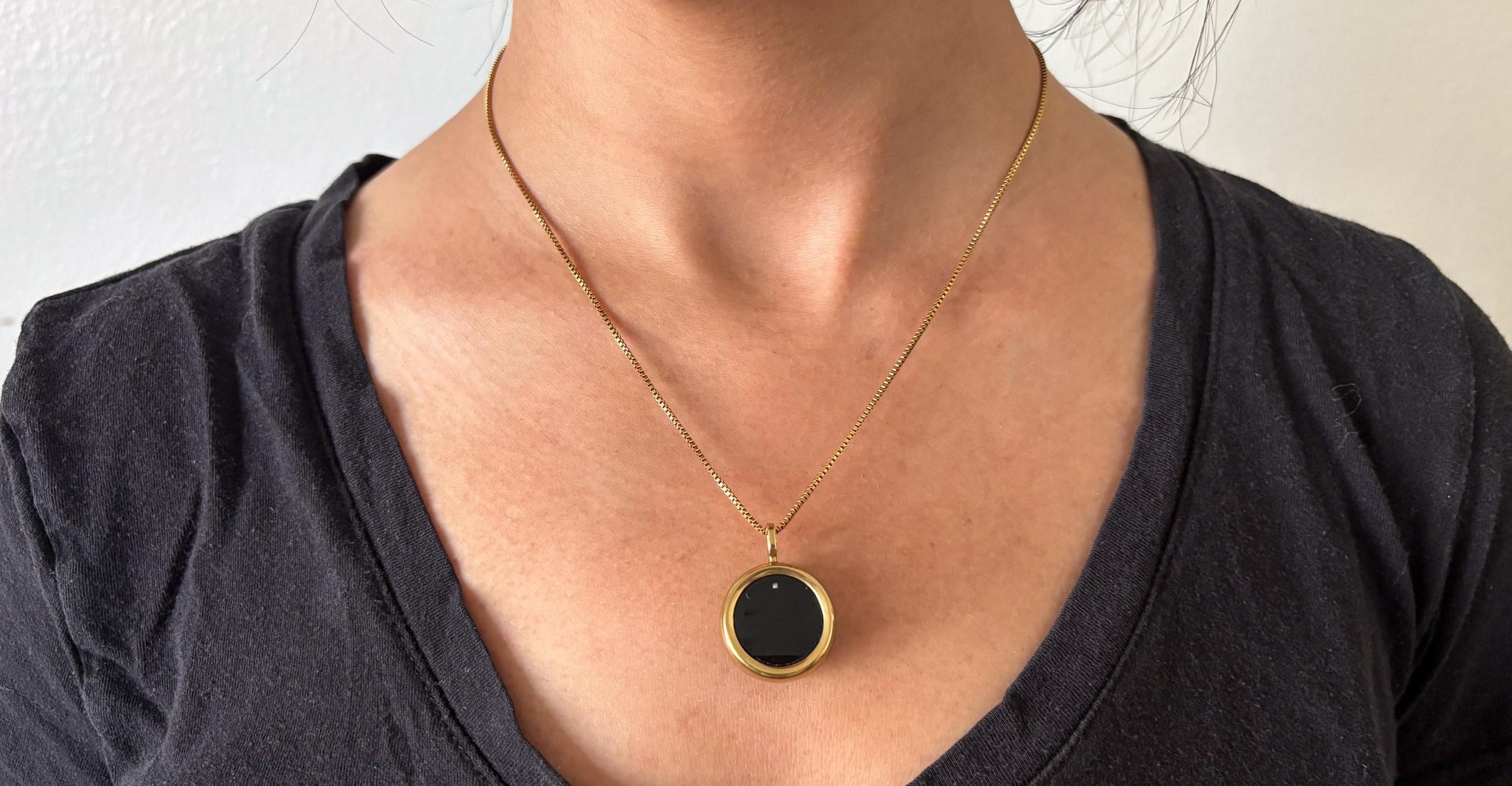
Last week, Humane debuted its AI Pin as a phone replacement without a screen. You interact with it through voice, and a tiny projector displays things like media controls and incoming calls on the palm of your hand. The idea is to allow you to simply move through the world, unencumbered by digital devices constantly demanding your attention. To wear the AI Pin is to live in a world beyond screens.
Technology
- Home
- Technology
- News
Screens are good, actually
The Humane AI pin lacks a screen in an effort to better connect us with our surroundings. But here’s the thing: screens are good, actually.

Published 3 سال قبل on نومبر 19 2023، 10:00 صبح
By Web Desk

It’s a beautiful vision that I’d love to buy into. But here’s the thing: screens are great, and I don’t think we can, or even should, ditch them quite yet.
Humane’s whole deal centers on the screenless-ness of its product — founder Imran Chaudhri said as much in his TED talk earlier this year. In Humane’s view, screens are a barrier between us and the rest of the world. The AI Pin allows you to “access the power of compute while remaining present in your surroundings, fixing a balance that’s felt out of place for some time now,” Chaudhri said. He’s not alone in that sentiment, with some research suggesting a link between depression and higher screentime. The science there isn’t settled, but Choudhri is tapping into a general worry that we’re all looking at our phone screens too damn much; just look at any number of products and features designed in response.
I don’t want to savor my trip to the DMV, I want to zone out and play Wordle on my little pocket computer
But even if a screenless future is the right destination, it requires more than zero screens in the present. Screens are great when you want to consume a lot of information at a glance or just check the 10-day weather forecast without waiting for a voice assistant to spit it all out.
And screens are, dare I say, fun. Say I’m on a work trip and my husband sends me a cute video of our kid — how exactly do I watch that on a screenless AI Pin? How do I text my sister about something gross that happened to me without telling everyone else in my immediate vicinity about it, too? The quest to have us live more in the moment is admirable, but some moments are personal or just plain dumb. I don’t want to savor my trip to the DMV, I want to zone out and play Wordle on my little pocket computer as I will time to pass faster.


I’d love to experience more of life’s fleeting moments without a little glowing box in front of my face. No argument here! Hell, I’d just like a break from the constant flood of notifications screaming for my attention at all hours of the day.
That’s why Humane’s pitch rings true in a way — it’s easy to imagine just walking around existing rather than checking your phone every five minutes. It sounds wonderful! But simply throwing your phone into the sea isn’t a viable alternative for most of us, so how do we stay connected and sift through the noise without disconnecting entirely? It’s an entirely reasonable pursuit, and Humane is far from the first to try to tackle the problem.
But Humane is unique in just how far it thinks we need to go. Chaudhri said in his TED talk that “for the human-technology relationship to actually evolve beyond screens, we need something radically different.” In that view, “radically different” apparently means “no screens” at all. But even that vision is a mirage: Humane says you manage the AI pin, your data, and the photos you take with it through a hub you access “on any web browser,” which tend to be used on — you guessed it! — screens. Not to get too “yet you participate in society” about it all. I get it. If there’s a path to this screenless future, it needs to be paved with a few screens in the present.
I’m all for a future where I spend less time tapping through apps and more time just getting shit done
I think Humane is onto something, and I’m all for a future where I spend less time tapping through apps and more time just getting shit done. If you squint at the new Ray-Ban Meta smart glasses, Humane, and the stuff we currently do with earbuds and smartwatches, you can start to see the fuzzy outline of the future of computing. But to pretend like we’re already there and all we need to do to reconnect with ourselves is ditch our little pocket screens, well, that’s a visual I can’t quite bring into focus.
Google’s Pixel Tag tracker is now available
- 19 hours ago

Reddit wants to guide your next purchase
- 4 hours ago
Aura’s next color E Ink photo frame is smaller, cheaper, sharper, and more colorful
- 4 hours ago
Peak Design’s Roller Lite Carry-On is bigger on the inside — and cheaper, too
- 4 hours ago

Creatine is everywhere. What does science actually say?
- 2 hours ago

History has a warning for the new Democratic majority
- a day ago

What to know about the Republican-led effort to impeach Pete Hegseth
- 2 hours ago

Seagate’s FireCuda Forge moves your data between a hard drive and SSD for better performance
- 4 hours ago

How the 7 healthcare workers who just got elected to Congress plan to fix our broken system
- 2 hours ago

How science informs author Emily St. John Mandel’s fiction
- 2 hours ago

Could this bacteria save coral reefs from the heat?
- a day ago
Sharge’s eye-catching MacBook charger is over 25 percent off
- 19 hours ago
You May Like

Trending