“Equivalent to having 50 Super Bowls”: The staggering — and lucrative — scale of eclipse tourism
Eclipse travel is set to pour millions into local economies. Many more people will travel for this event than for one of the country’s biggest games.


The biggest US travel event of this year might not be Taylor Swift’s sold-out concert tour or a long-awaited March Madness face-off.
Instead, it could well be the upcoming solar eclipse on April 8, which could see as many as 4 million people in the US journeying to view it. This year’s total solar eclipse is particularly special for the US: Although the phenomenon happens globally every 18 months, this one will be visible across a huge swath of the country, making witnessing it more accessible. Plus, the eclipse is expected to last longer than the prior one did in 2017, adding to its allure.
When it comes to the scale of travel we can expect, it’s “equivalent to having 50 Super Bowls simultaneously from Texas to Maine,” says Michael Zeiler, who helps run the Great American Eclipse website. Such tourism is set to generate upward of $1 billion in revenue across numerous cities, from Austin, Texas, to Rochester, New York. These cities will all be prime places to see the eclipse, which will be fully visible in parts of the southern US, the Midwest, and New England.
NASA's interactive map shows best times, places to watch total solar eclipse https://t.co/KMh6vmdvdM
— ABC7 Eyewitness News (@ABC7) April 3, 2024Hotels and campgrounds in places where the full eclipse will be visible have long been sold out, with tens of thousands of visitors expected to flock to these cities. “This is likely going to be the single biggest tourism event we’ve ever had,” Michael Pakko, a University of Arkansas economist, tells the Washington Post, regarding the more than $100 million in revenue the state is expecting. Towns and businesses are also going all out by investing in eclipse music festivals, theme park rides, and viewing parties.
Those traveling for this year’s eclipse join a long tradition of eclipse-chasers, who’ve been in awe of these events and who revel in sharing this communal experience. The rarity of such phenomena and the opportunity to enjoy them simultaneously with others bolsters their draw, experts say. The interest in eclipse tourism also comes as people’s willingness to travel has rebounded following the pandemic.
“The simple now-or-never of an eclipse is extremely motivating,” Jaime Kurtz, a psychology professor at James Madison University, told Vox. “The collective enthusiasm for the eclipse might also be a driving force. It’s unifying.”
There’s something about eclipses
Eclipse-chasers, or people who seek out eclipses when they happen, are drawn to this phenomena because of how unique it is, how infrequently it happens, and how much wonder it inspires. Some also have a specific interest in astronomy and space, and see eclipses as a way to explore that.
“It lifts you out of your everyday experience, and is such a remarkable feeling to be suddenly enveloped by a wave of darkness for a few minutes; it’s like standing on the surface of an alien planet,” said Zeiler, who has seen 11 eclipses on six continents. Zeiler traces a growing trend of eclipse tourism to the 1970s, when a group of astronomy enthusiasts first organized a cruise off the coast of Nova Scotia to see a solar eclipse. Since then, traveling to see eclipses has only become more popular as fascination with the phenomena has grown.
“No matter what I do, no matter how much I describe it, no matter how many videos you watch, they all fall short of being able to witness this for yourself,” Fred Espenak, an astrophysicist and eclipse-chaser, told Vox’s Brian Resnick and Joss Fong.
The event is also rarely visible to this degree in the US. In 2017, the eclipse had a narrower “path of totality,” or a smaller area where it could be seen in full from start to finish. This year, 31.6 million people already live in that larger path, making it easier for people to travel to it. And the next total solar eclipse to be visible in the US isn’t expected until the 2040s, which makes the upcoming one a prized experience.
“One of the reasons that we get value from experiences is because we think of them as less interchangeable than other ways that we could spend our money,“ Amit Kumar, a marketing and psychology professor at the University of Texas at Austin, told Vox.
Eclipses are also a singular event because so many people across the country — and world — are witnessing the same thing at the same time, fueling a feeling of connectivity and community that can be particularly powerful, Kumar said.
The desire to share in that feeling is just one factor that helps explain the high numbers of people willing to travel for this phenomenon, with local economies reaping benefits in the process. “Each eclipse is different. And that’s why we keep going again and again,” says Zeiler.

Big Oil has an audacious request for the Supreme Court
- 5 hours ago

Malaysia beat Pakistan by 5-4 goals in Asian Games match
- 3 days ago

India, Pakistan on Asian Games collision course after cricket washout
- 20 hours ago

US Afghanistan War Commission praises Pakistan’s contribution to regional peace
- 16 hours ago

What should you do if your friend is in love with you?
- 20 hours ago

Jensen Huang talks about AI and climate change like a supervillain
- 7 hours ago
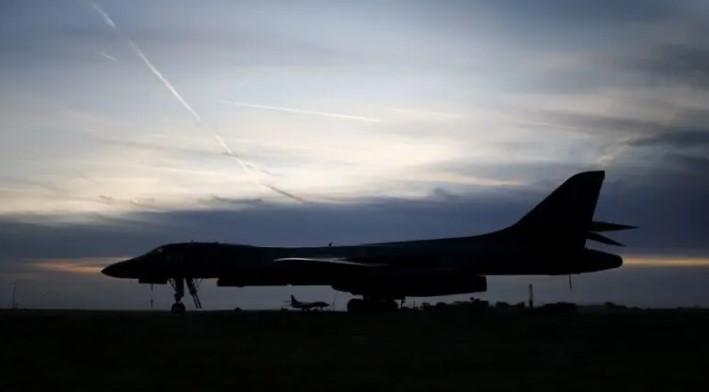
5 men held over bomb scare at England base used by US to attack Iran are UK nationals: police
- 19 hours ago
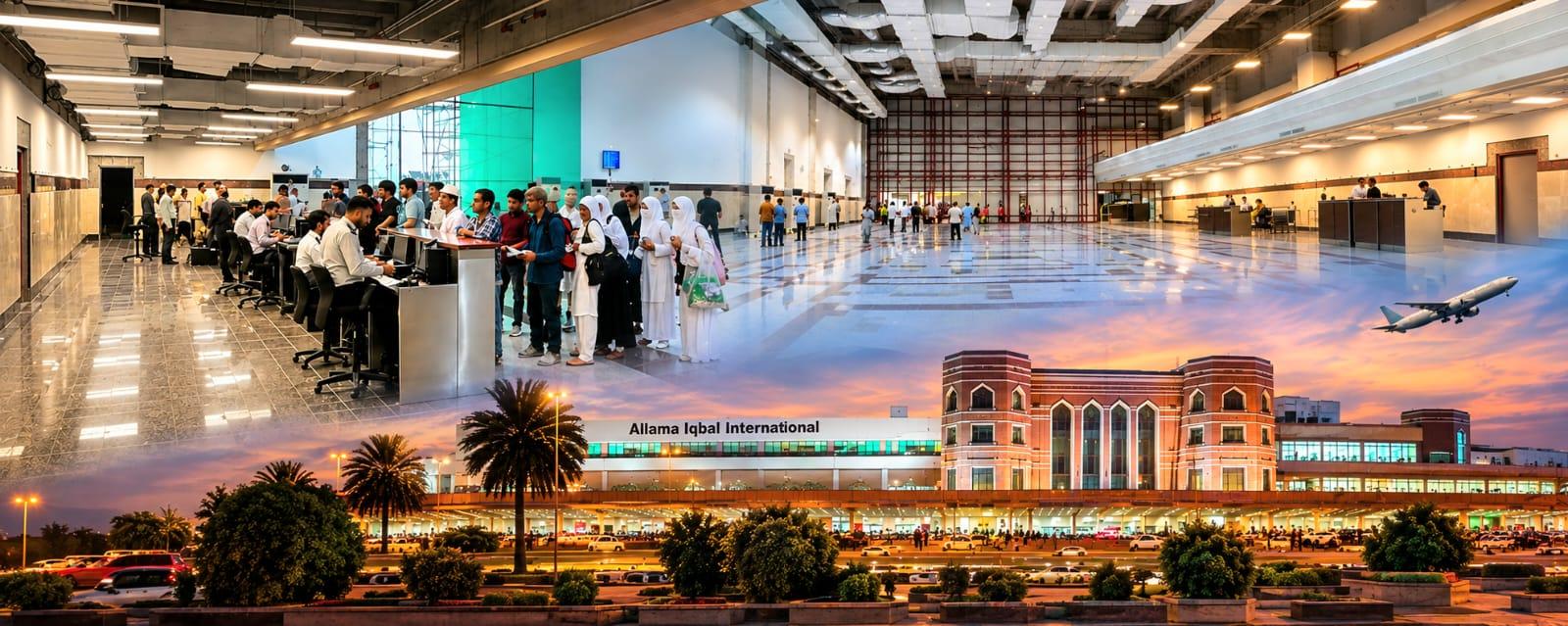
Allama Iqbal International Airport expansion gains momentum; passenger facilities set for significant upgrade
- 18 hours ago

Pakistan storm into Asian Games hockey semi-finals after thrashing Oman 7-2
- 21 hours ago

Pakistan Customs foils smuggling attempt at Islamabad Airport, seizes contraband worth Rs660mn
- 3 days ago

Soldiers can refuse to commit war crimes. Can AI?
- 2 days ago

Gold prices record big plunge in Pakisan
- a day ago