Euro Monitor report says the sale was set to decrease by 2% over the forecast period to 55 billion sticks.

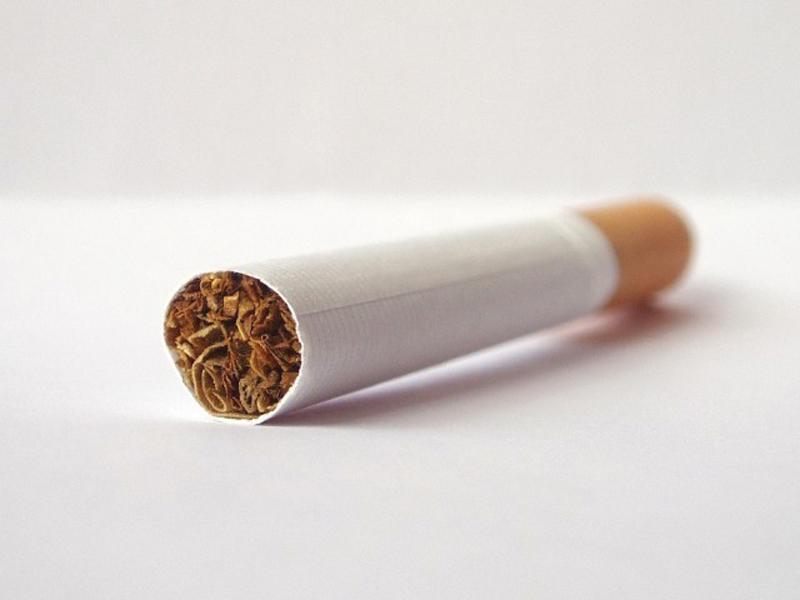
Islamabad: The retail volume sales of cigarettes decreased in Pakistan due to higher taxes and awareness amongst cigarette consumers of the potential health risks caused due to smoking, studies have revealed.
According to the Euro monitor report the retail volume sales decreased by 1% in 2022, resulting in the sale of 60 billion sticks annually, the sale was set to decrease by 2% over the forecast period to 55 billion sticks.
Euro monitor further said Pakistan Tobacco Company was the leading player in 2022, with a retail volume share of 71% in the market.
The report said following the ban on advertising tobacco products in Pakistan, and in the wake of the COVID-19 experience, there is an increasing awareness among consumers of the potential health risks of smoking tobacco actively and passively, individually or in any social setting.
Pakistan’s commitment to the Framework Convention on Tobacco Control (FCTC) underscores the importance of a unified pricing system for cigarettes to regulate the industry effectively and discourage consumption.
The WHO advocates for robust tax measures to reduce tobacco consumption, citing the effectiveness of a 10% increase in tobacco prices typically leads to a 4% decrease in overall tobacco consumption in high-income countries and up to an 8% decrease in low- and middle-income countries.
A study by the Pakistan Institute of Development Economics (PIDE) highlights the dire consequences of smoking-related diseases and deaths, with costs amounting to Rs615.07 billion in 2019, equivalent to 1.6% of the GDP.
Meanwhile, the International Monitory Fund (IMF) has recently, init study, suggested applying a single-tier tax structure on all international and national cigarette brands. Currently, cigarettes are taxed in two tiers, which is not only resulting a low collection of taxation from the cigarette industry but also resulting in 337000 deaths annually in Pakistan.
The objective of IMF recommendations is to ensure equitable taxation across cigarette products and it is widely appreciated by health advocates.

How bad healthcare can derail a woman’s entire life
- 7 hours ago

Voters mostly don’t like AI and data centers, but neither party seems to have an edge
- 9 minutes ago

The 2.5-hour AI-generated Odyssey movie is 2.5 hours too long
- 9 hours ago
PM expresses satisfaction over SBP reserves reaching historic high of $21.4bn
- 18 hours ago

The Dell XPS 13 is the first real competitor to the MacBook Neo
- 9 hours ago
Trump puts himself on the ballot
- 7 hours ago

Ronaldo included in Jesus' first Portugal squad
- 19 hours ago
The overlooked factor making everything more expensive
- 7 hours ago

Microsoft announces Windows and Surface event for October 7th
- 9 minutes ago

I reviewed Valve’s Steam Frame, ask me anything
- 9 hours ago
No one will be allowed to march on Islamabad: Mohsin Naqvi
- 17 hours ago

Apple Home’s new security camera features cost up to $60 a month
- 9 minutes ago