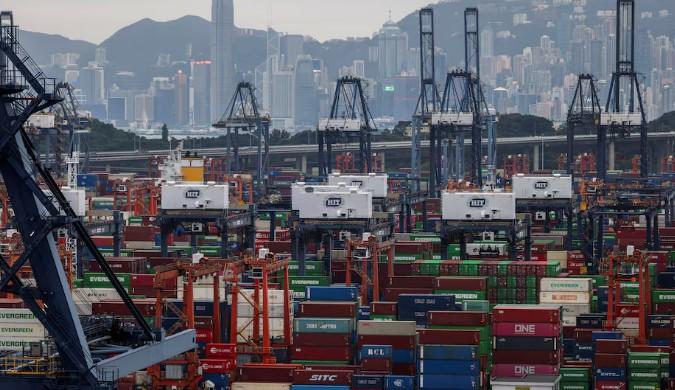
Bangladesh seeks to restore power to millions

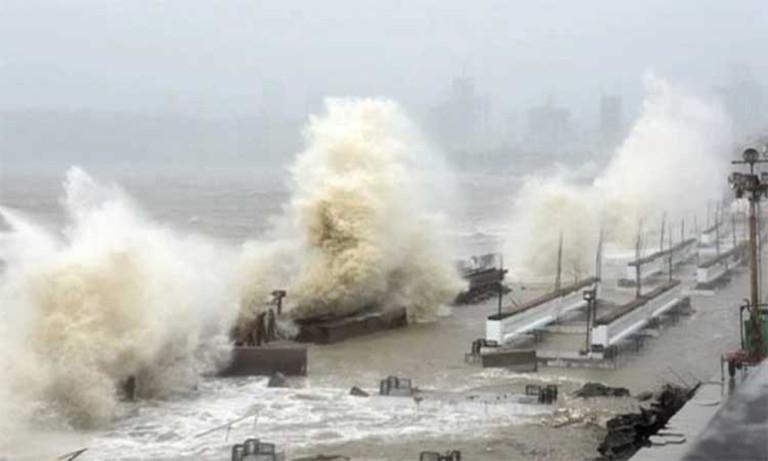
Dhaka: At least 24 people have died and millions were without power after Cyclone Sitrang struck Bangladesh, forcing the evacuation of about a million people.
Mass evacuations before Cyclone Sitrang made landfall on the west coast helped save lives, but the full extent of the casualties and damage would only be known after communications were fully restored, officials said.
"It was terrible. It looked like the sea was coming to grab us," Mizanur Rahman, a resident of Bhola district, told Reuters after communications were restored in his neighbourhood.
"We spent a sleepless night, all we could do was pray."
The cyclone barrelled in from the Bay of Bengal with winds gusting up to 88 kph (55 mph) and a storm surge of about 3 meters (10 feet) that flooded low-lying coastal areas.
Power and telephone links have largely been cut and coastal areas plunged into darkness, officials said.
Around 2,000 electric poles were damaged, leaving 8 million people without electricity, said Nasrul Hamid, junior minister for power, energy and mineral resources. "Efforts are underway to restore electricity as soon as possible," he told reporters.
Most of the people killed were crushed by falling trees.
Some 10,000 homes, 6,000 hectares (14,826 acres) of cropland and 1,000 fishing enclosures were damaged by the cyclone, Enamur Rahman, the junior minister for disaster management, told reporters.
No major damage was reported in refugee camps in southeast Bangladesh, where more than a million ethnic Rohingya refugees from neighbouring Myanmar are living in flimsy shelters.
Officials advised nearly 32,000 Rohingya refugees who had moved from the camps to a flood-prone island in the Bay of Bengal to stay indoors.
"We felt the force of the strong wind but were spared," Rohingya refugee Mohammed Arman told Reuters by phone.
Heavy rain fell on the streets of the capital, Dhaka, causing some flooding and disruption to commuters.
The cyclone also affected the eastern Indian state of West Bengal.
South Asia has experienced increasing extreme weather in recent years causing large-scale damage. Environmentalists warn that climate change could lead to more disasters, especially in places like densely populated Bangladesh.
Farah Kabir, Bangladesh country director of ActionAid group, said 2022 had climate emergencies such as floods and droughts "on a scale that has never been witnessed before".
"The climate crisis is growing, and here in Bangladesh we feel its ferocity," he said.
"When extreme weather events like Cyclone Sitrang strike, communities are left devastated. We urgently need access to funds that support communities living through the reality of the climate crisis.”

Disney Plus will stream Super Bowl LXI
- 21 hours ago

President Zardari and PM Shehbaz 'agree' on imposition of emergency in KP: sources
- a day ago
Who are the violent Israeli settlers in the West Bank?
- 19 hours ago

Anthropic bans ‘abusive or cruel behavior’ towards Claude
- 2 days ago

What if making your neighborhood safer means breaking the rules?
- 2 days ago
Saudi-led coalition says destroyed more than 100 Houthi targets
- a day ago

No one wants to be “Data Center Dave”
- 2 days ago

Xbox is launching a new film and TV division
- 2 days ago
UPDATE: DITKA DEAD AT 86...
- 20 hours ago

Is this the cure for Alzheimer’s?
- 2 days ago

PM Shehbaz calls for comprehensive strategy to combat diabetes
- a day ago

Pakistan calls for immediate de-escalation of Ukraine conflict
- a day ago