The declaration, which is initially effective for 90 days but can be renewed, came as nationwide cases topped 6,600 on Thursday

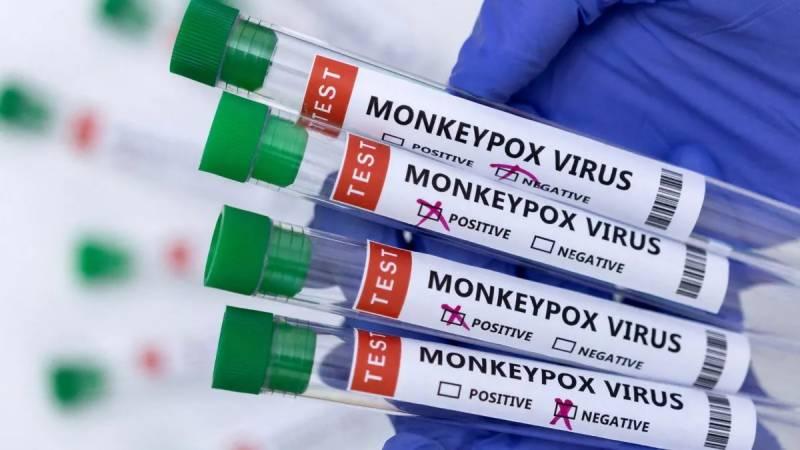
Washington: The United States on Thursday declared monkeypox a public health emergency, a move that should free up new funds, assist in data gathering and allow the deployment of additional personnel in the fight against the disease.
“We’re prepared to take our response to the next level in addressing this virus, and we urge every American to take monkeypox seriously and to take responsibility to help us tackle this virus,” Health and Human Services secretary Xavier Becerra said in a call.
The declaration, which is initially effective for 90 days but can be renewed, came as nationwide cases topped 6,600 on Thursday, around a quarter of them from New York state.
Experts believe the real number could be much higher in the current outbreak since the symptoms can be subtle, including single lesions.
The US has so far delivered some 600,000 JYNNEOS vaccines – originally developed against monkeypox’s related virus, smallpox – but this number figure is still far short of the approximately 1.6 million people considered at highest risk and who need the vaccine most.
Some 99 percent of US cases have so far been among men who have sex with men, the Health and Human Services department said last week, and this is the population authorities are targeting in the national vaccination strategy.
In contrast to previous outbreaks in Africa, the virus is now predominantly spread through sexual activity – but the Centers for Disease Control and Prevention says other routes are also possible, including sharing bedding, clothing, and prolonged face-to-face contact.
The US declaration comes after the World Health Organization also designated the outbreak an emergency last month – something it reserves for diseases of highest concern.
Also Thursday, US Food and Drug Administration commissioner Robert Califf said his agency was mulling a move that would allow clinicians to administer five doses of vaccine based on one dose of existing vials.
The vaccine is currently administered subcutaneously, but the new approach would involve administering it intradermally, at a shallower angle.
This “means basically sticking the needle within the skin and creating a little pocket there into which the vaccine goes, so this is really nothing highly unusual,” said Califf.
SOURCE: AFP
How bad healthcare can derail a woman’s entire life
- a day ago

Microsoft announces Windows and Surface event for October 7th
- a day ago

Afghan soil must not be used for terrorism: DG ISPR
- a day ago

Voters mostly don’t like AI and data centers, but neither party seems to have an edge
- a day ago

Your robotaxi might be a narc
- 14 hours ago
An Israeli documentary about Gaza is sweeping the world – and Israelis are furious
- 12 hours ago
Apple Home’s new security camera features cost up to $60 a month
- a day ago
Snap is launching a new Specs AI tool, and it’s coming to iOS and Mac
- 14 hours ago
Planning Minister Iqbal inaugurates upcoming anti-polio drive
- a day ago
Bose’s next open earbuds have more bass, more volume, and more battery life
- 14 hours ago

All seven Khwarij involved in Kohat mosque blast neutralized
- a day ago
Trump extends push for $100,000 H-1B visa fee by another year
- a day ago

.jpg&w=3840&q=75)