The report termed fiscal consolidation as the key to saving official reserves and exchange rate stability of the country.

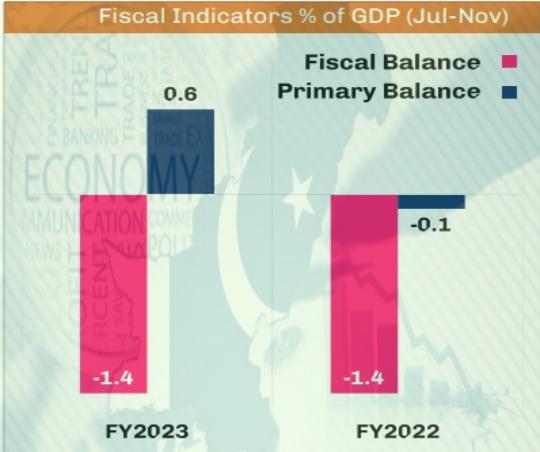
Islamabad: The fiscal deficit during the first five months (July-November) of the current fiscal year has been contained at the same level of 1.4 percent of GDP as it was recorded in the comparable period last year, finance ministry said in a report.
According to the monthly Economic Update and Outlook for January 2023, the primary balance improved during July-November (FY2023) and posted a surplus of Rs 511 billion (0.6 percent of GDP) against the deficit of Rs 36 billion (-0.1 percent of GDP) last year.
“The first five months of CFY have ended with some developments; containing fiscal deficit and surplus in primary balance due to effective fiscal management,” it says.
According to the report, the private sector credit observed developments in the month of December 2022 as it increased by Rs 458 billion compared Rs 413.6 billion in December 2021, emanated more credit demand both from working capital and fixed investment.
During 1st July to December 30, FY2023 money supply (M2) showed growth of 2.0 percent (Rs. 562.8 billion) compared to growth of 4.3 percent (Rs. 1047.3 billion) in last year.
The current account deficit shrank to $ 400 million in December 2022 as against $ 1857 million in the same period last year, largely reflecting an improvement in the trade balance.
Current Account posted a deficit of $ 3.7 billion for Jul-Dec FY2023 as against a deficit of $ 9.1 billion last year, mainly due to a contraction in imports.
The report termed fiscal consolidation as the key to saving official reserves and exchange rate stability of the country. It says, the fiscal consolidation may temporarily be costly in terms of growth prospects in the short term. However, long-run prosperity and growth could only be achieved by augmenting the country’s long-term equilibrium growth path by expanding production capacities and productivity.
The report says, Pakistan was currently confronted with the challenges like high inflation, low growth, and low levels of official foreign exchange reserves.

How did the Cornell rape case go so wrong?
- 2 days ago

Pakistan's delegation to attend Makkah defence committee meeting in Riyadh today
- 16 hours ago

Apple’s ‘HomePad’ will reportedly launch on October 13th
- an hour ago
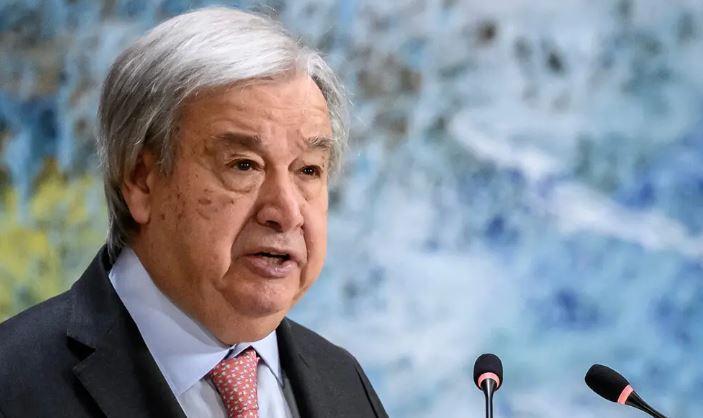
UN Secretary-General Guterres to arrive in Pakistan tomorrow
- 14 hours ago

OpenAI won’t go public until its models are safe
- an hour ago

Medvedev disqualified from China Open semi after hitting ball into crowd
- 9 hours ago
ROMO OUT AT CBS AFTER DUI...
- 2 days ago

US withdraws all bomber aircraft from UK airbase used during Iran war
- 9 hours ago

Gold prices plummet in Pakistan, global markets
- 3 days ago

The Sonos Ace Ultra are the headphones Sonos should have made the first time
- an hour ago

The best early October Prime Day deals happening now
- an hour ago
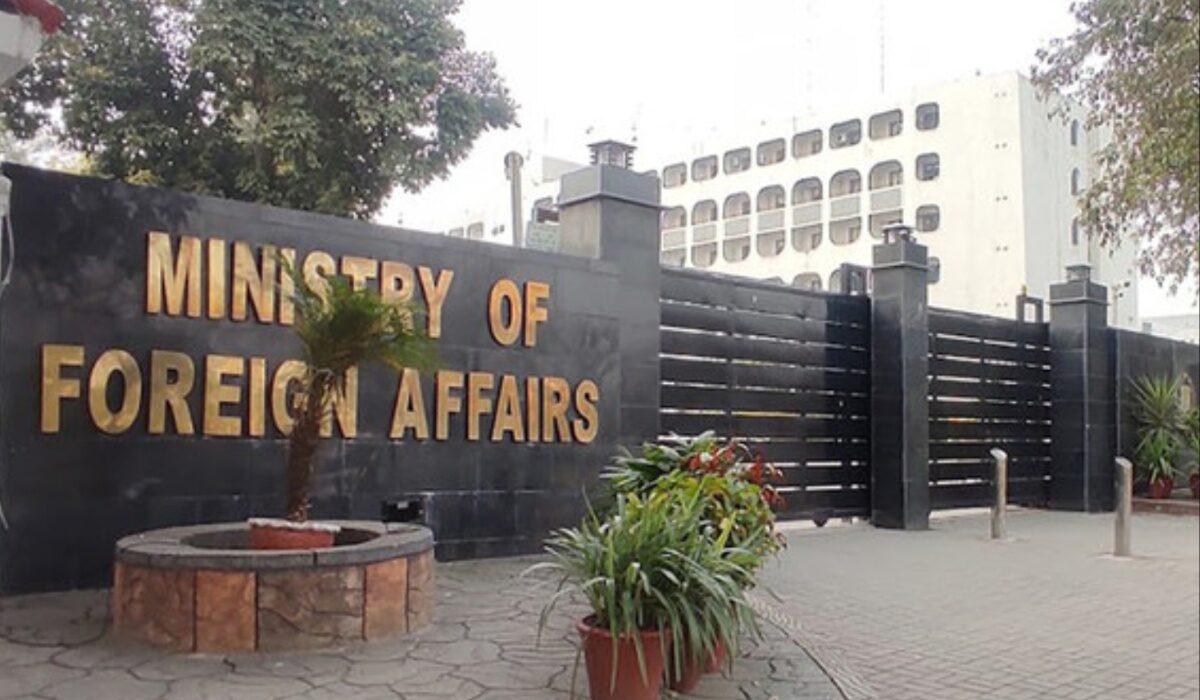
Civilian deaths: Pakistan lodges strong protest with India over border firing incident
- 3 days ago