Pakistan reacts to US sanctions on firms' alleged links with missile program
Foreign Office Spokesperson Mumtaz Zahra Baloch says Pakistan rejects political use of export controls.

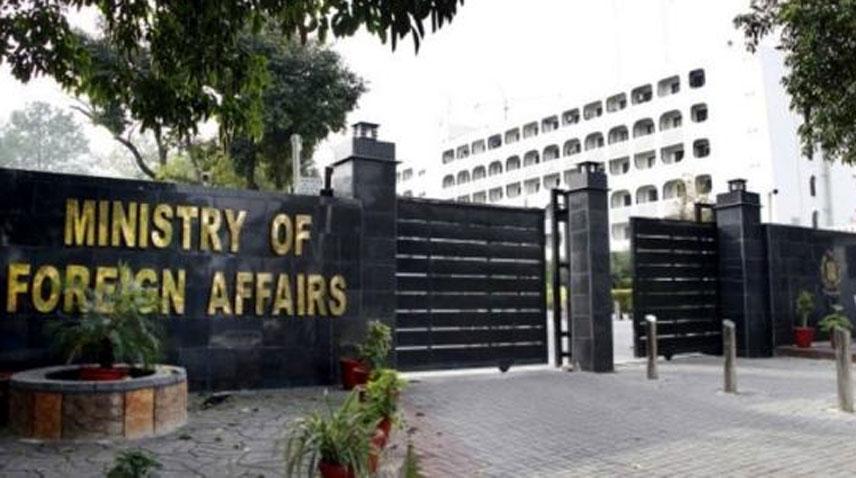
Islamabad: Foreign Office on Saturday strong exception to the US decision to impose sanctions against commercial entities on allegations of links with Pakistan’s ballistic missile programme.
In response to media queries regarding the US decision to impose sanctions against commercial entities on allegations of links with Pakistan’s ballistic missile programme, Foreign Office Spokesperson Mumtaz Zahra Baloch said such listings of commercial entities have taken place in the past as well on allegations of links to Pakistan's ballistic missile programme without sharing any evidence whatsoever.
Mumtaz Zahra Baloch said while they are not aware of the specifics of the latest measures by the United States, in the past they have come across many instances where listings have been made on mere suspicion or even when the involved items were not on any control lists but were deemed sensitive under catch-all provisions.
The Spokesperson said Pakistan rejects political use of export controls. It is a reality that the same jurisdictions, which claim to exercise strict non-proliferation controls, have waived off licensing requirements for advanced military technologies for some countries. She said this is leading to arms buildup; accentuating regional asymmetries, and undermining the objectives of non-proliferation and of regional and global peace and security.
She said Pakistan has pointed out many times need to avoid arbitrary application of export controls and for discussions between concerned parties for an objective mechanism to avoid erroneous sanctions on technology needed purely for socio-economic development pursuits.
Mumtaz Zahra Baloch said Pakistan has been ready to discuss end-use and end-user verification mechanisms so that legitimate commercial users are not hurt by discriminatory application of export controls. It is well known that the same jurisdictions, which claim strict adherence to non-proliferation controls, have waived off licensing requirements for advanced military technologies for some countries. She said such discriminatory approaches and double standards are undermining the credibility of non-proliferation regimes and also the objectives of regional and global peace and security by accentuating military asymmetries.
FinMin Aurangzeb, WB discuss Pakistan's economic reform agenda
- 4 hours ago

How the biggest renewable energy project in US history finally got built
- 19 hours ago

US military bans BYD vehicles from strategic air base in Japan
- 10 hours ago

GM promises smarter cars, faster updates, and autonomous dry-cleaning runs
- 21 hours ago

PM Shehbaz sets illustrative wheat price at Rs4,500 per 40kg for 2027
- 4 hours ago

This Democrat’s accountability plan has Trump fuming
- 19 hours ago

What Christina Applegate’s misdiagnosis reveals about MS
- 19 hours ago

The Cornell rape case has surfaced a hidden divide among progressives
- 19 hours ago
Russia released a US prisoner. What did they get out of it?
- 19 hours ago

Conversational Gemini navigation comes to Apple CarPlay
- 21 hours ago

10 terrorists, including one female, killed in Gwadar: ISPR
- 7 hours ago
Field Marshal Munir vows total defeat of terrorists with public support
- 10 hours ago