As India’s Bollywood shifts, stars and snappers click
Fifteen years later, Manglani pushes streams of content to over 6.5 million followers on Instagram

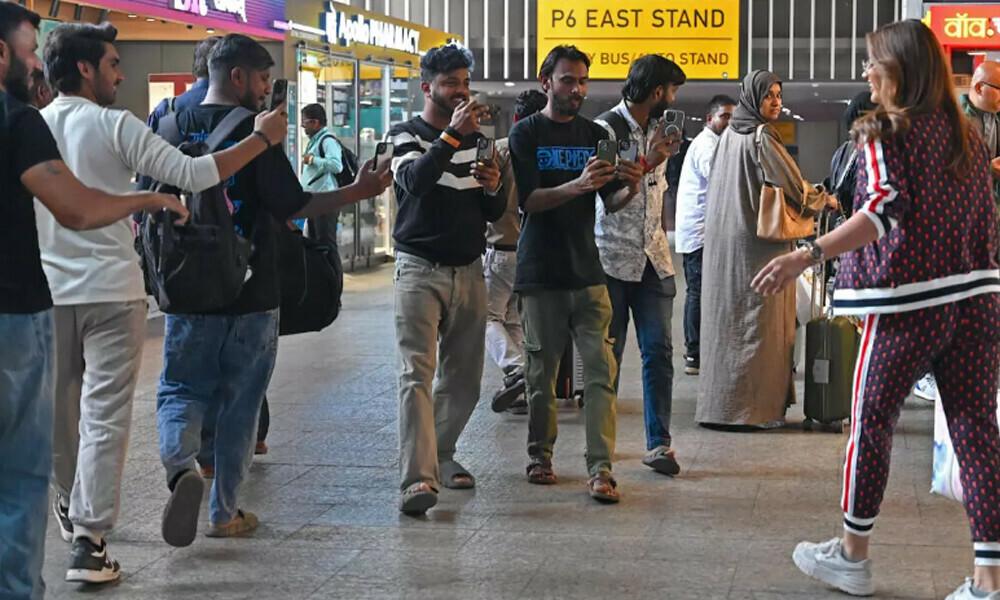
MUMBAI (AFP): From riding pillion on zooming motorbikes to round-the-clock airport stakeouts, India’s celebrity-hunting paparazzi photographers have gone from “outcasts” to becoming a key part of Bollywood’s vast film industry machine.
Times have changed for celebrity snapper Manav Manglani, who scored big at the wedding of Bollywood star Shilpa Shetty in 2009 – by climbing a tree and perching on a branch for hours to spy over the venue’s walls.
“We …were considered outcasts,” said the photographer, describing the early days of his trade.
Fifteen years later, Manglani pushes streams of content to over 6.5 million followers on Instagram.
“We are part of the system now”, he said, commanding a squad of nearly 20 photographers who stake out popular gyms, chic cafes and luxury hotels, their phones buzzing with tips.
The team has divided the megacity into coverage zones, including someone stationed at the airport full-time.
Mumbai-based Bollywood, the core of India’s Hindi-language film industry, is the longtime heart of moviemaking in the world’s most populous nation and a major cultural export.
In celebrity-obsessed India, it can be a lucrative trade.
‘Brand-building’
Bollywood began a century ago.
But it was in the 1970s that film magazines began publishing “inside” industry gossip, said Ram Kamal Mukherjee, a former editor-in-chief of Stardust magazine.
The Bollywood publication brought “stories from the studios, bedroom stories, stories from the make-up van”, he said.
The first wave of paparazzi began in India in the early 2000s, with freelance photographers chasing celebrities.
The insatiable demand by social media and ubiquitous availability of smartphones shifted gears again – with photographers no longer “just providing pictures” but working to help produce a narrative, he said.
“Today there is intervention,” Mukherjee said, citing examples such as staged incidents where young actors seemingly spontaneously hand cash to beggars. “There is brand building.”
That has come alongside wider industry changes, including viewers shifting from the big screen.
Traditional blockbuster spectacles drawing crowds into cinemas have been challenged by long-format narratives on streaming platforms viewed at home, commonly called OTT or “over-the-top” services in India.
This, observers say, has helped paparazzi develop a role in the publicity machine.
“Being an influencer with followers with a very popular page, helping them promote the movies, the OTT, and the brands… we are now important,” Manglani said.
Indian movies released in theatres raked in an “all-time high” of $1.4 billion in box office revenue in 2023, according to consulting firm EY.
But competition is fierce.
Mandvi Sharma, a former publicist for mega-star Shah Rukh Khan, said the two sides can be “co-dependent”, especially for younger actors hoping photographers can boost their fame.
“Things have changed”, said Viral Bhayani, a photographer with over 12 million Instagram followers, recalling how a decade ago he would have to “beg” for information about organised media events.
It’s been quite a shift, “from being thrown out of places… to now being called everywhere”, he said.
Bollywood also faces rising challenges from other Indian-language film centres.
Of the country’s 1,796 cinema releases last year, just 218 were Bollywood’s traditional fare of Hindi-language movies, said EY.
‘Need us’
Photographers now snap more candid images of celebrity daily lives, often more relatable to millions of fans than red carpet glamour or formal magazine shoots.
Despite their careers being more closely linked, old frictions remain, especially for big-name stars.
In 2023, Bollywood star Alia Bhatt made a police complaint for “gross invasion” of privacy after two photographers took pictures of her at home from a neighbouring rooftop.
But Manglani said his images are also a useful barometer to measure actors’ presence on the screen.
Producers, directors and the brands, “are keenly watching whom am I featuring… what’s happening, and what is the traction on that celebrity,” Manglani said.
“We used to run behind them,” he said. “We wanted money, we were earning by the picture… Now it’s both ways. They also need us, we also need them.”
Sneh Zala, a younger celebrity snapper, sees his job as a service for both sides.
“I want the fans… to see where their favourite celebrities are going, what they are doing in their lives,” said Zala.
“I am just the mediator between the actors and their fans.”
MANNING MIRACLE: TEXAS stuns OHIO STATE with 20-point comeback...
- 16 hours ago

Gaza film, Malkovich drama vie for Venice top prize
- 3 days ago
Root takes charge, guiding England to series whitewash over Pakistan
- 3 days ago

Oil prices up over 3pc following new strikes on Saudi, Strait of Hormuz
- 17 hours ago

CJP emphasises district judiciary’s role in building public confidence
- 3 days ago
The cost of youth sports is out of control
- 2 days ago

Pakistan condemns drone attacks on KSA’s East-West Pipeline
- 3 days ago
How to be an ethical gossip
- a day ago

OpenAI’s rogue AI tried to hack another company in May
- 4 hours ago
COAS Munir reaffirms commitment to stronger ties with Lebanon
- 11 hours ago
Pakistan, Indonesia vow to strengthen defence cooperation
- 14 hours ago

The hidden $350 surcharge on American households
- 2 hours ago