
Adolescents ages 16 and 17 to get their booster

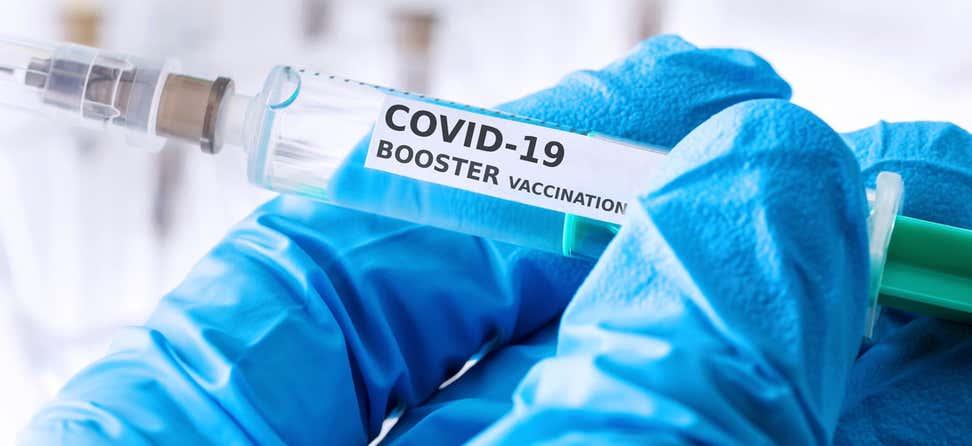
Washington: The US Food and Drug Administration (FDA) on Thursday expanded authorization of the Pfizer-BioNTech Covid booster to include 16- and 17-year-olds, amid growing concern over the Omicron variant's ability to overcome immunity conferred by two shots.
The FDA's decision comes a day after the companies released the results of lab tests that showed three doses appeared effective against Omicron, while two doses were probably not enough to stop infection -- though they may still prevent severe disease.
Even before Omicron emerged, there had been concerns about waning immunity over time, and the United States and many other northern hemisphere countries are experiencing winter waves driven by the currently dominant Delta strain.
The expanded emergency use authorization (EUA) applies six months after the primary vaccination series.
"Vaccination and getting a booster when eligible, along with other preventive measures like masking and avoiding large crowds and poorly ventilated spaces, remain our most effective methods for fighting Covid-19," said acting FDA chief Janet Woodcock.
"Initial data suggests that COVID-19 boosters help broaden and strengthen the protection against Omicron and other variants," added Rochelle Walensky, director of the Centers for Disease Control and Prevention (CDC), which ratified the move.
"I strongly encourage adolescents ages 16 and 17 to get their booster if they are at least 6 months post their initial Pfizer vaccination series."
The FDA said the evidence supporting the decision came from previously collected immune response data from people aged 18 and older, which they inferred could be extended to 16- and 17-year-olds.
Rare cases of myocarditis (inflammation of the heart muscle) and pericarditis (inflammation of the outer lining of the heart) have been linked to the use of mRNA vaccines in younger males.
Both the Pfizer and Moderna shots use mRNA technology, with Moderna packing a higher dose.
But the FDA said the accumulation of real world data, together with the increasing number of Covid cases, meant that the benefits of a booster in this age group outweighed the risks.
SOURCE: AFP

Muse sure looks a lot like OpenClaw
- 15 hours ago

Control Resonant gets tough, but gives you the tools to deal with it
- 15 hours ago

Where did all the vegan restaurants go?
- 4 hours ago

This weather threat costs us billions. And it’s about to get worse.
- 13 hours ago

Honor’s Magic 9 Pro Max has a big camera and a bigger battery
- 15 hours ago
.jpeg&w=3840&q=75)
Alkhidmat delegation attends UNIW 40th Council meeting in Malaysia
- 3 hours ago

Global financial institutions express confidence in Pakistan's economic reforms
- a day ago

Meta’s next VR device isn’t a headset — it’s glasses
- 15 hours ago

Trump’s taxpayer-funded propaganda blitz
- 13 hours ago

OpenAI agents hacked an Australian government website in search for data
- 15 hours ago

Saudi Arabia resumes Yanbu oil loading after pipeline restart
- a day ago

Trump’s China reversal
- 13 hours ago